
Overview
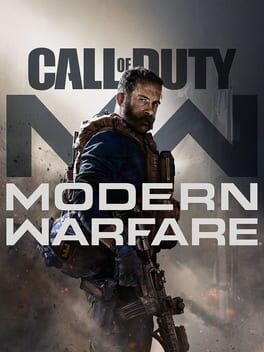
When Infinity Ward announced the arrival of Call of Duty: Modern Warfare 4, the industry was already braced for another seismic shift in the franchise’s long‑running formula. The series, which has dominated the first‑person shooter market for nearly two decades, entered a period of accelerated annual releases, aggressive live‑service pivots, and a sprawling ecosystem that now includes battle‑royale, cooperative extraction, and narrative‑driven campaigns. Against this backdrop, the rollout of Modern Warfare 4 has been anything but smooth: a staggered campaign launch, a delayed DMZ mode, and a surprise early opening of the competitive multiplayer suite have turned the title into a live case study of how modern AAA launches are managed under the pressure of subscriber‑driven revenue models.
Historically, Call of Duty launches have been synonymous with midnight queues, record‑breaking sales weeks, and a predictable wave of community chatter that quickly settles into a stable competitive meta. The current climate, however, is defined by fragmented platform releases, cross‑play negotiations, and a player base that now expects continuous content updates rather than a single, monolithic launch. Modern Warfare 4’s early multiplayer unlock therefore arrives at a crossroads where publisher ambition meets an increasingly skeptical audience that is quick to label any perceived misstep as a “worst ever” moment, a sentiment amplified by social media echo chambers and the ever‑present specter of review‑burnout.
What Happened?
Infinity Ward’s decision to push the full multiplayer component live overnight caught many players off‑guard, especially after the campaign had been made available to a limited subset of users only days earlier. The early access was framed as a “bullish” move, ostensibly to let the community dive straight into the competitive loop while the studio finalizes balance tweaks and seasonal content. In practice, the abrupt release meant that servers were inundated with both seasoned veterans and newcomers still unfamiliar with the new gunplay mechanics, map layouts, and the re‑engineered progression system that ties directly into the franchise’s integrated Battle Pass.
The reaction on forums, Twitch streams, and YouTube commentary has been decidedly harsh. Critics have pointed to a perceived lack of polish, inconsistent matchmaking, and a steep learning curve that feels punitive rather than rewarding. While some early adopters praise the fresh tactical options and the ambitious integration of DMZ‑style extraction elements into the core loop, the prevailing narrative on major gaming outlets labels the launch as “the worst Call of Duty ever,” a hyperbole that underscores the heightened expectations placed on a franchise that has, for better or worse, become a cultural touchstone for competitive FPS play.
Analysis
The premature multiplayer release can be read as a strategic gamble aimed at salvaging subscriber churn in an increasingly crowded live‑service market. By granting immediate access, Activision hopes to generate a surge of player‑count metrics that feed into the algorithmic matchmaking and, crucially, the in‑game economy that drives micro‑transaction revenue. However, the backlash reveals a deeper tension: the modern shooter audience values both instantaneous gratification and a polished, balanced experience. When those two pillars collide, the resulting friction can erode brand equity faster than any single negative review.
From a competitive ecosystem standpoint, the early launch also forces rival studios—such as EA’s Apex Legends team and Ubisoft’s Rainbow Six Siege developers—to reassess their own content calendars. If Modern Warfare 4 can sustain a player base despite the initial turbulence, it may validate a “soft‑launch” approach for future live‑service titles, where iterative updates replace the traditional big‑bang release. Conversely, a prolonged dip in active users could accelerate a shift toward more conservative, fully‑tested rollouts, especially as console manufacturers like Sony and Microsoft tighten their certification pipelines to protect the integrity of their online ecosystems.
XPLog Opinion
At XPLog UK we view Infinity Ward’s early multiplayer unlock as a bold, if reckless, experiment that underscores the franchise’s struggle to balance legacy expectations with the relentless pace of live‑service demands; the verdict will ultimately hinge on whether the studio can translate the current wave of criticism into concrete, player‑centric improvements that restore confidence in the series’ competitive future.
Final Thoughts
Modern Warfare 4’s journey is far from over—its next major patch, scheduled for early November, will be the true litmus test for whether the early multiplayer exposure was a miscalculated stumble or a calculated step toward a more agile, community‑driven development model. Players, analysts, and investors alike should keep a close eye on engagement metrics, balance updates, and the forthcoming seasonal content roadmap, all of which will determine if this title can rewrite the narrative from “worst ever” to a resilient cornerstone of the Call of Duty legacy.