
Overview
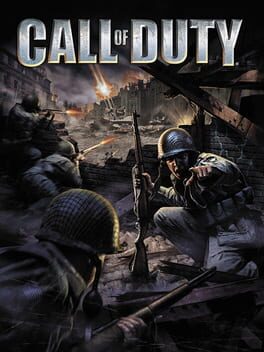
When Activision Blizzard first ported a Call of Duty title to the original Nintendo Switch, the industry treated it as a novelty—a proof‑of‑concept that a franchise built on high‑octane graphics and massive multiplayer could survive on a handheld with modest hardware. Fifteen years later, the release of Modern Warfare 4 on the eagerly anticipated Switch 2 marks a decisive shift from curiosity to strategic partnership, signalling that Nintendo’s upgraded architecture finally meets the performance envelope demanded by AAA shooters. The evolution of the Switch platform—from a hybrid novelty to a full‑fledged competitor with a custom NVIDIA‑based GPU and expanded memory—has redefined the expectations of both developers and players, making the arrival of a flagship first‑person shooter a watershed moment for the ecosystem.
Beyond the hardware, the timing aligns with a broader industry trend toward platform‑agnostic ecosystems. Sony and Microsoft have spent the last decade tightening their exclusive line‑ups, while Nintendo has cultivated a family‑friendly identity that has gradually opened to more mature experiences. Modern Warfare 4’s entry onto Switch 2 therefore arrives at a crossroads where Nintendo is eager to diversify its software portfolio and Activision seeks to tap into a user base that, until now, has been largely underserved by its core franchise. The announcement also arrives amid a post‑pandemic surge in cross‑play adoption, where players expect seamless connectivity across consoles, PC, and mobile, making the Switch’s newfound capability to handle such networking demands a critical factor.
What Happened?
At a live‑streamed event co‑hosted by Nintendo and Infinity Ward, the developers unveiled Modern Warfare 4 for the Switch 2, confirming a global launch slated for early Q4 2026. The presentation highlighted that the title runs at a native 60 fps in a dynamic 1080p‑upscaled mode when docked, while maintaining a smooth 30 fps handheld experience with adaptive resolution scaling. Infinity Ward’s lead technical director emphasized that the team leveraged the Switch 2’s variable rate shading and dedicated AI‑accelerators to preserve the series’ signature responsiveness, especially the “balletic precision” of movement that has become a hallmark of the franchise.
In addition to raw performance metrics, the announcement detailed a suite of first‑party integrations: cross‑play with Xbox Series X|S, PlayStation 5, and PC via the new Activision Connect hub; a cloud‑save system that synchronizes progress across devices; and a tiered monetisation model that respects Nintendo’s historically low‑price expectations while still offering the cosmetic micro‑transactions that fund the live‑service model. The developers also promised exclusive Switch‑only content, including a limited‑time “Island Assault” map designed around the handheld’s gyroscopic controls, hinting at a deeper commitment to leveraging Nintendo’s unique input methods.
Analysis
From a market perspective, the decision to bring Modern Warfare 4 to the Switch 2 could recalibrate the competitive dynamics of the console war. Historically, Nintendo’s market share has been buoyed by its distinctive first‑party titles, while third‑party AAA releases have been sparse. By securing a marquee shooter that traditionally drives hardware sales on PlayStation and Xbox, Activision may entice a segment of hardcore gamers who have previously dismissed the Switch as a “casual” platform. This could translate into a measurable uptick in Switch 2 sales, particularly among the 18‑34 demographic that has been the backbone of the Call of Duty community.
Technical hurdles, however, remain a focal point of scrutiny. The Switch 2’s power envelope, while markedly improved, still trails the raw silicon of its competitors. Infinity Ward’s reliance on dynamic resolution and AI‑upscaling introduces a variable visual fidelity that could affect competitive integrity, especially in esports‑oriented play where frame consistency is paramount. Moreover, the integration of cross‑play raises questions about matchmaking balance; players on higher‑spec hardware may enjoy an advantage that could alienate the handheld cohort unless robust parity mechanisms are instituted. If Activision can navigate these challenges, the payoff could be a new benchmark for what constitutes “AAA on a handheld,” potentially prompting other publishers to revisit previously abandoned console generations.
XPLog Opinion
XPLog believes that Modern Warfare 4 on Switch 2 is not merely a novelty port but a strategic inflection point that validates Nintendo’s hardware evolution and signals Activision’s willingness to diversify its platform portfolio beyond the traditional console duopoly; the move will likely accelerate the convergence of high‑performance handhelds and mainstream AAA ecosystems, forcing the industry to rethink the boundaries of performance versus portability.
Final Thoughts
In sum, the arrival of Modern Warfare 4 on the Switch 2 represents a bold gamble that could reshape player expectations, broaden Nintendo’s audience, and force the broader industry to acknowledge the viability of high‑fidelity shooters on hybrid devices; with the official launch date pencilled for November 2026 and a post‑launch roadmap that includes seasonal updates and esports support, the coming months will be crucial in determining whether this partnership becomes a lasting paradigm or a fleeting experiment.