
Overview
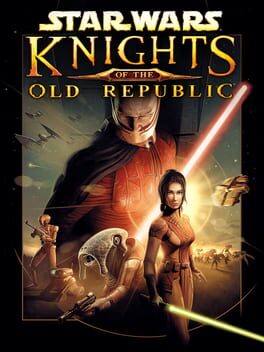
The video game industry has been rocked this week by the most dramatic studio shutdown in recent memory: Electronic Arts announced a reduction of roughly 400 positions, effectively dissolving BioWare, the studio that gave us the narrative‑driven landmarks Mass Effect, Dragon Age, and the original Star Wars: Knights of the Old Republic. BioWare’s demise is not merely a corporate footnote; it signals the end of a creative lineage that has defined modern RPG storytelling for two decades, from the moral quandaries of the early Mass Effect trilogy to the intricate political tapestry of Dragon Age: Inquisition. The layoffs arrived on the heels of a broader EA restructuring that has seen the publisher double‑down on live‑service models, prompting analysts to question whether the traditional single‑player, story‑first paradigm can survive in a market increasingly dominated by recurring revenue streams.
Against this backdrop, the long‑awaited fifth installment of the Mass Effect saga—tentatively referred to as Mass Effect 5—had been a beacon of hope for a community that has watched the franchise’s narrative universe expand across games, novels, and streaming series. Fans have been clamoring for a continuation that would finally address the unresolved threads left after the controversial ending of Mass Effect 3 and the subsequent “Rebirth” narrative direction hinted at in the now‑canceled project. In an industry where legacy franchises are often resurrected as live‑service experiences, the promise of a fresh, single‑player entry carried weight not only for BioWare’s loyal base but also for publishers seeking to prove that deep, authored experiences still command commercial viability.
What Happened?
Late last night, a grainy but unmistakably in‑engine video began circulating across Reddit, Twitter, and niche gaming forums, purporting to be the first glimpse of the cancelled Mass Effect 5. The clip opens with a caption reading, “The following is in‑engine footage from our small team. It uses our pre‑production assets,” a disclaimer that immediately set off alarms among the community. Credibility was bolstered when Bloomberg’s veteran games reporter Jason Schreier, who famously broke the EA layoff story, affirmed the footage’s authenticity, citing insider confirmation. IGN, another heavyweight in gaming journalism, also corroborated the leak, stating that the visual fidelity and asset pipeline matched what BioWare had publicly shown during earlier development milestones.
The trailer itself offers a cinematic tableau rather than gameplay: a new, nameless protagonist engages in a hushed conversation with an Asari woman in a bustling bar, only for the scene to pivot into a kinetic showdown featuring Liara T’Soni, one of the franchise’s most iconic characters. As the protagonist narrates a history of soldier‑to‑spy transitions, the camera sweeps across alien cityscapes and hints at a conflict‑prevention narrative that would have taken players to multiple planets, echoing the galaxy‑spanning ambition of the original trilogy. The final title card reads “Mass Effect Universe,” suggesting a possible rebranding that could have broadened the series’ scope beyond the familiar Milky Way setting. Unfortunately, the trailer fades out before any gameplay mechanics are revealed, underscoring the abruptness with which the project was shelved.
Analysis
From a market perspective, BioWare’s termination and the subsequent leak illustrate a stark inflection point for narrative‑driven RPGs. EA’s decision appears rooted in a cost‑benefit analysis that favours titles with predictable, recurring revenue over high‑risk, story‑heavy experiences that demand extensive writing, voice acting, and world‑building resources. The cancellation also removes a potential competitor to upcoming sci‑fi RPGs such as Bethesda’s Starfield and Square Enix’s upcoming titles, potentially consolidating market share for those franchises while leaving a void for fans seeking a more character‑centric, choice‑driven experience. Moreover, the leak itself could be interpreted as a form of grassroots preservation, signaling that the community values the intellectual property enough to circulate unofficial material, a phenomenon that has historically pressured publishers into reviving dormant franchises.
Technically, the trailer’s reliance on pre‑production assets suggests that BioWare had already invested heavily in a new engine pipeline, likely building on the Frostbite framework that has been both praised for visual fidelity and criticized for its steep learning curve. The decision to abort the project mid‑pipeline not only wastes those development dollars but also raises questions about EA’s internal tooling strategy; if the studio cannot bring a Frostbite‑based RPG to completion, it may prompt a reevaluation of the engine’s suitability for narrative‑centric games. In the broader ecosystem, this could accelerate a shift toward more flexible, modular engines like Unreal Engine 5, which have already attracted studios looking to avoid the pitfalls that plagued BioWare’s later titles.
XPLog Opinion
At XPLog UK we view the disappearance of BioWare as a cautionary tale about the perils of prioritising short‑term financial metrics over long‑term creative stewardship. The Mass Effect franchise has cultivated a multigenerational fan base that not only purchases games but also fuels ancillary revenue streams through merchandise, novels, and streaming adaptations. By extinguishing the studio that holds the narrative DNA of this universe, EA risks eroding brand equity that took years to build, potentially diminishing the franchise’s future licensing value. We believe that a more prudent approach would have been to transition BioWare into a smaller, independent studio focused on episodic releases, preserving both the talent pool and the franchise’s storytelling integrity.
Final Thoughts
While the leaked trailer offers a tantalising glimpse of what could have been a landmark addition to the Mass Effect saga, its existence now serves as a bittersweet epitaph for a studio that defined a generation of interactive storytelling. Players should keep an eye on EA’s upcoming fiscal reports and any potential announcements regarding the stewardship of the Mass Effect IP, as the publisher may yet seek to monetize the universe through alternate mediums or a new development partner. Until then, the community’s collective grief and the circulating footage remain the only testament to a project that will never see the light of day, reminding us that even the most beloved franchises are vulnerable in an industry driven by relentless financial calculus.