
Overview
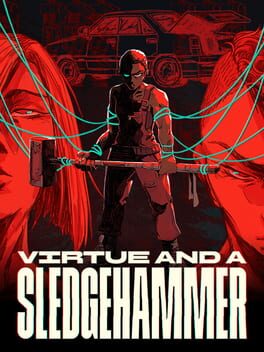
When a game announces that its core mechanic revolves around the blunt, visceral satisfaction of a sledgehammer, it immediately taps into a lineage of cathartic experiences that have haunted the medium since its earliest days. From the primal joy of swinging a hammer in the original Wolfenstein 3D to the weight‑driven melee systems of modern action titles, developers have long recognized that a well‑tuned impact can become a player’s emotional release valve. In the current climate, where mental‑health narratives are increasingly woven into marketing copy, the tagline “Most people resort to therapy. But you chose the brave option. A sledgehammer” is both a cheeky provocation and a signal that the upcoming title, Virtue and a Sledgehammer, intends to position itself at the intersection of kinetic gameplay and narrative self‑reflection.
Beyond the weapon itself, the announcement arrives at a moment when the industry is experimenting with hybrid release strategies. The past two years have seen a surge in narrative‑driven prologues, visual novels, and “story‑first” demos that serve both as world‑building tools and as low‑cost market tests. This trend, championed by studios ranging from Supergiant Games to Annapurna Interactive, reflects a broader shift: publishers are no longer content to rely solely on polished trailers; they now deliver bite‑sized, playable experiences that can be streamed, shared, and dissected across social platforms. The free visual novella prologue for Virtue and a Sledgehammer is a textbook example of this approach, offering an experimental taste that diverges sharply from the kinetic promise of the full game while still anchoring the same thematic core.
What Happened?
Earlier this week, the developers behind Virtue and a Sledgehammer released a downloadable prologue that masquerades as a visual novella, accessible without charge on PC and major console storefronts. The prologue eschews the expected physics‑heavy combat in favor of a stylised, story‑driven sequence that introduces the protagonist’s psychological turmoil and the symbolic weight of the sledgehammer. Players navigate through illustrated panels, make occasional dialogue choices, and witness animated set‑pieces that hint at the game’s larger narrative arc. By offering this experience now, the studio aims to seed community conversation, generate early feedback on tone, and create a sense of ownership among early adopters.
The full game, slated for release next week, promises a “chunky, impact‑frame‑friendly” combat system that leans heavily on precise animation and tactile feedback. Early screenshots reveal a physics engine tuned to deliver exaggerated, yet satisfying, hammer strikes that affect both enemies and the environment—a design decision reminiscent of the “satisfying smash” ethos popularised by titles like God of War and the indie hit Getting Over It. The developers have also hinted at a robust progression system, where players can upgrade the sledgehammer’s weight, swing speed, and even imbue it with narrative‑driven abilities that reflect the protagonist’s emotional journey.
Analysis
From a market perspective, Virtue and a Sledgehammer occupies a niche that straddles mainstream action and boutique narrative experiences, a hybrid space that has proven lucrative for studios willing to gamble on distinctive branding. By coupling a visceral combat loop with an introspective narrative hook, the game differentiates itself from the crowded melee‑action segment dominated by franchises like Dark Souls and Devil May Cry. Moreover, the free visual novella prologue serves as a low‑risk acquisition funnel, likely to boost pre‑order conversion rates by converting curiosity into emotional investment. This strategy mirrors the successful rollout of titles such as Hades, where early story teasers cultivated a passionate community before launch.
Technical considerations also play a crucial role. Delivering a “frame‑friendly” sledgehammer mechanic on current‑gen hardware requires careful optimisation of collision detection and ragdoll physics, especially when the weapon’s impact must feel both weighty and responsive. If the studio can achieve this without sacrificing visual fidelity, it could set a new benchmark for melee realism, prompting competitors to revisit their own physics pipelines. However, the reliance on a heavy, single‑weapon focus also risks alienating players accustomed to diverse arsenals, potentially limiting the title’s appeal to a subset of core gamers who value depth of mechanics over variety.
XPLog Opinion
At XPLog UK we see Virtue and a Sledgehammer as a bold statement that the indie sector is finally comfortable enough to blend high‑octane catharsis with earnest storytelling, without resorting to the gimmickry that plagued many “therapy‑themed” releases of the past. The decision to launch a narrative‑first prologue demonstrates a sophisticated understanding of modern player psychology: gamers now crave agency not just in combat, but in the emotional scaffolding of a game world. Should the full title deliver on its promise of satisfying impact and meaningful progression, it could very well become a reference point for future titles that aim to marry kinetic gameplay with a purpose‑driven narrative.
Final Thoughts
Virtue and a Sledgehammer is set to drop next week, but the free visual novella prologue already offers a glimpse into a game that aspires to be more than a simple smash‑fest; it seeks to weaponise emotional release in a way that feels both personal and universally resonant. Players and analysts alike should keep an eye on launch metrics, community sentiment, and post‑release support, as these will indicate whether the sledgehammer can indeed become a lasting symbol of cathartic gameplay in an increasingly story‑driven market.