
Overview
The gaming world was rocked last week when Electronic Arts confirmed the abrupt closure of BioWare, the studio behind the iconic Mass Effect saga, and simultaneously announced the cancellation of the long‑awaited Mass Effect 5. The decision sent ripples through the industry, not only because it marked the end of a development house that had defined narrative‑driven RPGs for two decades, but also because it arrived at a moment when EA is aggressively reshaping its portfolio toward live‑service and high‑revenue franchises. Analysts immediately began parsing the financial statements, noting a sharp write‑down in development costs and a strategic pivot that aligns with EA’s broader “games as a service” roadmap, a move that has already sparked debate among investors and gamers alike.
Beyond the balance sheet, the cancellation struck a chord with a community that has invested over a decade of emotional and monetary capital into the Mass Effect universe. The series pioneered branching storytelling, deep moral choice systems, and a richly woven sci‑fi mythos that inspired countless indie projects. In an era where players are demanding both cinematic fidelity and persistent online experiences, the vacuum left by BioWare’s exit has opened a strategic opening for competitors to court a highly engaged fanbase. Meanwhile, the broader market sees a resurgence of narrative‑focused titles from studios like CD Projekt Red and FromSoftware, suggesting that the appetite for story‑heavy experiences remains robust despite the prevailing live‑service tide.
What Happened?
In the midst of the fallout, a mysterious trailer titled “Mass Effect Universe” surfaced on a burner social media account late Tuesday night, instantly igniting a firestorm of speculation across Reddit, Twitter, and dedicated fan forums. The video, a sleek 30‑second montage of star‑spanning vistas, enigmatic alien silhouettes, and a hauntingly familiar orchestral cue, was traced to an anonymous uploader who claimed to have been handed the clip by an “insider” after the official shutdown. Within hours, the original post was scrubbed, yet the internet’s copy‑culture machinery ensured the footage proliferated across dozens of re‑uploads, each preserving the same cryptic branding and a fleeting glimpse of a logo that merged the classic Mass Effect emblem with a new, stylized planetary ring.
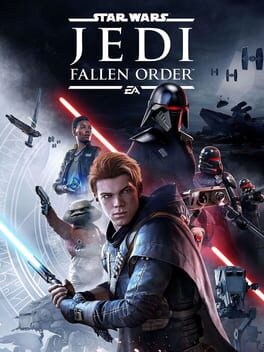
The content of the trailer, while deliberately vague, hints at an ambitious re‑imagining rather than a mere remaster. Viewers catch fleeting shots of a sprawling hub world, modular spacecraft, and what appears to be a multiplayer combat arena—elements that align closely with EA’s current emphasis on shared‑world experiences. No official statement has accompanied the leak, but the visual language suggests a possible pivot toward a live‑service model that could keep the franchise alive without the traditional single‑player campaign structure. Industry insiders have noted that such a shift would not be unprecedented for EA, citing the recent transformation of titles like “Star Wars Jedi: Fallen Order” into ongoing service ecosystems.
Analysis
From a market perspective, the emergence of a “Mass Effect Universe” trailer could be interpreted as EA’s attempt to salvage a valuable intellectual property while mitigating the sunk costs associated with a full‑scale single‑player sequel. By re‑tooling the franchise into a service‑oriented format, EA can leverage recurring revenue streams, micro‑transactions, and seasonal content drops—an approach that has proven lucrative for games such as “FIFA” and “Apex Legends.” However, this strategy also risks alienating the core audience that values deep narrative immersion over repetitive multiplayer loops, potentially fracturing the community and eroding brand equity if the execution feels dissonant with the series’ legacy.
Competitively, the move places EA in direct contention with other heavyweight publishers who are also courting the premium narrative RPG space. Sony’s partnership with Naughty Dog and its upcoming “Marvel’s Spider‑Man 2” demonstrates a commitment to story‑driven, single‑player excellence, while Microsoft’s acquisition of Bethesda signals an intent to blend expansive lore with multiplayer capabilities. Should EA succeed in delivering a compelling “Mass Effect Universe,” it could shift the balance of power toward its own ecosystem, especially if the service is launched on both Xbox and PlayStation platforms, thereby expanding EA’s reach beyond its traditional PC‑centric stronghold.
XPLog Opinion
At XPLog UK, we view the sudden appearance of the “Mass Effect Universe” trailer as a double‑edged sword: on one hand, it offers a lifeline to a franchise teetering on the brink of oblivion; on the other, it threatens to dilute the very storytelling DNA that made Mass Effect a cultural touchstone. If EA can marry the series’ rich narrative heritage with a thoughtfully designed service layer—one that respects player agency, offers meaningful progression, and avoids pay‑to‑win pitfalls—there is a genuine opportunity to reinvent the brand for a new generation. Conversely, a rushed, monetisation‑first rollout could irreparably scar the franchise’s reputation, turning loyal fans into vocal detractors and handing the narrative‑driven RPG crown to a competitor.
Final Thoughts
While the “Mass Effect Universe” trailer remains shrouded in mystery, its very existence signals that EA is not ready to abandon the franchise’s vast fanbase without a fight. The next few weeks will be crucial as the publisher either confirms the project with concrete details or lets the leak fade into the background of endless speculation. Players and analysts alike should keep an eye on official EA communications, upcoming EA Play showcases, and any filing updates that may hint at budget allocations for the new venture. If the studio can deliver a balanced hybrid that honors the series’ storytelling roots while embracing modern service models, the Mass Effect saga may yet find a sustainable future in an industry that increasingly rewards both depth and durability.