
Overview
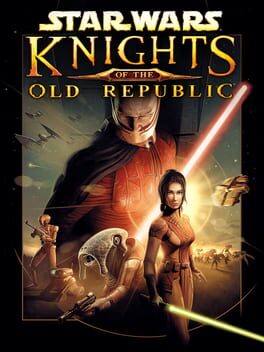
After more than three decades of shaping the very definition of Western role‑playing games, BioWare is officially winding down its operations, a move that reverberates far beyond the studio’s own corridors. The announcement arrives at a time when the industry is grappling with a confluence of pressures—rising development costs, a shift toward live‑service monetisation, and an increasingly crowded marketplace of narrative‑driven experiences from both legacy developers and indie innovators. BioWare’s legacy, built on genre‑defining titles such as the original Baldur's Gate, Neverwinter Nights, the Star Wars: Knights of the Old Republic duology, Dragon Age, and the first two Mass Effect games, has long served as a benchmark for storytelling ambition, character depth, and player agency. Those pillars have become part of the cultural fabric of gaming, influencing everything from tabletop design to the narrative structures of contemporary AAA releases.
Yet the studio’s recent trajectory has been marked by a series of missteps that mirror broader industry trends: the ambitious but troubled launch of Anthem, the mixed reception of Mass Effect: Andromeda, and a series of leadership churn that left long‑term projects in limbo. EA’s decision to shutter BioWare is framed as a strategic realignment—“to align talent and investments where we see the greatest opportunities for players and long‑term growth.” This language echoes a pattern seen at other megapublishers, where legacy IPs are either handed off to external studios or re‑imagined under new development models. The closure, therefore, is not merely an internal cost‑cutting measure; it signals a pivot in how major publishers are choosing to allocate scarce creative resources in an era where live‑service ecosystems and cross‑platform play dominate the conversation.
What Happened?
In a terse statement released to the press, BioWare confirmed that development on the next Mass Effect project has been terminated, effectively pulling the plug on what many hoped would be the franchise’s long‑awaited return to form. The announcement did not provide a concrete timeline for the cancellation, but it underscored that the decision was taken after a thorough review of the project’s progress, resource allocation, and projected market performance. Sources close to the development hinted that the title suffered from a “scope creep” typical of large‑scale RPGs, where narrative branching, technical ambition, and the desire to meet fan expectations ballooned beyond realistic production capacities.
EA’s broader statement framed the studio’s shutdown as part of a “realignment” strategy, suggesting that talent and capital will be redirected toward ventures that promise higher returns and more sustainable development cycles. While the company stopped short of naming specific successors, industry analysts speculate that EA may be looking to double‑down on its live‑service franchises—such as Apex Legends and the FIFA series—or to invest in emerging technologies like cloud gaming and AI‑driven content generation. The decision also raises questions about the future stewardship of BioWare’s storied IPs; historically, when a flagship studio folds, its properties are either licensed to external developers or placed under a new internal umbrella, a path that could see Mass Effect and Dragon Age revived under a different creative banner.
Analysis
The termination of the next Mass Effect project is a watershed moment for EA’s portfolio diversification strategy. By pulling resources from a high‑risk, high‑reward single‑player RPG, EA mitigates exposure to the volatile sales curves that have plagued recent narrative‑driven releases. This move aligns with a broader market shift where publishers favour titles that can generate recurring revenue through seasonal updates, battle passes, and microtransactions. However, the decision also risks alienating a core segment of gamers who have long championed deep, story‑centric experiences—a demographic that, while smaller than the live‑service audience, remains fiercely loyal and often drives critical acclaim and long‑term brand equity.
From a competitive standpoint, the vacuum left by BioWare could accelerate the rise of rival studios eager to capture the high‑budget RPG market. Companies like CD Projekt Red, despite their own recent challenges, still command a passionate fanbase, while newer entrants such as Larian Studios have demonstrated that ambitious, player‑driven narratives can thrive when paired with transparent development cycles and community engagement. Moreover, the cancellation may prompt EA to explore strategic partnerships or acquisitions, potentially handing over the reins of Mass Effect or Dragon Age to a studio with a proven track record in delivering polished single‑player experiences. Such a handoff could rejuvenate the franchises, but it also introduces risks related to IP stewardship, fan expectations, and the preservation of BioWare’s distinctive storytelling ethos.
XPLog Opinion
At XPLog UK we view BioWare’s closure as both a cautionary tale and an opportunity: a cautionary tale about the perils of over‑extending legacy franchises without clear, attainable milestones, and an opportunity for the industry to recalibrate how narrative depth is funded and delivered. EA’s pivot toward more predictable revenue models is understandable, yet it should not come at the expense of the very experiences that differentiate premium gaming from the churn of live‑service titles. We urge EA to consider a hybrid approach—maintaining a lean, dedicated team or external partner focused on delivering the next chapter of Mass Effect with realistic scope, while leveraging its broader ecosystem for support services. Only by preserving a space for ambitious, story‑first RPGs can the market retain the creative diversity that keeps players emotionally invested.
Final Thoughts
The shuttering of BioWare marks the end of an era, but it also sets the stage for a new chapter in how blockbuster RPGs are conceived, funded, and brought to market. Players should keep an eye on EA’s upcoming investor briefings and any announcements regarding the fate of the Mass Effect and Dragon Age IPs, as well as the potential emergence of a successor studio tasked with carrying the torch. In the meantime, the legacy of BioWare’s storytelling will continue to inspire developers and gamers alike, reminding the industry that even in an age of live services, there remains a profound appetite for richly crafted, character‑driven journeys.