
Overview
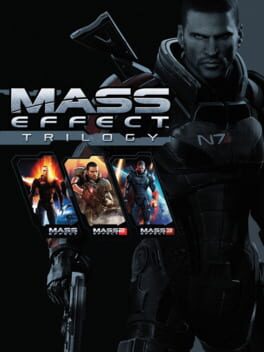
Electronic Arts’ decision to shutter BioWare, a studio whose name has been synonymous with narrative-driven role‑playing games for more than three decades, reverberates far beyond the immediate loss of a development team. BioWare’s pedigree—spanning the seminal Neverwinter Nights, the critically lauded Mass Effect trilogy, and the ambitious Dragon Age saga—has helped define the modern RPG market, setting standards for character agency, branching storylines, and cinematic world‑building. The closure arrives at a moment when the industry is grappling with the consolidation of publishing power, the rise of live‑service models, and a renewed appetite for high‑budget single‑player experiences, making EA’s move both a symptom and a catalyst of broader strategic realignments.
Historically, BioWare’s partnership with EA began in 2007 when the publisher acquired the studio for roughly $860 million, a deal that promised to marry EA’s distribution muscle with BioWare’s creative vision. Over the ensuing years, the relationship has been marked by both triumphs—such as the award‑winning Mass Effect 2—and missteps, notably the contentious launch of Mass Effect: Andromeda whose technical woes and narrative dilution sparked community backlash. The current announcement, which also terminates the “early development” phase of the next Mass Effect title, therefore represents the culmination of a decade‑long tension between artistic ambition and commercial imperatives.
What Happened?
In a terse statement posted to EA’s corporate website, the company confirmed that BioWare will cease operations effective immediately, citing a strategic refocus on core business areas and an assessment of market conditions that no longer support the studio’s current trajectory. The notice also disclosed that the nascent pre‑production work on the forthcoming Mass Effect entry—still in its embryonic concept stage—has been halted, with any existing assets slated for archival or redistribution within EA’s broader portfolio. No layoffs beyond BioWare’s internal staff were announced, suggesting that EA intends to retain key talent through transfers to other internal teams or external partners.
While EA refrained from providing granular financial figures, industry analysts estimate the shutdown will involve a multi‑million‑dollar write‑off, encompassing sunk development costs, severance packages, and the depreciation of proprietary IP tooling. The announcement also triggered a wave of speculation about the future of the Mass Effect franchise: will EA license the IP to an external studio, re‑ignite development under a new internal label, or simply retire the series altogether? The lack of a concrete roadmap fuels uncertainty among the franchise’s dedicated fanbase, which has long advocated for a return to the series’ original narrative depth and player‑driven decision‑making.
Analysis
The closure reflects a broader industry trend where publishers are pruning legacy studios that struggle to meet the accelerated development cycles demanded by contemporary market expectations. In the post‑pandemic era, development pipelines have been compressed, and the financial risk associated with high‑budget, story‑heavy RPGs has risen sharply. Competitors such as Ubisoft and Square Enix have doubled down on live‑service ecosystems, leveraging recurring revenue streams to offset the volatility of single‑player launches. BioWare’s recent titles, while still commercially viable, have not delivered the blockbuster margins needed to justify continued investment under EA’s evolving profit‑center model.
From a technical standpoint, the termination of early development on the next Mass Effect title may also signal challenges in reconciling the studio’s ambitious design goals with the realities of next‑gen hardware constraints and cross‑platform parity. Early reports hinted at a desire to overhaul the series’ engine to support larger, more dynamic worlds—a move that would require substantial R&D resources and could delay time‑to‑market beyond EA’s acceptable window. By cutting the project at the concept stage, EA avoids a potentially costly overrun, but it also forfeits the opportunity to re‑establish the franchise as a flagship narrative experience in an era where players increasingly crave deep, single‑player journeys.
XPLog Opinion
At XPLog UK we view EA’s decision as a cautionary tale about the perils of letting commercial calculus eclipse creative stewardship. BioWare’s legacy is built on player trust—a trust eroded not by a single misstep but by a pattern of rushed releases and diluted storytelling. While the financial rationale is understandable, the long‑term damage to EA’s brand equity within the core RPG community could be profound; gamers are already gravitating toward studios that prioritize artistic integrity over quarterly earnings, and the vacuum left by BioWare may accelerate that migration.
Final Thoughts
In the months ahead, the industry will be watching closely to see whether EA repurposes the Mass Effect IP under a new banner, licenses it to an external developer, or consigns it to the annals of gaming history. The closure of BioWare underscores a pivotal moment where the economics of blockbuster single‑player RPGs clash with evolving consumer expectations for depth, continuity, and accountability. Stakeholders should keep an eye on EA’s upcoming earnings calls and any subsequent announcements regarding IP stewardship, as these will shape the next chapter of narrative gaming for both creators and players alike.