
Overview
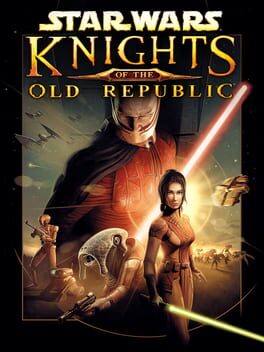
When BioWare first emerged from the fledgling studios of the late 1990s, its signature blend of narrative depth and player agency set a new benchmark for role‑playing games. Titles such as Star Wars: Knights of the Old Republic, the original Mass Effect trilogy, and Dragon Age: Origins not only defined a generation of gamers but also forged a commercial model where story‑driven franchises could thrive alongside multiplayer juggernauts. Over the past three decades the studio has weathered console transitions, the rise of digital distribution, and the relentless pressure to iterate on beloved IPs, yet it has remained a cultural touchstone for core gamers who value immersive world‑building as much as technical polish.
In the broader industry, the announcement of Electronic Arts’ $55 billion acquisition by a consortium of Saudi‑backed investment firms marked a seismic shift in the balance of power among the world’s biggest publishers. The deal, finalized only months ago, signalled an infusion of capital that many expected to accelerate EA’s push into live‑service ecosystems and high‑budget AAA projects. However, the same financial firepower now appears to be redirected, with BioWare’s flagship studio shuttered and the highly anticipated Mass Effect 5 scrapped before a single beta could be shown. This convergence of corporate restructuring and creative termination is reshaping expectations for how legacy studios will survive—or be sacrificed—in an era where shareholder returns often eclipse artistic ambition.
What Happened?
In a terse press release issued early this week, Electronic Arts confirmed the closure of BioWare’s main development hub in Edmonton, citing a “strategic realignment” following the recent ownership change. The statement acknowledged that the studio’s ongoing project—tentatively titled Mass Effect 5—had been cancelled, with the majority of its staff offered relocation packages or severance. While EA’s new investors have emphasized a commitment to “sustaining long‑term franchise health,” insiders suggest that the decision stemmed from a reassessment of the franchise’s profitability trajectory, especially after the mixed reception and sales dip of Mass Effect: Andromeda and the more recent Mass Effect Legendary Edition re‑release.
Developers who have spoken on condition of anonymity revealed that the cancelled sequel had already entered a late‑stage pre‑production phase, with concept art, narrative outlines, and a prototype engine build already in place. The team had been experimenting with a hybrid single‑player and emergent multiplayer structure—a bold attempt to marry BioWare’s storytelling pedigree with the live‑service models that dominate EA’s current portfolio. However, escalating development costs, coupled with the investors’ appetite for quicker ROI, appear to have rendered the project untenable. The announcement also hinted at a possible migration of select talent to other EA studios, though the cultural fit of BioWare’s narrative‑first ethos within those environments remains uncertain.
Analysis
The termination of BioWare’s flagship studio reverberates far beyond a single franchise. Historically, EA has leveraged its extensive catalogue to cross‑promote titles across platforms, but the loss of a core narrative engine like BioWare threatens to erode the company’s diversification strategy. In a market increasingly dominated by live‑service shooters and battle‑royale titles, the absence of a high‑caliber single‑player RPG pipeline could narrow EA’s appeal to the segment of gamers who prioritize story over seasonal content. Moreover, the decision underscores a growing tension between investor‑driven financial engineering and the creative cycles required to nurture deep, story‑rich experiences—a tension that has already manifested in the recent layoffs at other storied studios such as Infinity Ward and Rockstar’s Dundee branch.
From a competitive standpoint, the vacuum left by BioWare may accelerate the rise of independent studios that have been courting disaffected fans with promises of “return to form” RPGs. Companies like Obsidian Entertainment and Larian Studios have demonstrated that mid‑size developers can deliver critically acclaimed, narrative‑heavy experiences without the massive overhead of a studio like BioWare. Additionally, the cancellation of Mass Effect 5 could embolden rivals—particularly Sony’s PlayStation Studios, which has doubled down on exclusive single‑player adventures—to capture market share among players yearning for the next great sci‑fi saga. The strategic calculus for EA now hinges on whether it can repurpose the intellectual property in a way that satisfies both its new investors and the core fanbase, perhaps by licensing the universe to third‑party developers or pivoting to a service‑oriented model that retains the franchise’s lore while monetising it differently.
XPLog Opinion
At XPLog UK we view BioWare’s demise as a cautionary tale of how even the most venerable creative engines can be sacrificed on the altar of short‑term financial engineering. The decision to axe Mass Effect 5 not only alienates a fiercely loyal community but also signals a troubling willingness by EA’s new owners to prune beloved IPs that do not promise immediate, quantifiable returns. While the infusion of Saudi capital promises greater fiscal muscle, it also brings a risk‑averse mindset that may stifle the very innovation that once made BioWare a household name. In an industry where player trust is increasingly hard‑won, we fear that the long‑term health of EA’s portfolio—and indeed the broader console ecosystem—will suffer if narrative‑driven studios are continuously sidelined in favour of quick‑cash live‑service ventures.
Final Thoughts
The closure of BioWare and the cancellation of Mass Effect 5 mark a watershed moment that forces the industry to confront the fragile balance between artistic ambition and shareholder expectations. As EA integrates its new ownership structure over the coming fiscal year, observers should watch for further portfolio realignments, potential licensing deals for the Mass Effect universe, and the emergence of indie titles aiming to fill the narrative void. The next few quarters will reveal whether the market can sustain a renewed focus on story‑centric experiences or if the era of blockbuster live‑service dominance will finally eclipse the golden age of RPG craftsmanship.