
Overview
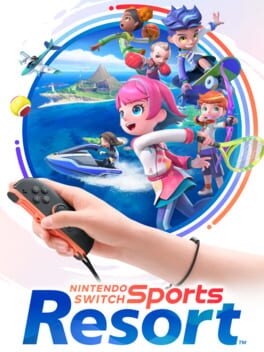
Tomorrow marks the worldwide debut of Nintendo Switch Sports Resort, the eagerly anticipated sequel to the franchise that transformed the Switch’s motion‑control pedigree into a bona‑fide party staple. After a year of iterative refinements, a polished roster of summer‑themed events, and a marketing push that emphasizes both casual accessibility and competitive depth, Nintendo is positioning the title as the centerpiece of its next‑generation holiday lineup. The timing is deliberate: a Q4 launch dovetails with the company’s broader strategy to rejuvenate the Switch ecosystem ahead of the rumored next‑generation hardware, ensuring the platform remains a vibrant hub for multiplayer experiences even as the console ages.
Historically, Nintendo has treated launch‑day patches as a safety net rather than a feature rollout, a practice that dates back to the original Wii’s online infrastructure woes in 2006. With Switch Sports Resort, the stakes are higher because the title’s core selling point is its online multiplayer suite, a departure from the primarily local‑only focus of its predecessor. In the current market, where Sony’s PlayStation 5 and Microsoft’s Xbox Series X|S dominate the online sports niche with titles like FIFA and NBA 2K, Nintendo’s decision to enable robust online modes from day one reflects a strategic pivot toward retaining its community of competitive players while courting newcomers drawn to the ease of motion controls.
What Happened?
In a swift move typical of Nintendo’s launch‑day support, version 1.1.0 of Switch Sports Resort went live alongside the game’s release on 22 October. The update’s headline feature is the activation of all online matchmaking queues, allowing players to dive straight into cross‑regional tournaments, leaderboards, and casual pick‑up games without the usual waiting period for server stabilization. Alongside this, Nintendo introduced a “Mii Frequency Adjuster,” a nuanced quality‑of‑life tweak that lets users dictate how often their custom avatars appear in offline competitive modes, catering to both those who relish personal flair and those who prefer a streamlined visual field.
The patch also bundled a suite of minor bug fixes and performance optimizations, such as reduced latency spikes in the volleyball and beach tennis modes, and a recalibrated motion‑sensor algorithm that addresses the occasional drift reported in early beta builds. While the changes may appear modest on paper, they collectively smooth the launch experience, mitigating the risk of early‑day negative sentiment that can cascade across social platforms and impact long‑term sales trajectories.
Analysis
From a market perspective, the immediacy of the online enablement underscores Nintendo’s recognition that the modern gamer expects seamless connectivity as a baseline feature. By pre‑emptively unlocking these services, Nintendo sidesteps the “launch‑day lag” pitfall that plagued titles like Splatoon 2, where delayed online functionality contributed to a temporary dip in active user counts. Moreover, the Mii Frequency Adjuster, though seemingly cosmetic, hints at Nintendo’s broader data‑driven approach to avatar personalization—a domain where rivals have invested heavily in micro‑transaction ecosystems. By offering granular control without monetisation, Nintendo differentiates itself as a player‑first platform, potentially fostering higher retention among its core demographic.
Strategically, this patch also serves as a litmus test for Nintendo’s server infrastructure ahead of the anticipated next‑gen console rollout. Successful real‑time matchmaking on the current Switch hardware validates the scalability of Nintendo’s online backbone, a crucial factor when competing with the more mature ecosystems of PlayStation Network and Xbox Live. Should the servers handle the surge of global traffic without significant outages, Nintendo will have secured a persuasive argument for developers to prioritize online features in future Switch titles, reinforcing the console’s relevance in an increasingly networked gaming landscape.
XPLog Opinion
XPLog views the 1.1.0 update as a decisive statement: Nintendo is no longer content to treat online play as an afterthought. By delivering a fully functional multiplayer suite on day one, the company signals confidence in its network architecture and a willingness to meet the expectations of a more competitive, esports‑aware audience. This move could catalyse a shift in how Nintendo approaches future sports and party franchises, embedding robust online ladders and seasonal content from the outset rather than retrofitting them post‑launch.
Final Thoughts
As Switch Sports Resort steps onto the global stage, the ver. 1.1.0 patch ensures that the first impressions are unmarred by connectivity hiccups, positioning the game as a benchmark for Nintendo’s evolving online strategy. Players should keep an eye on upcoming seasonal events slated for December and the promised post‑launch content drops, which will further test the durability of Nintendo’s server ecosystem and its ability to sustain an engaged, worldwide community.