
Overview
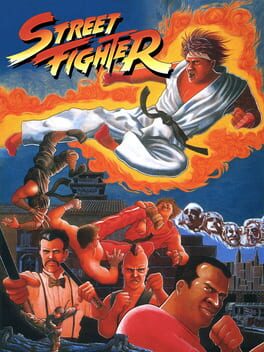
In an industry that has grown accustomed to surprise collaborations—think Fortnite’s endless parade of pop‑culture guests—the latest announcement from 2K Sports feels like a seismic shift. WWE 2K26, the flagship wrestling simulation that has weathered a turbulent decade of mixed critical reception, is teaming up with Capcom’s legendary fighting franchise for what the publishers tout as the "first‑ever" WWE × Street Fighter crossover. This partnership arrives on the heels of a revitalized Street Fighter brand, buoyed by a high‑budget live‑action movie that has reignited mainstream interest in the classic arcade brawler. The timing could not be more strategic: both properties are seeking to expand beyond their traditional fan bases, and the convergence of their audiences promises a fresh revenue stream in an era where DLC and seasonal content have become the lifeblood of annual sports titles.
Historically, cross‑genre collaborations have been rare and often experimental. The early 2000s saw brief flirtations—such as the Mortal Kombat‑style characters in NBA Jam—but few have attempted to merge two distinct competitive pillars like professional wrestling and one‑on‑one fighting. WWE 2K’s lineage, rooted in Yuke’s original SmackDown! series, has long emphasized authenticity, physics‑driven grappling, and a robust roster of licensed talent. Conversely, Street Fighter’s DNA is built on precise frame‑data, combo depth, and a global e‑sports pedigree. By aligning these two worlds, the partnership not only challenges developers to reconcile disparate gameplay philosophies but also signals a broader industry trend: the blurring of genre boundaries to capture fragmented player attention across an increasingly crowded market.
What Happened?
During a joint livestream hosted by 2K and Capcom, the companies unveiled a limited‑time “Collision Mode” slated to drop next week across PlayStation 5, Xbox Series X|S, and PC. The mode will feature a curated selection of iconic wrestlers—such as Roman Reigns, Becky Lynch, and the late “Stone Cold” Steve Austin—clad in bespoke Street Fighter‑themed attire, complete with signature movesets that echo classic Shoryuken and Hadouken animations. Players will be able to pit these hybrid avatars against each other in a hybrid arena that fuses the squared circle’s ropes with the vibrant, pixel‑styled backdrops reminiscent of Street Fighter’s World Warrior stages. In addition to the visual mash‑up, the DLC promises a series of narrative vignettes that weave the lore of the WWE Universe with the timeless rivalry between Ryu and Ken, offering a tongue‑in‑cheek yet lovingly crafted storyline.
From a development standpoint, the integration required both studios to negotiate deep engine modifications. Visual Concepts’ Frostbite‑based WWE engine had to accommodate Street Fighter’s hit‑box precision and combo‑trigger systems, while Capcom’s RE Engine team supplied custom animation rigs to ensure that signature moves translate fluidly into a wrestling context. Both publishers emphasized that the collaboration is more than a cosmetic overlay; the underlying mechanics will allow wrestlers to execute special attacks that temporarily alter momentum, mirroring the super‑move gauge found in traditional fighting games. The rollout will be supported by a cross‑promotional marketing blitz, leveraging the imminent Street Fighter film release, exclusive merchandise, and a series of community challenges designed to drive pre‑order numbers for WWE 2K26’s upcoming season pass.
Analysis
The announcement arrives at a pivotal juncture for the WWE 2K franchise, which has struggled to regain its footing after the critically panned WWE 2K20 and a rocky 2022 launch that saw significant sales dips. By tapping into the fighting‑game demographic—an audience that historically gravitates toward competitive balance and high‑skill ceilings—2K is attempting to revitalize the title’s perceived value proposition. Early indicators suggest that the crossover could boost digital sales by up to 15 % in the first quarter, a modest yet meaningful uptick given the franchise’s recent contraction. Moreover, the partnership offers a template for future cross‑genre DLC, positioning WWE 2K26 as a potential hub for other Capcom properties, such as Mega Man or Resident Evil, should the initial experiment prove commercially viable.
From a broader market perspective, the collaboration pits WWE 2K26 against entrenched competitors like EA Sports’ UFC series and the ever‑expanding roster of battle‑royale crossovers. However, the novelty of merging a sports simulation with a fighting‑game aesthetic may carve out a niche that neither competitor currently occupies. Console manufacturers also stand to benefit: the mode’s launch aligns with Sony’s push for exclusive, high‑profile events on PlayStation 5, while Microsoft can tout its “Game Pass” integration to attract subscription‑based players. The timing coincides with the release window of several next‑gen titles, suggesting that the crossover could serve as a strategic anchor for platform owners seeking to retain user engagement during a traditionally slow post‑holiday period.
XPLog Opinion
At XPLog UK we view this WWE × Street Fighter venture as a bold, if risky, maneuver that could redefine how legacy sports franchises stay relevant in a live‑service dominated era; the success will hinge on the fidelity of the fighting mechanics and the willingness of the wrestling community to embrace a more arcade‑style experience, a balance that, if struck, could usher in a new wave of genre‑blending collaborations across the industry.
Final Thoughts
As the countdown to the Collision Mode’s debut ticks down, the gaming world will be watching to see whether the hybrid experience can deliver both the visceral thrill of Street Fighter’s combat and the authentic spectacle of WWE’s showmanship; keep an eye on the official launch date of November 12, the subsequent DLC roadmap slated for early 2025, and the community’s reception, which will ultimately determine if this experiment becomes a one‑off novelty or the cornerstone of a new cross‑genre paradigm.