
Overview
When Square Enix announced that a new Final Fantasy title would debut exclusively on the yet‑to‑launch Switch 2, the reaction across the JRPG community was a mixture of cautious optimism and nostalgic yearning. The franchise, which has spent the past decade oscillating between high‑budget, cinematic spectacles and mobile‑first experiments, has left a sizable segment of its core audience longing for the stripped‑down, turn‑based combat and narrative depth that defined the series in the 1990s. This longing has been amplified by the broader industry trend of retro‑inspired revivals, from the resurgence of pixel‑art platformers to the resurgence of classic RPG mechanics on modern hardware, creating a fertile ground for a title that promises to bridge the past and the present.
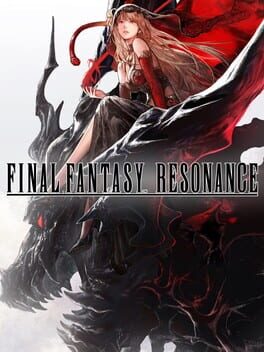
Against this backdrop, Final Fantasy Resonance arrived not merely as a port or a cosmetic overhaul of the long‑defunct mobile gacha title Final Fantasy Brave Exvius, but as a full‑scale reimagining that leverages the Switch 2’s upgraded GPU and SSD‑like storage to deliver a genuine console experience. Square Enix’s development team, led by veterans who cut their teeth on the original Final Fantasy VI and VII, positioned Resonance as a “true‑blue classic” – a phrase that signals both reverence for the series’ heritage and a strategic pivot back toward the core gameplay loop that originally earned the franchise its legendary status.
What Happened?
At the official reveal event streamed from Kyoto, Square Enix showcased a series of gameplay segments that highlighted Resonance’s return to turn‑based combat, complete with a refreshed Job System reminiscent of Final Fantasy V, but augmented by modern AI‑driven enemy behavior. The narrative, while borrowing the broad strokes of Brave Exvius’s storyline—an interdimensional crisis threatening multiple worlds—was rewritten by the studio’s narrative directors to include branching story paths, fully voiced dialogue, and a soundtrack that blends orchestral arrangements with chiptune motifs as an homage to the series’ 16‑bit roots. The announcement also confirmed that the game would launch simultaneously on the Switch 2 and as a cloud‑streamed title for PlayStation 5, indicating Square Enix’s intent to capture both handheld and console markets.
In addition to the core game, Square Enix unveiled a suite of post‑launch support plans: a seasonal content calendar featuring new Job classes, cross‑title events that will tie Resonance into other Square Enix properties like Dragon Quest and the upcoming Final Fantasy XIV expansion, and a “legacy mode” that allows players to toggle classic UI elements and battle speed settings. The developers emphasized that while the game draws inspiration from a mobile predecessor, every asset—from character models to environmental textures—has been rebuilt from the ground up for the Switch 2’s hardware, ensuring that the title stands as a first‑party console experience rather than a repackaged mobile product.
Analysis
From a market perspective, Resonance represents a calculated gamble that could reshape Square Enix’s positioning within the increasingly crowded JRPG segment. By delivering a title that explicitly targets the “old‑school” demographic, the publisher is attempting to recapture a slice of the audience that migrated to indie titles such as Octopath Traveler and Bravely Default when Square Enix’s own releases began to feel more experimental and less faithful to the series’ origins. Moreover, the decision to launch on the Switch 2—a platform that has become the de‑facto home for portable JRPGs—leverages the console’s dominant market share in the handheld space, potentially offsetting the revenue dip caused by the waning popularity of mobile gacha models.
Technical considerations also play a pivotal role. The Switch 2’s improved CPU and GPU capabilities enable Square Enix to implement a more sophisticated AI for enemy encounters, a feature that was previously constrained by the limited processing power of the original Switch. This not only enhances the tactical depth of battles but also aligns with the broader industry shift toward “deep casual” experiences, where accessibility does not preclude strategic complexity. If Resonance can deliver a seamless blend of nostalgic design and modern performance, it may set a new benchmark for how legacy franchises can be revitalized without sacrificing the expectations of contemporary gamers.
XPLog Opinion
At XPLog UK we view Final Fantasy Resonance as a bold, if risky, affirmation that Square Enix still understands the core of its brand: a commitment to storytelling, strategic combat, and a world that feels lived‑in. The move away from a purely mobile‑first strategy toward a console‑centric, heritage‑driven title could re‑energize the franchise’s most vocal fanbase and, if executed with the polish expected of a flagship release, may restore confidence among investors who have watched the company's share price wobble amidst a series of mixed‑reception spin‑offs.
Final Thoughts
Ultimately, Final Fantasy Resonance stands at a crossroads where nostalgia meets next‑gen capability, and its success will hinge on Square Enix’s ability to deliver a product that feels both reverently classic and unmistakably modern. With a launch window slated for Q2 2027 and a roadmap of post‑launch content already outlined, the title will be a litmus test for how legacy publishers can adapt to evolving player expectations while honoring the design philosophies that originally made them household names. Keep an eye on Square Enix’s earnings calls later this year for early indicators of how Resonance is performing across both hardware ecosystems.