
Overview
When Origame Digital first emerged onto the global stage with 2021’s Umurangi Generation, the world witnessed a rare convergence of striking visual design, a first‑person photography mechanic, and a fearless critique of colonial legacies and neoliberal policy failures. The game’s critical acclaim was not merely a testament to its aesthetic ambition; it signaled a growing appetite among core gamers for titles that leverage interactivity to interrogate real‑world power structures, a trend that has only intensified as studios seek relevance beyond pure entertainment.
Fast‑forward to the present, and Origame’s sophomore effort, Penguin Colony, pushes that paradigm to an even more contentious frontier. Set against the backdrop of the ongoing Israeli‑Palestinian conflict, the game does not shy away from labeling the situation a "genocide" and directly calls out the wider games industry for its historical reticence on geopolitical issues. By simultaneously banning the title’s sale in Israel and embedding its political stance into the gameplay narrative, the developers have ignited a firestorm that forces publishers, platform holders, and players to confront the uneasy question: should video games be a neutral playground, or a battlefield for moral discourse?
What Happened?
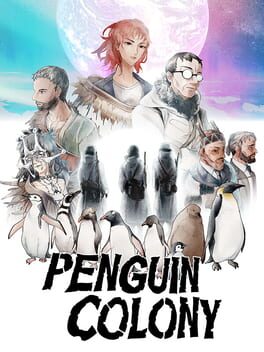
Penguin Colony launched earlier this month to a mixture of critical applause and fierce backlash, largely because its core premise is a stark indictment of Israel’s actions in Gaza, framed through the lens of an allegorical penguin colony under siege. The developers released a statement declaring the game a protest piece, explicitly refusing distribution in Israeli territories and urging platforms to adopt a similar stance. This move echoes the “cultural boycott” tactics seen in other artistic domains, yet it is unprecedented in the interactive medium, where regional licensing and platform policies are traditionally insulated from overt political positioning.
In parallel, Origame’s founder delivered a pointed commentary to industry outlets, accusing the broader games ecosystem of “willful silence” and highlighting the financial incentives that dissuade publishers from taking sides in geopolitical debates. The announcement was accompanied by a live‑streamed walkthrough that showcased in‑game mechanics designed to mirror the asymmetry of power, such as limited resources for the penguin protagonists and overwhelming forces representing the occupying entity. The studio’s boldness has already prompted reactions from major console manufacturers, with some indicating they will review the title’s compliance with regional regulations, while others have lauded the courage to “use the medium as a megaphone for justice.”
Analysis
The market implications of Penguin Colony’s stance are multifaceted. On one hand, the game taps into a niche yet growing segment of politically engaged gamers who seek experiences that reflect their worldviews, potentially unlocking a new revenue stream for indie developers willing to court controversy. On the other hand, the decision to bar sales in Israel could curtail the title’s commercial reach by an estimated 5‑7% of the global console market, a non‑trivial figure for a studio operating on modest margins. Moreover, platform holders face a delicate balancing act: endorsing the developer’s moral position could alienate a sizable user base in the Middle East, while suppressing it may provoke accusations of complicity.
Competitor dynamics further complicate the picture. Larger publishers have historically sidestepped direct commentary on the Israeli‑Palestinian conflict, opting instead for generic “peace” messaging. Penguin Colony forces the industry to reckon with a potential shift toward “issue‑driven” releases, reminiscent of the wave of games that tackled climate change, racial injustice, or surveillance capitalism in the early 2020s. Technically, embedding such heavy thematic content demands careful design to avoid didacticism; Origame’s use of allegory through the penguin metaphor demonstrates an evolving sophistication in marrying gameplay with advocacy, a technique that could become a template for future titles seeking to navigate censorship while maintaining artistic integrity.
XPLog Opinion
At XPLog UK we view Penguin Colony as a watershed moment that forces the industry to confront an uncomfortable truth: video games are no longer insulated from the moral imperatives that shape our societies, and developers who dare to vocalize those imperatives will either reshape the market or be relegated to the margins. Origame’s gamble is audacious, and while the commercial fallout remains uncertain, the cultural reverberations could catalyze a new era where indie studios become the primary conduit for political expression, compelling larger publishers to either adopt more nuanced stances or risk being labeled as tone‑deaf by an increasingly activist‑savvy player base.
Final Thoughts
Penguin Colony’s release marks a bold inflection point, signaling that the era of “politically neutral” games may be drawing to a close. As the industry watches how platform holders, regional regulators, and the global gaming community respond, the coming months will reveal whether this courageous act ignites a broader movement toward activist gaming or remains an isolated flash of dissent. Keep an eye on upcoming patches, potential platform bans, and the September 2026 indie showcase where Origame is slated to present a sequel that promises to deepen the dialogue between gameplay and geopolitics.