
Overview
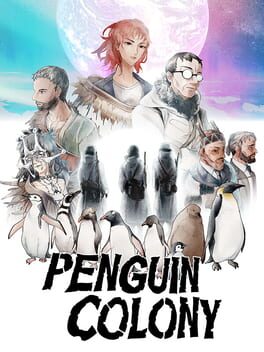
When Origame Digital, the indie studio that earned critical laurels for the photo‑journalistic shooter Umurangi Generation, announced its latest title Penguin Colony, the gaming world expected another atmospheric, narrative‑driven experience. Instead, the studio paired the launch with a decisive geopolitical stance: the game will not be sold in Israel, a move framed as an act of solidarity with the Palestinian people. This decision arrives at a moment when the industry is grappling with the increasing expectation that developers and publishers take public positions on contentious world events, from climate activism to human‑rights campaigns. The backdrop includes a series of high‑profile boycotts and “cancel culture” debates that have reshaped marketing strategies and distribution agreements across consoles, PC storefronts, and mobile platforms.
Historically, the video‑game sector has been reluctant to wade into overt political waters, preferring the safety of escapist titles. Yet the past decade has seen a gradual erosion of that reticence, catalyzed by the rise of socially conscious indie studios and the growing clout of player communities on platforms like Twitter and Discord. In the wake of the 2022 Russian invasion of Ukraine, several developers pulled support for Russian servers, while others introduced in‑game charity events for Ukrainian relief. Penguin Colony’s Israel ban therefore sits within an evolving paradigm where artistic expression and moral positioning intersect, prompting publishers to weigh the potential commercial fallout against brand integrity and audience loyalty.
What Happened?
Origame Digital released an official statement alongside the launch trailer for Penguin Colony, declaring that the game would be unavailable for purchase or download in Israel. The studio framed the restriction as a symbolic gesture, emphasizing that the move is “intended to demonstrate solidarity with Palestine.” No legal injunction or governmental pressure was cited; rather, the decision appears to be a self‑imposed restriction enforced through digital storefronts such as Steam, the Epic Games Store, and console marketplaces. The announcement also noted that the developers would continue to support the game globally, providing regular updates, bug fixes, and community events for all other regions.
From a logistical standpoint, implementing a regional block requires coordination with platform holders, each of which maintains its own compliance and regional licensing frameworks. For instance, Sony’s PlayStation Store and Microsoft’s Xbox Marketplace have historically been cautious about politically motivated bans, preferring to leave such decisions to developers. However, recent precedents—most notably the removal of certain titles from the Chinese market due to censorship demands—have shown that platform operators can and will enforce region‑specific restrictions when presented with clear developer intent. Origame’s ability to secure these blocks across multiple ecosystems underscores both the studio’s growing clout and the maturing infrastructure for granular distribution control.
Analysis
The immediate market impact of the ban is likely modest in pure sales terms; Israel represents a relatively small slice of the global gaming pie, with estimates placing its console and PC market at under 2% of worldwide revenue. Nonetheless, the symbolic weight of the action reverberates far beyond the numbers. By aligning itself with a contentious geopolitical cause, Origame Digital signals to its core audience—a demographic that values authenticity, social consciousness, and artistic risk—that the studio will not shy away from moral positioning. This can translate into heightened brand loyalty among like‑minded players, potentially driving word‑of‑mouth promotion and stronger community engagement in markets that share similar sentiments.
Conversely, the decision may alienate a segment of the global player base that prefers a separation between entertainment and politics. In an industry where platform exclusivity and regional licensing are already complex, adding a political dimension could complicate future negotiations with distributors, especially in regions that view such actions as interference. Moreover, the move may set a precedent that encourages other indie studios to adopt similar bans, leading to a fragmented marketplace where availability is increasingly dictated by political alignment rather than purely commercial considerations. This fragmentation could pressure larger publishers to adopt clearer policies, either to protect their global reach or to capitalize on niche activist markets.
XPLog Opinion
At XPLog UK we view Origame Digital’s stance as a bold, if risky, evolution of the indie developer’s role as a cultural commentator. The studio has leveraged its modest yet passionate fanbase to amplify a humanitarian message without sacrificing the creative integrity of Penguin Colony. While the commercial downside is limited, the long‑term implication is a more politicized distribution landscape where moral positioning becomes a differentiator. Developers who can navigate this terrain thoughtfully may find new avenues for community building, whereas those who ignore the growing expectation for social accountability risk appearing tone‑deaf in an increasingly activist‑driven market.
Final Thoughts
Penguin Colony’s exclusion from the Israeli market marks a noteworthy inflection point, illustrating how even small studios can wield cultural influence through strategic distribution choices. As the industry continues to wrestle with the balance between artistic freedom and geopolitical sensitivity, players and publishers alike should monitor how such decisions affect platform policies, regional licensing norms, and the broader dialogue around games as vehicles for social expression. Keep an eye on Origame’s upcoming post‑launch roadmap—updates, DLC, and community events will reveal whether the solidarity statement translates into sustained engagement or remains a singular, symbolic gesture.