
Overview
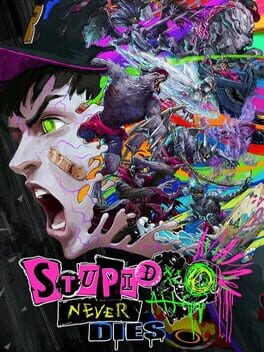
The roguelite landscape on current‑gen consoles has reached a point where new entries are judged not just on mechanical polish but on the ability to carve a distinctive identity amid a sea of procedural generators, bullet‑hell combat, and ever‑expanding meta‑systems. In this climate, a title that adopts a "scribblecore" visual language—hand‑drawn, deliberately chaotic line work that feels as if it were ripped from a fever‑dream sketchbook—immediately signals a willingness to gamble on aesthetic audacity. Stupid Never Dies, the debut action roguelite from Japanese studio GPTRACK50, arrives on PlayStation 5 with a promise to upend the genre’s conventions, leveraging an unhinged narrative that would make even the notoriously eccentric Suda51 crack a grin.
Beyond its visual bravado, the game lands at a moment when Sony’s ecosystem is actively courting both high‑budget exclusives and indie experiments that push the hardware’s capabilities. The PS5’s SSD‑driven loading speeds and haptic feedback have become a sandbox for developers seeking to deliver seamless, fast‑paced runs—an essential component for any roguelite that thrives on rapid death‑and‑retry loops. GPTRACK50’s decision to target this platform signals confidence that their unconventional design can thrive where performance constraints are minimal, and where a community of core gamers is hungry for fresh, risk‑laden experiences that diverge from the polished, formulaic titles that dominate storefronts.
What Happened?
At its core, Stupid Never Dies thrusts players into a grotesquely humorous nightmare where toilets become weapons, monsters are devoured with reckless abandon, and every death is punctuated by a burst of absurdist storytelling. The gameplay loop marries fast, twitchy combat with procedurally generated levels that feel less like recycled tiles and more like a constantly shifting comic strip. Each run presents a new set of challenges, power‑ups, and narrative beats that are delivered through fragmented, tongue‑in‑cheek dialogue, reinforcing the game’s self‑aware, chaotic tone. The aesthetic choices—thick, uneven strokes, neon‑splashed backgrounds, and a soundtrack that oscillates between chiptune frenzy and distorted industrial noise—coalesce into an experience that feels both deliberately raw and technically refined.
GPTRACK50, a studio that has largely operated under the radar of mainstream press, provided a handful of developer comments that hint at a philosophy rooted in creative freedom over market conformity. In interviews, the team emphasized that the title’s narrative absurdity was a conscious reaction to the “seriousness creep” they observed in many modern roguelites, where developers prioritize meta‑progression over visceral fun. The game launched exclusively on PS5, leveraging the console’s DualSense controller to deliver nuanced vibration cues that correspond to the player’s health state and the visceral impact of each weapon swing. While the release window was modest, the studio has signaled an intent to support post‑launch content, hinting at additional character classes and narrative expansions that could further deepen the game’s chaotic lore.
Analysis
From a market perspective, Stupid Never Dies arrives as a counterpoint to the homogenisation that has begun to characterise the roguelite segment. Titles such as Hades, Dead Cells, and Returnal have set high benchmarks for narrative integration and mechanical depth, but they also inadvertently created a template that many subsequent releases have mimicked. By rejecting the polished aesthetic and embracing a deliberately messy visual language, GPTRACK50 positions the game to capture a niche of players who are fatigued by the genre’s predictability. This differentiation could translate into a modest yet sustainable sales trajectory, especially within the PS5’s “indie spotlight” segment where discoverability is often driven by editorial features and community word‑of‑mouth.
Competitor dynamics further illuminate the strategic timing of this launch. While major publishers are gearing up for the next wave of AAA releases, the indie calendar remains relatively open, granting Stupid Never Dies a window to dominate discussion on platforms like PlayStation Blog and streaming services. Technically, the game’s reliance on the PS5’s fast SSD mitigates one of the classic roguelite pain points—long load times between runs—allowing for a fluid, almost arcade‑like experience. However, the game’s idiosyncratic art style may pose a risk in terms of broader market appeal, as mainstream audiences often gravitate toward more conventional graphics. The studio’s commitment to post‑launch support could offset this by continually refreshing the player’s experience, a tactic that has proven effective for titles that maintain relevance through iterative content drops.
XPLog Opinion
At XPLog UK we view Stupid Never Dies as a bold, if polarising, statement that the roguelite genre still has room for genuine artistic rebellion. The game’s willingness to embrace chaos—both in its visual presentation and narrative tone—offers a refreshing antidote to the increasingly formulaic pipelines that dominate indie releases. While it may not achieve blockbuster numbers, its impact lies in reminding developers and players alike that the genre’s heart beats strongest when risk is rewarded with originality. For core gamers seeking a fresh adrenaline rush that feels as much like a comic‑book skit as a hardcore challenge, this title is a must‑play, and its success could inspire a new wave of experimental aesthetics in future releases.
Final Thoughts
Stupid Never Dies stands as a testament to the power of creative daring in an industry that often favours safe iterations. Its debut on PS5 not only showcases the console’s capability to handle fast, procedurally generated experiences but also highlights a market appetite for games that laugh at themselves while delivering tight, unforgiving gameplay. As GPTRACK50 rolls out future content updates and potentially eyes broader platform releases, the title will serve as a barometer for how far the roguelite community is willing to venture beyond the polished norm. Keep an eye on the studio’s announcements over the next few months for DLC roadmaps and possible collaborations that could further cement the game’s cult status.