
Overview
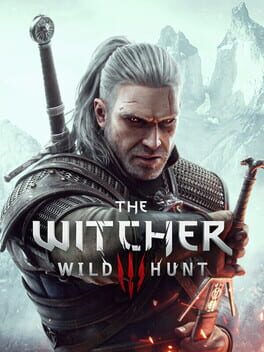
Since its original 2015 launch, The Witcher 3: Wild Hunt has become a benchmark for open‑world design, narrative depth, and technical ambition, cementing CD Projekt Red as a studio capable of delivering blockbuster experiences that rival any first‑party offering. The decision to remaster the title for modern hardware arrived at a time when the industry is witnessing a renaissance of legacy games being reborn for newer consoles, a trend driven by both nostalgic demand and the commercial appeal of extending a franchise’s revenue tail. In this climate, the arrival of Nintendo’s Switch 2—promising a leap in GPU performance, higher bandwidth memory, and a more robust power envelope—has opened a fresh frontier for developers seeking to bring high‑fidelity experiences to a truly portable platform.
CD Projekt Red has been methodical in its post‑launch support for the remaster, releasing a cascade of patches that have gradually refined performance, fixed long‑standing bugs, and introduced quality‑of‑life improvements. The latest iteration, version 5.01, arrives not merely as a routine maintenance update but as a strategic move to align the game with the Switch 2’s upgraded capabilities. By delivering visual clarity enhancements and console‑specific bug squashes, the studio signals its intent to keep The Witcher 3 relevant in an increasingly crowded market where new AAA titles vie for the limited shelf‑space of handheld gamers.
What Happened?
Version 5.01 of The Witcher 3: Wild Hunt – Remastered began rolling out across most regions today, with a pending certification process that will unlock the Japanese market shortly thereafter. The patch notes enumerate a suite of gameplay tweaks—ranging from refined combat hit‑registration to adjusted enemy AI aggression levels—paired with a series of UI refinements that address lingering alignment issues on smaller screens. Crucially for Switch 2 owners, the update promises “visual clarity and fidelity” improvements, a phrase that translates into sharper textures, reduced shimmering, and a more stable frame‑rate that leverages the handheld’s upgraded GPU.
In a brief developer statement, CD Projekt Red emphasized that the Switch 2 build was not a simple port but a dedicated optimization pass that took advantage of the new console’s hardware‑accelerated ray‑tracing support and higher memory bandwidth. While the patch does not push the game to a full 4K resolution—an expectation more realistic on home consoles—it does raise the internal rendering resolution, delivering crisper foliage and more detailed character models without sacrificing the 30‑fps target that the original Switch version struggled to maintain. The studio also confirmed that several launch‑day bugs specific to the Switch 2, such as occasional texture pop‑ins and audio desynchronisation during cutscenes, have been fully resolved.
Analysis
The timing of this patch dovetails with Nintendo’s broader push to position the Switch 2 as a legitimate competitor to the Xbox Series X|S and PlayStation 5 within the portable sector. By bolstering a marquee title like The Witcher 3, CD Projekt Red not only extends the commercial lifespan of its own IP but also enriches the Switch 2’s launch library—a critical factor in early‑adopter purchasing decisions. The incremental sales boost from players who previously hesitated due to performance concerns could be non‑trivial, especially as the handheld market continues to fragment between premium devices and budget‑friendly alternatives.
From a technical standpoint, the update showcases the growing sophistication of cross‑platform development pipelines. The shift from a static, console‑agnostic build to a hardware‑aware optimisation layer reflects industry best practices seen in titles such as Elden Ring and Horizon Forbidden West, where studios allocate dedicated engineering resources to squeeze out every frame of performance on less powerful platforms. This approach also hints at a future where post‑launch patches become a vehicle for delivering “next‑gen” visual upgrades without the need for a full sequel, a model that could reshape how publishers monetize long‑tail support.
XPLog Opinion
At XPLog UK we view CD Projekt Red’s Switch 2‑focused patch as a masterstroke of audience‑centric stewardship: it respects the expectations of handheld purists while reinforcing the studio’s reputation for post‑release dedication. However, the move also raises a cautionary flag about the sustainability of continual patch‑driven enhancements; developers must balance the allure of incremental visual upgrades against the risk of diluting the brand’s core experience with perpetual micro‑tweaks that can overwhelm the player base.
Final Thoughts
Patch 5.01 positions The Witcher 3: Wild Hunt – Remastered as a flagship title for the Switch 2, demonstrating that even a three‑year‑old game can be refreshed to meet modern handheld standards. As the certification process clears Japan and further regional rollouts proceed, the industry will be watching closely to see whether this strategy sparks a wave of similar high‑profile updates for other legacy franchises, potentially redefining the lifecycle of AAA games in the portable arena.