
Overview
When Nihon Falcom first announced its ambition to resurrect the Legend of Heroes franchise for modern hardware, the industry took note. The original Trails in the Sky, launched on the PlayStation Portable in 2004, became a cult classic thanks to its intricate world‑building, memorable characters, and a combat system that rewarded strategic planning. Fast‑forward to 2023, Falcom delivered a ground‑up remake of the first chapter on the original Nintendo Switch, an effort that not only refreshed the visual palette with full 3D models but also introduced a suite of quality‑of‑life improvements—dynamic lighting, rebalanced difficulty, and an optional auto‑save that lowered the entry barrier for newcomers while preserving the depth beloved by veterans.
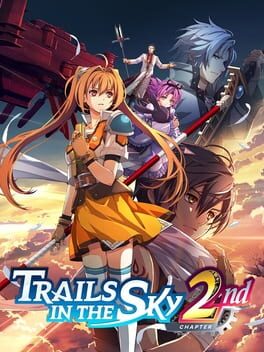
The sequel, Trails in the Sky 2nd Chapter, arrives as a Switch 2‑exclusive “2nd Edition,” positioning itself at the intersection of nostalgia and next‑gen ambition. This release comes at a pivotal moment for Nintendo, whose Switch family is transitioning to a more powerful hardware iteration that promises higher frame rates, ray‑traced effects, and expanded storage. Within this ecosystem, Falcom’s decision to double‑down on a premium remake signals confidence that classic JRPGs can thrive alongside the platform’s ever‑growing indie and first‑party line‑up, while also catering to a demographic that has matured alongside the series over the past two decades.
What Happened?
During a streamed showcase at the Tokyo Game Show, Falcom revealed that Trails in the Sky 2nd Chapter will launch on the Switch 2 on November 21, 2026, as a “2nd Edition” that leverages the console’s upgraded GPU to render the game at a native 60 fps in 1080p resolution. The publisher highlighted several technical upgrades: fully realized character models that replace the original 2D sprites, a reworked lighting engine that casts dynamic shadows across Orbal Academy’s courtyards, and an optional “Performance Mode” that prioritizes frame stability for competitive speed‑run communities. In addition, the title will ship with a downloadable content (DLC) bundle that adds a “Legacy Gallery,” showcasing concept art from the 2004 original and a behind‑the‑scenes documentary featuring Falcom’s veteran designers.
Beyond visual fidelity, Falcom has promised a deeper narrative experience, noting that the sequel’s script has been expanded by roughly 15 percent to explore darker political undercurrents that were merely hinted at in the original. Combat has been fine‑tuned with a new “Tactical Stance” system, allowing players to switch between offensive and defensive postures on the fly, a feature that mirrors the evolution seen in recent Square Enix titles such as *Final Fantasy VII Remake*. Quality‑of‑life enhancements include an overhauled menu hierarchy, faster load times thanks to the Switch 2’s SSD, and a cloud‑save integration that synchronizes progress across handheld and docked play, ensuring that the franchise’s long‑term fans can pick up where they left off without friction.
Analysis
The decision to release a high‑budget remake on Nintendo’s upcoming hardware is a calculated gamble that could reshape Falcom’s market positioning. Historically, the studio has relied on the PC and PlayStation ecosystems to reach Western audiences, with titles like *Ys* and *The Legend of Heroes* finding niche success through digital storefronts. By aligning with Nintendo—a platform that commands a broader, family‑oriented user base—Falcom stands to capture a segment of gamers who may have missed the original releases but are now seeking deeper, story‑driven experiences on a console that supports both couch and portable play. This move also places Falcom in direct competition with Square Enix’s own remake strategy, potentially forcing the larger publisher to reassess its pricing and feature parity to maintain relevance in the premium JRPG space.
From a technical perspective, the Switch 2’s hardware leap offers Falcom an unprecedented canvas to finally realize the ambitious scope envisioned for the original 2004 title. However, the transition is not without challenges; the development team must balance the desire for cinematic fidelity with the console’s power envelope, especially given Nintendo’s historically conservative approach to third‑party performance optimization. Successful execution could set a new benchmark for how legacy Japanese RPGs are ported to modern hardware, encouraging other studios to revisit their back catalogs with confidence that the platform can deliver both visual grandeur and the precise timing required for turn‑based combat systems.
XPLog Opinion
At XPLog UK we view Falcom’s Switch 2 edition as a watershed moment for the genre: it proves that a meticulously crafted remake can be more than a nostalgic cash‑grab—it can be a catalyst that revitalises a franchise, expands its audience, and pushes a console manufacturer to elevate its support for complex, narrative‑heavy titles. If the performance targets are met and the additional content feels substantive rather than filler, Trails in the Sky 2nd Chapter could become the gold standard for future JRPG remasters, compelling both publishers and hardware partners to invest in deeper, longer‑term collaborations.
Final Thoughts
In sum, Trails in the Sky 2nd Chapter on Switch 2 represents a convergence of Falcom’s storied legacy, Nintendo’s next‑gen aspirations, and a market hungry for high‑quality RPG experiences that honor their roots while embracing modern technology. Players should keep an eye on the pre‑order window opening in early October, with a possible demo slated for the upcoming Nintendo Direct in December, which will give a clearer picture of how the upgraded engine handles the series’ signature blend of storytelling and strategic combat.