
Overview
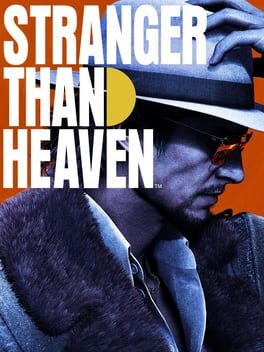
When RGG Studio—formerly the celebrated team behind the Yakuza franchise—announced a 2027 release titled Stranger Than Heaven, the industry collectively braced for something both audacious and enigmatic. The game arrives at a moment when the PlayStation 5 ecosystem is entering its twilight, yet still commands a massive install base eager for fresh, console‑exclusive experiences. By positioning the title as a five‑era saga that traverses the tumultuous decades from 1915 to 1965, the studio signals an ambition to blend cinematic storytelling with the kind of meticulous world‑building that has become a hallmark of Japanese narrative‑driven titles.
Stranger Than Heaven’s premise—an intergenerational odyssey set against the backdrop of a rapidly modernising Japan—taps into a broader resurgence of historically grounded games that aim to educate as much as they entertain. Recent successes such as Ghost of Tsushima and Lost Judgment have demonstrated a market appetite for period pieces that marry authenticity with stylised action. RGG’s decision to anchor the opening act in Kokura, 1915, not only offers a fresh geographical focus away from the usual Tokyo or Kyoto locales but also aligns with a growing curiosity among gamers for lesser‑explored chapters of Asian history. The deep‑dive trailer, released on YouTube, serves as both a narrative hook and a technical showcase, hinting at a layered experience that could redefine how multi‑era storytelling is handled on current hardware.
What Happened?
The newly unveiled trailer plunges players into the first act, where a young protagonist named Makoto Daito clandestinely boards the vessel of a shadowy figure known only as Orpheus. The cinematic sequence paints Kokura’s 1915 port as a bustling crossroads of trade, espionage, and cultural exchange, setting the stage for Makoto’s reluctant voyage. As the ship cuts through mist‑laden waters, the camera lingers on period‑accurate architecture, lantern‑lit streets, and the palpable tension of a nation on the brink of transformation. The narration, coupled with a hauntingly original score, underscores the stakes: Makoto’s journey will be defined by harsh realities and life‑changing encounters that reverberate throughout the subsequent eras.
Beyond the narrative beats, the trailer teases gameplay mechanics that blend stealth, dialogue‑driven decision‑making, and a surprising musical element—Snoop Dogg’s cameo as a wandering bard whose verses echo the city’s undercurrents. This unexpected collaboration hints at a hybrid approach where hip‑hop rhythms intersect with early‑20th‑century Japanese folklore, offering players a unique auditory texture that could become a signature motif for the series. Visually, the engine showcases ray‑traced lighting that captures the flicker of oil lamps against the night sky, while the character models exhibit a level of detail reminiscent of the latest Yakuza entries, suggesting that RGG has refined its proprietary technology to meet the demands of a multi‑era canvas.
Analysis
From a market perspective, Stranger Than Heaven arrives at a crossroads where narrative‑driven exclusives are fighting for relevance against live‑service juggernauts. By anchoring its launch on the PS5, Sony gains a title that can draw both long‑time fans of RGG’s storytelling pedigree and newcomers intrigued by the era‑spanning concept. The inclusion of a global music icon like Snoop Dogt underscores a strategic push to broaden the title’s cultural reach, potentially opening avenues for cross‑media promotion and soundtrack sales—a revenue stream increasingly vital for premium releases. Moreover, the game’s structure—five distinct periods each with its own aesthetic and mechanical nuances—positions it as a modular product that could sustain post‑launch content through era‑specific DLC, mirroring the successful episodic model employed by titles such as The Witcher 3.
Technically, delivering five historically divergent worlds on a single console generation presents a formidable challenge. RGG Studio must balance high‑fidelity assets with memory constraints, especially when rendering intricate period‑specific environments that demand unique lighting, weather, and crowd simulations. Early footage suggests the studio has leaned on a hybrid streaming system, pre‑loading assets in the background as players transition between eras—a technique that, if perfected, could set a new benchmark for next‑gen open‑world performance. However, any misstep in load‑times or visual fidelity could fracture immersion, a risk that will be scrutinised heavily given the high expectations set by recent Sony first‑party releases.
XPLog Opinion
At XPLog UK we view Stranger Than Heaven as a bold declaration that narrative ambition can still command the spotlight in an age dominated by multiplayer ecosystems. RGG’s willingness to gamble on an unconventional protagonist, a historically rich setting, and a genre‑blending soundtrack signals a confidence that the core gaming audience craves depth over dopamine spikes. Should the title deliver on its promises, it will not only reinforce Sony’s reputation for curating distinctive single‑player experiences but also rejuvenate the market for period‑driven adventure games, encouraging other studios to explore untapped chapters of world history.
Final Thoughts
Stranger Than Heaven’s Act 1 trailer offers more than a glimpse of a single storyline; it showcases a meticulously crafted vision that could reshape how developers approach temporal storytelling on console hardware. With a projected release window in late 2027, the industry will be watching closely for further reveals, especially regarding how the remaining eras will interlock and whether the ambitious technical solutions hinted at will hold up under real‑world scrutiny. Keep an eye on Sony’s upcoming State of Play in early 2027 for the next tranche of information, and prepare for a title that may well become a landmark in the evolution of narrative‑driven gaming.