.png)
Overview
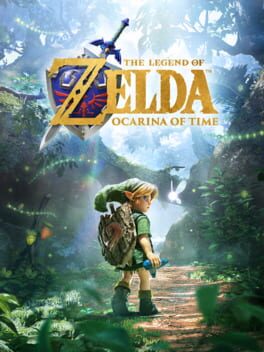
When Nintendo unveiled The Legend of Zelda: Ocarina of Time for the Nintendo 64 in 1998, the industry was on the cusp of a seismic shift from 2D sprites to fully realized 3D worlds. The title didn’t merely arrive; it arrived as a cultural moment, setting a new benchmark for narrative pacing, environmental storytelling, and musical composition. Critics lauded its seamless blend of puzzle‑box dungeons, a time‑travel mechanic that felt both revolutionary and intuitively grounded, and a score that has since become synonymous with the very idea of adventure. Yet beyond the accolades and the record‑shattering Metacritic score, Ocarina of Time cultivated a quiet, almost reverent space within the living rooms of a generation that grew up alongside the early days of console gaming.
For many of those early adopters, the game was more than a milestone; it was a sanctuary. In the summer of 2005, a seven‑year‑old writer lost his father, an event that shattered the familiar scaffolding of his world. The following winter, the same child retreated to his Nintendo 64, cartridge in hand, and found in Hyrule a refuge where grief could be processed in a language he understood. The act of guiding Link through the Lost Woods, listening to the haunting melody of the Ocarina, and confronting the looming darkness of Ganondorf became a ritual of emotional catharsis. This personal narrative, now resurfacing on Nintendo Life, underscores a broader truth: the most celebrated games often double as therapeutic tools, a fact the industry has only begun to acknowledge in recent years.
What Happened?
The original feature, penned by a veteran of both gaming and personal loss, recounts how the act of playing Ocarina of Time transformed a raw, unprocessed sorrow into something manageable. The author describes the tactile sensation of inserting the cartridge, the warm glow of the CRT television, and the way each musical cue seemed to echo the rhythm of his own heartbeat. By aligning the in‑game milestones—collecting the Spiritual Stones, pulling the Master Sword from its pedestal—with his own emotional checkpoints, the young player forged a parallel narrative that allowed him to confront his grief without the need for words that felt too heavy to utter.
While the piece is deeply personal, it also highlights a structural brilliance in Nintendo’s design that makes such moments possible. The game’s open‑ended exploration, its lack of punitive difficulty spikes, and its emphasis on discovery over combat create a low‑stress environment where players can linger, reflect, and return at their own pace. Moreover, the Ocarina itself functions as an early example of player‑driven audio interaction, turning music into a mechanic that can soothe, signal, or summon—mirroring how a child might use a lullaby to calm an anxious mind. The article therefore serves as both a memoir and a case study in how intentional game design can inadvertently become a conduit for emotional resilience.
Analysis
From a market perspective, Ocarina of Time’s enduring relevance illustrates a key trend in the industry: legacy titles are increasingly leveraged as long‑term brand assets that extend beyond pure nostalgia. Nintendo has capitalized on this by re‑releasing the game on multiple platforms—from the Wii Virtual Console to the Switch Online service—thereby keeping the emotional connection alive for new cohorts of players while monetising the nostalgia of older fans. This strategy dovetails with a broader shift toward “games as cultural heritage,” where titles are preserved not merely for their gameplay but for their sociocultural impact, a notion that academic circles are now exploring under the banner of game studies.
Technically, Ocarina of Time pioneered several systems that have become industry staples: lock‑on targeting, context‑sensitive actions, and a dynamic audio engine that reacts to player input. These innovations have been iterated upon by competitors, from Sony’s Horizon series to Microsoft’s upcoming open‑world adventures, each borrowing the core philosophy of using gameplay as an emotional conduit. The article’s emphasis on personal healing underscores a market reality—players are seeking experiences that offer more than escapism; they want games that acknowledge their lived realities. As a result, we can anticipate a rise in titles that embed therapeutic design principles, a movement that may soon see formal collaborations between developers and mental‑health professionals.
XPLog Opinion
At XPLog UK we view the resurgence of stories like this as a clarion call for the industry to double‑down on empathy‑driven design. Nintendo inadvertently set a benchmark with Ocarina of Time: a game that, while engineered for fun, also possessed the quiet gravitas to become a personal sanctuary. Future flagship releases should deliberately embed moments of reflection, optional narrative beats that allow players to process rather than merely progress. In an era where live‑service models dominate, the risk is that constant churn erodes the contemplative space that made Ocarina of Time a refuge. Developers who remember that a cartridge can be a lifeline will not only win critical acclaim but also foster a loyal, emotionally invested community.
Final Thoughts
The seven‑year silence between the loss of a parent and the rediscovery of Ocarina of Time is a poignant reminder that games can be far more than entertainment—they can be vessels for healing, memory, and identity. As the industry continues to evolve, titles that honor this duality will stand out, shaping both market dynamics and player expectations. Keep an eye on upcoming releases that tout "emotional accessibility" and the next wave of Nintendo Switch Online additions, which promise to re‑introduce classic experiences to a new generation seeking both adventure and solace.