.png)
Overview
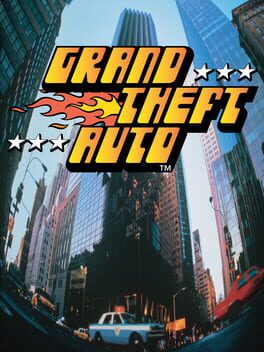
When Liquid Swords, a modest studio hailing from Gothenburg, announced Samson in early 2024, the industry buzzed with the familiar promise of a fresh take on the open‑world crime genre. The game’s premise—an underdog protagonist wrestling with crushing debt, rag‑tag automobiles, and a desperate rescue mission for his sister—tapped into the gritty, narrative‑driven roots that made titles like Grand Theft Auto a cultural touchstone. Yet the timing of its debut placed it squarely against a crowded calendar dominated by heavyweight releases from both legacy publishers and next‑gen indie powerhouses, all vying for the dwindling attention spans of players saturated with streaming content and live‑service ecosystems.
Sweden’s game development scene, historically fertile with studios that have punched well above their weight—think DICE, Starbreeze, and Paradox Interactive—has cultivated a reputation for marrying high production values with innovative design. Liquid Swords entered this lineage hoping to leverage the nation’s strong support infrastructure, including tax incentives and a collaborative indie network. However, the broader market reality in 2024 has shifted dramatically: funding pipelines favor games that can guarantee rapid post‑launch monetisation, while platform holders increasingly reward titles that can sustain player engagement through regular updates. Samson’s launch, therefore, arrived at a moment when the margin for error for a mid‑budget, open‑world project had narrowed to almost nothing.
What Happened?
Samson launched to a chorus of mixed reactions, with critics and players alike highlighting a core concept that felt promising but was hampered by a litany of technical shortcomings. The world, while ambitious in scale, suffered from frequent frame‑rate drops, collision glitches, and a combat system that felt unpolished compared to the tight, responsive mechanics expected of modern beat‑em‑ups. Early patches attempted to address the most glaring bugs—optimising physics calculations, refining AI path‑finding, and smoothing out vehicle handling—but the iterative fixes arrived too slowly to reverse the initial wave of negative sentiment that had already impacted sales momentum.
Within six months of launch, the studio’s financial health began to unravel. Revenue streams fell short of the break‑even point projected in their original business plan, a shortfall compounded by the cost of post‑launch support and a lack of a robust publisher partnership to underwrite ongoing development. In a terse statement filed with the Swedish Companies Registration Office, Liquid Swords cited “insufficient cash flow and an inability to secure additional funding” as the primary drivers behind the bankruptcy filing. The announcement sent ripples through the European indie community, prompting a broader conversation about the sustainability of high‑ambition projects that lack the safety net of a major publisher.
Analysis
The Samson episode underscores a growing tension in the indie sector: the allure of open‑world design versus the harsh economics of delivering a technically stable product at scale. Historically, open‑world titles have demanded extensive resources for world‑building, testing, and optimisation—a reality that studios like Rockstar and Ubisoft have managed through deep pockets and large, specialised teams. When a studio of Liquid Swords’ size attempts to emulate that formula, the risk of under‑delivering becomes magnified, especially in a market where players expect a near‑seamless experience from day one. The fallout from Samson illustrates how a single, high‑profile misstep can cascade into financial ruin, eroding investor confidence and making future funding prospects even more elusive for the developers involved.
From a platform perspective, Samson’s failure also highlights the delicate balance console manufacturers must strike when curating indie libraries. Both PlayStation and Xbox have positioned themselves as championing indie creativity, yet the commercial realities of shelf space and algorithmic recommendation systems mean that titles that falter early can quickly disappear from visibility. This creates a feedback loop where only the most polished indie releases receive sustained promotional support, while others—regardless of artistic merit—are left to languish. The liquidation of Liquid Swords may prompt platform holders to re‑evaluate their risk‑sharing models, perhaps offering more structured post‑launch assistance or co‑development arrangements to mitigate similar outcomes.
XPLog Opinion
At XPLog UK we view the Samson saga as a stark reminder that ambition must be tempered with pragmatic execution. The industry’s current appetite for expansive, narrative‑driven experiences does not excuse a lack of technical polish, especially when the consumer base is increasingly unforgiving. Studios should consider scaling their visions to match their resources, or alternatively, seeking strategic partnerships that can provide the engineering depth required for open‑world ambitions. In the long run, the health of the indie ecosystem depends on a realistic appraisal of what can be delivered within a given budget, and on platforms offering safety nets that prevent a single commercial stumble from erasing years of creative labor.
Final Thoughts
Liquid Swords’ bankruptcy serves as both a cautionary tale and a catalyst for industry introspection. As the next wave of indie studios prepares to launch their own open‑world experiments, the lessons from Samson—rigorous QA, realistic scope, and diversified funding—will be indispensable. Observers should keep an eye on upcoming announcements from European funding bodies and console partners, as any shift toward more collaborative development models could reshape how ambitious indie projects are financed and supported in the years ahead.