.png)
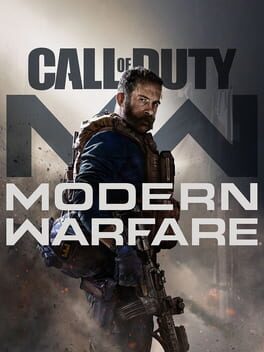
Overview
Activision’s decision to ship Call of Duty: Modern Warfare IV on Nintendo’s freshly unveiled Switch 2 marks a watershed moment for both the franchise and the handheld market. For years the series has been synonymous with high‑octane, graphically demanding experiences that have traditionally found a home on the most powerful home consoles and PCs. By targeting the Switch 2—a device that merges Nintendo’s portable pedigree with Nvidia’s next‑gen Tegra‑X1+ architecture—Activision is signaling confidence that the portable console’s performance envelope has finally expanded enough to accommodate a true‑to‑core Call of Duty experience without sacrificing the series’ signature fidelity.
The timing could not be more strategic. The modern FPS landscape is increasingly fragmented, with next‑generation consoles pushing 4K/120 Hz pipelines while PC gamers chase ray‑tracing and AI‑driven upscaling. Nintendo, meanwhile, has been rebuilding its brand relevance after the Switch’s eight‑year reign, and the Switch 2’s promise of higher bandwidth memory, a more robust GPU, and dedicated AI cores offers a tangible technical leap. Embedding advanced upscaling technologies directly into the game’s graphics settings not only showcases the hardware’s capabilities but also sets a new benchmark for how handheld titles can negotiate the classic trade‑off between resolution and performance.
What Happened?
During a pre‑launch showcase, Activision revealed that Modern Warfare IV’s Switch 2 build will feature two distinct upscaling pathways hidden within the graphics menu. The first leverages Nvidia’s Deep Learning Super Sampling (DLSS), a machine‑learning‑driven algorithm that reconstructs higher‑resolution frames from a lower‑resolution render target, effectively delivering near‑native image quality while preserving frame‑rate headroom. The second option is an in‑house anti‑aliasing solution dubbed “Filmic SMAA T2X,” a hybrid technique that combines Subpixel Morphological Anti‑Aliasing (SMAA) with temporal supersampling, aiming to smooth jagged edges without the heavy GPU load of traditional supersampling.
Players who pre‑ordered the title are granted early access to the full single‑player campaign, a move that mirrors Activision’s broader “early access” strategy employed on other platforms. This early window not only fuels community hype but also provides a valuable data set for the studio to fine‑tune the upscaling implementations based on real‑world performance metrics before the full multiplayer launch slated for 23 October. The dual‑option approach empowers users to prioritize either the AI‑enhanced clarity of DLSS or the more predictable, CPU‑light Filmic SMAA T2X, depending on personal preference and the specific hardware revision of their Switch 2 unit.
Analysis
The inclusion of DLSS on a handheld console is a clear indicator that Nvidia’s AI pipeline is maturing beyond the confines of high‑end PCs and now serves as a differentiator for next‑gen portable devices. Historically, Nintendo’s handhelds have relied on fixed-function upscalers or simple bilinear filters, limiting the visual ambition of third‑party titles. By integrating DLSS, the Switch 2 positions itself as a viable platform for AAA developers who previously dismissed the handheld market as a technical dead‑end. This could catalyze a wave of high‑fidelity ports, compelling competitors like Sony’s PlayStation Vita successor or emerging cloud‑gaming handhelds to accelerate their own AI‑upscaling solutions.
From a market perspective, Activision’s gamble pays dividends on multiple fronts. First, it expands Call of Duty’s audience to Nintendo’s massive install base, which historically skews younger and family‑oriented. Second, the dual upscaling model serves as a live A/B test for future titles, offering concrete performance data that could inform the studio’s broader engine roadmap, especially as Infinity Ward continues to refine its in‑house rendering pipeline. Finally, the decision to split the upscaling responsibilities—outsourcing AI to Nvidia while retaining a proprietary anti‑aliasing path—reflects a pragmatic risk‑mitigation strategy, ensuring that even if DLSS encounters compatibility hiccups, the game retains a fallback that preserves visual integrity.
XPLog Opinion
At XPLog UK we view the Switch 2’s dual‑upscaling arsenal as a decisive moment that could redraw the competitive map of portable gaming; it signals that the era of “graphically light” handheld experiences is ending, and that publishers willing to invest in sophisticated rendering pipelines will reap both critical acclaim and commercial upside. Modern Warfare IV’s bold stride onto the Switch 2 not only validates the console’s hardware ambitions but also forces the industry to reckon with AI‑driven scaling as a baseline expectation rather than a premium feature.
Final Thoughts
In sum, the marriage of Call of Duty’s blockbuster pedigree with the Switch 2’s AI‑enhanced graphics pipeline suggests a future where flagship franchises can comfortably span the console spectrum without compromise. As the full multiplayer launch approaches, observers should monitor frame‑rate stability across both upscaling modes, community sentiment on visual fidelity, and any subsequent announcements from other AAA studios eyeing the Switch 2 as a launch platform. The coming weeks will reveal whether this technical gamble reshapes handheld expectations or remains an isolated experiment.