.png)
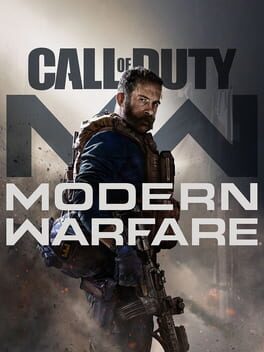
Overview
Thirteen years have passed since a Call of Duty title ever graced a Nintendo system – the ill‑fated Ghosts on the Wii U marked the last time the franchise stepped onto Nintendo hardware. In the intervening decade, Nintendo has reinvented its portable strategy, moving from the modestly powered Wii U to the wildly successful Switch, and now teasing a second‑generation Switch that promises a dramatic leap in GPU and CPU capability. This evolution arrives at a moment when the console wars are increasingly defined by cross‑play, subscription ecosystems, and the appetite for premium first‑person shooters on every platform, making the arrival of Modern Warfare 4 on the upcoming Switch 2 a headline that reverberates far beyond a simple port.
Activision’s decision to align the launch of Modern Warfare 4 with the Switch 2’s debut is not merely a marketing coincidence; it reflects a broader industry trend where publishers are compelled to treat handhelds as first‑class targets rather than afterthoughts. Microsoft’s recent multi‑year agreement to bring flagship titles to Nintendo consoles has already softened the historic divide between Xbox‑centric shooters and Nintendo’s family‑friendly image. The new partnership signals a willingness to invest resources into optimizing a technically demanding franchise for a platform that historically lagged behind in raw horsepower, suggesting that Nintendo’s hardware roadmap is finally catching up to the expectations of core gamers.
What Happened?
At a joint press event streamed from both Nintendo’s Tokyo headquarters and Activision’s Los Angeles studio, the companies confirmed that the full single‑player campaign of Call of Duty: Modern Warfare 4 will launch on the Switch 2 simultaneously with its PlayStation 5, Xbox Series X|S, and PC releases. According to the announcement, the campaign will run at a native 1080p resolution when docked, scaling down to 720p in handheld mode, with a target of 30 fps that can be boosted to 60 fps via a performance mode. The developers emphasized that the port is not a stripped‑down “day‑one patch” but a purpose‑built build that leverages the Switch 2’s upgraded NVidia‑based GPU and the new ARM‑centric CPU architecture to retain the series’ signature cinematic set‑pieces and AI‑driven narrative pacing.
While the campaign is confirmed, Activision clarified that the traditional multiplayer suite – including Warzone, competitive ladders, and the expansive seasonal map rotation – will arrive in a staggered fashion, with a beta rollout slated for early 2027. This phased approach mirrors the strategy employed on previous console generations, where network infrastructure and server load considerations dictated a delayed multiplayer debut on less‑tested hardware. Nonetheless, the company pledged “full parity” within six months of launch, promising that the Switch 2 owners will ultimately experience the same suite of modes, cross‑play functionality, and post‑launch content as their console and PC counterparts.
Analysis
The immediate market implication is clear: Nintendo is positioning the Switch 2 as a viable platform for AAA shooters, a category historically dominated by Sony and Microsoft. By securing a marquee title like Modern Warfare 4, Nintendo can attract a segment of the core gamer demographic that has long dismissed the Switch as a “casual” device. Early sales data from previous Switch‑exclusive blockbusters showed that a strong launch title can catalyze a surge in hardware demand; extrapolating from that pattern, a successful Modern Warfare 4 launch could translate into a measurable uptick in Switch 2 pre‑orders, especially among players who favor competitive multiplayer but have been reluctant to invest in a high‑cost console.
From a competitive standpoint, the move also pressures Sony and Microsoft to reaffirm their own handheld strategies – a space they have largely abandoned in favor of cloud gaming. If the Switch 2 can deliver a stable 30‑fps experience with minimal visual compromise, it could set a new benchmark for portable FPS performance, forcing rivals to either accelerate their own hardware refresh cycles or double down on streaming solutions. Moreover, the staggered multiplayer rollout hints at a cautious but ambitious approach to server infrastructure, suggesting that Activision is willing to allocate dedicated resources to ensure low‑latency matchmaking on a hybrid console, a technical hurdle that has historically plagued cross‑platform releases.
XPLog Opinion
At XPLog UK we view the Modern Warfare 4 Switch 2 debut as a watershed moment that finally validates Nintendo’s claim to be a “hardcore‑friendly” platform. The decision to invest in a full‑scale campaign build, rather than a token port, demonstrates a maturing relationship between Activision and Nintendo that could usher in a new era of first‑person shooters on handhelds. While the delayed multiplayer launch is understandable, it also underscores the importance of patience from the community; the real test will be whether the post‑launch support lives up to the promise of parity, and whether Nintendo can sustain the server performance required for a truly competitive experience.
Final Thoughts
Modern Warfare 4’s arrival on the Switch 2 marks more than a simple platform extension – it is a strategic inflection point that could reshape the shooter market’s hardware hierarchy. Players should keep an eye on the official launch window slated for Q4 2026, the subsequent multiplayer beta in early 2027, and the promised full multiplayer parity by mid‑2027. If Nintendo and Activision deliver on these milestones, the Switch 2 may well become the first truly hybrid console capable of marrying AAA shooter fidelity with on‑the‑go portability, redefining where and how core gamers choose to play.