.png)
Overview
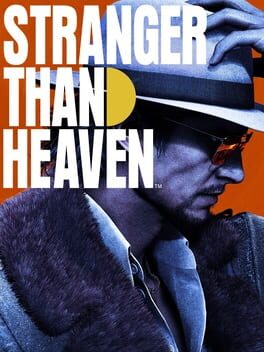
Ryu Ga Gotoku Studios, the creative engine behind the long‑running Yakuza and Like a Dragon franchises, is preparing to launch a daringly different narrative venture titled Stranger Than Heaven. The title positions itself as a quasi‑prequel that stretches over half a century, following the fictional immigrant Makoto Daito as he traverses Japan from the early Taishō era through the post‑war boom. By anchoring the story in real‑world locations such as Kokura, Kure and Shinjuku, the studio is attempting to fuse its trademark crime‑drama sensibility with a sweeping historical epic, a move that signals a broader ambition to diversify the franchise’s thematic palette.
At a time when the industry is witnessing an influx of cross‑cultural collaborations—think of the recent surge in games that blend Western music icons with Eastern storytelling—RGG’s decision to enlist hip‑hop legend Snoop Dogg as a narrative catalyst feels both calculated and culturally resonant. The inclusion of a figure like Snoop, playing the enigmatic Orpheus, dovetails with a growing appetite among core gamers for unexpected mash‑ups that challenge genre conventions while expanding market reach into music‑driven demographics.
What Happened?
The latest story trailer, dubbed “Act 1: Kokura Story Trailer,” drops viewers into 1915 Kokura, where a wide‑eyed Makoto Daito steps off a massive ocean liner with a single, audacious goal: to master English and secure a foothold in an unfamiliar land. The visual narrative quickly pivots when Makoto encounters Orpheus, portrayed by Snoop Dogg, who offers to teach him the rhythm and cadence of rap as a metaphor for navigating a new cultural landscape. The sequence blends period‑accurate architecture with stylised, graffiti‑infused set pieces, underscoring the game’s willingness to juxtapose historical fidelity with contemporary artistic flair.
Beyond the rap lesson, the trailer teases a sprawling itinerary that will see Makoto journey from the industrial port of Kure to the seaside town of Minami, then onward to the hot‑spring resort of Atami before culminating in the neon‑lit streets of Shinjuku. Each locale is presented as a narrative waypoint, promising gameplay that evolves alongside Makoto’s personal growth and the nation’s tumultuous transformation. The developers also hinted at additional musical cameos, including a controversial nod to Tupac Shakur, suggesting a layered soundtrack that could become a selling point as much as the story itself.
Analysis
From a market perspective, Stranger Than Heaven arrives at a crossroads where legacy IPs are being repurposed to capture both nostalgic fans and newcomers. By leveraging Snoop Dogg’s global brand, RGG taps into a cross‑media synergy that could boost streaming numbers, merchandise sales, and even soundtrack downloads—a revenue model reminiscent of the successful integration of licensed music in titles like Grand Theft Auto V. Moreover, the game’s multi‑decade scope aligns with the industry’s appetite for long‑form storytelling, positioning it to compete with narrative‑heavy releases such as Red Dead Redemption 2 and The Last of Us Part II for critical acclaim and award season attention.
Technical execution, however, presents a formidable challenge. Recreating early‑20th‑century Japan with the fidelity expected by today’s console generation demands a substantial investment in environmental art, lighting, and AI‑driven crowd simulations. Coupled with the need to authentically render rap performances—complete with lip‑sync, dynamic music mixing, and culturally sensitive representation—the development pipeline must juggle historically accurate design with modern performance capture. Failure to balance these elements could fracture the immersion that RGG has cultivated across its previous titles.
XPLog Opinion
At XPLog UK we view Stranger Than Heaven as a bold, if risky, evolution for Ryu Ga Gotoku Studios; the marriage of period drama and hip‑hop culture could either redefine the franchise’s identity or dilute the gritty realism that long‑time fans cherish. Our verdict leans optimistic: if the studio can deliver a seamless blend of authentic historical ambience and the kinetic energy of rap‑driven storytelling, the title will not only broaden its demographic appeal but also set a precedent for future cross‑genre experiments in the medium.
Final Thoughts
With a January 15 launch across PlayStation 5, Xbox Series X|S and PC, Stranger Than Heaven stands poised to become a cultural touchstone that tests the limits of narrative ambition in mainstream gaming. Players and industry watchers alike should keep an eye on post‑launch data regarding soundtrack performance, community reception to the Snoop Dogg cameo, and how the game’s decade‑spanning story influences future entries in the Yakuza universe.