.png)
Overview
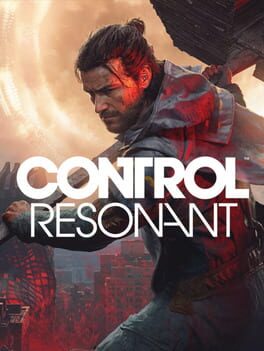
Remedy Entertainment, the Finnish studio best known for its cinematic, story‑heavy titles, has once again found itself at the centre of industry conversation. After a three‑week sprint since its launch, Control Resonant has eclipsed the sales velocity of both Alan Wake 2 and the original Control, marking the first time any of the studio’s releases has crossed the one‑million‑copy threshold faster than any predecessor. This milestone arrives at a moment when the market for high‑budget, narrative‑driven action games is undergoing a subtle shift; publishers are increasingly betting on live‑service extensions and post‑launch content to prolong a title’s revenue tail, while gamers crave deeper, cohesive experiences that reward continued play. Remedy’s decision to launch Resonant as a substantial expansion rather than a traditional DLC reflects a strategic pivot that aligns with these broader trends, positioning the company to capitalize on both the immediate hype and the longer‑term engagement loop.
The backdrop to this achievement is a decade‑long evolution of Remedy’s design philosophy. From the groundbreaking physics‑based combat of the original Control to the psychological horror of Alan Wake, the studio has cultivated a reputation for marrying cutting‑edge technology with intricate storytelling. Over the past thirty‑one years, Remedy has navigated multiple platform generations, surviving the collapse of the Xbox 360 era, the rise of subscription services, and the current console war between Sony’s PlayStation 5 and Microsoft’s Xbox Series X|S. Control Resonant’s rapid uptake underscores not only the strength of the underlying IP but also the studio’s adeptness at leveraging cross‑generation hardware, cloud saves, and a unified progression system that encourages both legacy and new players to dive in.
What Happened?
In a concise press release issued yesterday, Remedy announced that Control Resonant has sold over one million copies, achieving this figure in just under three weeks—a pace that outstrips the original Control’s 12‑month climb to the same mark and eclipses Alan Wake 2’s six‑week trajectory. The expansion adds a new “Resonance” narrative arc, introducing a fresh antagonist, expanded environments, and a suite of gameplay refinements, including a rebalanced combat system and upgraded visual fidelity that exploits the full power of current‑gen consoles and high‑end PCs. Remedy’s CEO, Tero Virtala, emphasized that the sales surge is a testament to the community’s appetite for deeper lore and that the team will continue to support the title with additional post‑launch content, hinting at a possible “seasonal” model akin to what has been successful in the live‑service sector.
Beyond raw numbers, the announcement highlighted several strategic milestones: the expansion’s launch coincided with a major marketing push across streaming platforms, a partnership with Nvidia for DLSS 3 integration, and a limited‑edition physical bundle that sold out within hours. Moreover, Remedy reported a 27 % increase in concurrent players during the first weekend, a metric that not only signals strong initial uptake but also suggests robust word‑of‑mouth momentum. The studio also disclosed that a substantial portion of sales originated from the PlayStation 5 ecosystem, a noteworthy data point given Remedy’s historical alignment with Microsoft’s Xbox platform, hinting at a possible rebalancing of their console partnership dynamics.
Analysis
The rapid commercial success of Control Resonant can be read as a bellwether for the viability of premium expansion packs in an era dominated by microtransactions and battle‑royale titles. By delivering a content‑rich, narrative‑forward update that feels almost like a standalone sequel, Remedy has demonstrated that there remains a lucrative niche for developers who can fuse cinematic storytelling with iterative gameplay enhancements. Competitors such as Naughty Dog and CD Projekt Red have experimented with similar models, but Remedy’s execution—particularly the seamless integration of next‑gen graphical upgrades and cross‑save functionality—sets a new benchmark for post‑launch value propositions. This could pressure other mid‑tier studios to reconsider their post‑release roadmaps, potentially leading to a wave of “expansion‑first” strategies that prioritize depth over breadth.
From a market‑share perspective, the sales distribution hints at a shifting console allegiance. While Remedy’s earlier titles were often touted as system sellers for Xbox, the pronounced uptake on PlayStation 5 suggests that the studio’s recent multi‑platform optimisation, coupled with Sony’s aggressive promotion of narrative‑driven exclusives, is paying dividends. Should this trend continue, Remedy may find itself in a stronger negotiating position when discussing future publishing deals, possibly securing more favorable revenue splits or co‑development opportunities. Additionally, the success reinforces the relevance of the “remaster‑plus‑expansion” formula, a path that could see older IPs like Max Payne or Quantum Break resurrected with modern enhancements, thereby expanding Remedy’s catalog without the overhead of entirely new IP development.
XPLog Opinion
At XPLog UK we view Control Resonant’s record‑breaking launch as a decisive proof point that the appetite for high‑quality, story‑centric expansions remains untapped by many major publishers. Remedy’s willingness to invest in a substantive post‑launch experience—complete with technical upgrades and a fresh narrative thread—demonstrates a commendable commitment to its player base, and it sets a standard that could recalibrate industry expectations. If Remedy continues to leverage this momentum, we anticipate not only a stronger foothold in the console wars but also a ripple effect that encourages other studios to prioritize depth and craftsmanship in their DLC pipelines, ultimately enriching the ecosystem for core gamers who demand more than fleeting, grind‑heavy content.
Final Thoughts
Control Resonant’s swift ascent to the top of Remedy’s sales charts signals a pivotal moment for both the studio and the broader narrative‑driven action genre; the combination of robust post‑launch support, cross‑platform optimisation, and a clear player‑first ethos may well dictate the next wave of expansion strategies across the industry. Keep an eye on Remedy’s upcoming roadmap announcements slated for the next quarter, as well as the potential rollout of seasonal content that could further cement the title’s longevity and influence future publishing models.