.png)
Overview
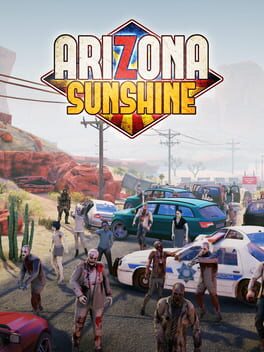
When Vertigo Games first unveiled Arizona Sunshine in 2016, it arrived as a hallmark of PlayStation VR’s early ambitions, offering a gritty, wave‑gun‑fueled zombie shoot‑out that proved that immersive first‑person shooters could thrive on a headset. The title’s success on the original PSVR helped cement Sony’s claim that VR could be more than a novelty, feeding a niche yet vocal community that prized the tactile sensation of aiming a virtual gun. Over the ensuing years, the franchise rode a wave of iterative upgrades – a 2020 remaster for the PS5’s upgraded hardware and a later adaptation for the much‑anticipated PSVR2, which promised higher fidelity and refined tracking. Each incarnation leaned heavily on the immersive camera, reinforcing the notion that the series’ identity was inseparable from virtual reality.
Now, nearly a decade after its debut, Vertigo is announcing Arizona Sunshine III as a pure PlayStation 5 title, stripped of any VR support and reimagined with a traditional third‑person perspective. Set for a 21 January 2027 launch, the shift arrives at a moment when Sony’s console ecosystem is wrestling with a plateau in hardware sales, a burgeoning focus on cloud streaming, and a competitive landscape where rivals are doubling down on cross‑generational, non‑VR experiences. The decision to abandon VR entirely signals a strategic pivot not only for Vertigo but also for the broader PlayStation portfolio, suggesting that developers may be reassessing the commercial viability of headset‑only experiences in a market that still struggles to achieve mainstream adoption.
What Happened?
Vertigo Games confirmed that Arizona Sunshine III will launch on the PlayStation 5 on 21 January 2027, priced at £19.99 (or $24.99) with a pre‑order discount for PlayStation Plus members that reduces the cost by roughly 20 per cent. The new version abandons the franchise’s signature VR‑first design in favour of a conventional third‑person camera, delivering a more accessible entry point for players who own a PS5 but no headset. In promotional material, the studio emphasised that the core zombie‑infested desert setting will remain intact, but the gameplay loop will be rebuilt around conventional controller mechanics, allowing for smoother navigation, tighter combat pacing, and expanded narrative beats that were previously constrained by the need to accommodate VR locomotion.
Vertigo’s lead designer, who spoke at a recent digital showcase, described the transition as “a return to the roots of the series’ storytelling while embracing the technical horsepower of the PS5.” He noted that the development team has leveraged the console’s SSD and ray‑tracing capabilities to render the arid Arizona landscape with unprecedented detail, from dust‑laden dunes to sun‑bleached wreckage. The studio also hinted at new multiplayer modes that will operate over PlayStation Network, a departure from the largely solo‑focused experiences of the earlier VR titles. By positioning the game as a standard PS5 release, Vertigo hopes to tap into the broader install base, which currently numbers in the tens of millions, far outstripping the modest VR user base that has historically limited the franchise’s reach.
Analysis
The market implications of stripping VR from a once‑iconic headset title are profound. Sony’s VR hardware has consistently lagged behind competitors like Meta’s Quest line in terms of unit sales, and the ecosystem has struggled to attract a steady stream of AAA releases. By converting Arizona Sunshine into a non‑VR experience, Vertigo is effectively hedging against the risk of low adoption rates that could have crippled sales projections for a niche product. Moreover, the move aligns with Sony’s broader strategy of consolidating its software offerings around the core console, especially as the company invests heavily in PlayStation Plus tiers and cloud streaming via PlayStation Now. A successful launch could demonstrate that legacy VR franchises can be repurposed for mainstream consumption, potentially encouraging other developers to revisit dormant VR IPs with a similar conversion approach.
From a competitive standpoint, the decision also positions the game against a crowded field of post‑apocalyptic shooters that dominate the PS5 library, such as the latest entries in the Resident Evil and The Last of Us franchises. However, Arizona Sunshine’s established brand equity, combined with its lower price point and the nostalgia factor for early VR adopters, may carve out a unique niche. The inclusion of enhanced multiplayer modes could further differentiate it, tapping into the thriving online co‑op market that has surged since the pandemic era. Technically, the shift to a third‑person perspective allows Vertigo to exploit the PS5’s hardware more fully, delivering higher frame rates and richer visual fidelity than the VR versions could ever achieve, thereby raising player expectations for future non‑VR spin‑offs of previously headset‑bound titles.
XPLog Opinion
At XPLog, we view Arizona Sunshine III’s metamorphosis as a pragmatic acknowledgment that the VR market, while innovative, remains a peripheral segment of the console ecosystem. Vertigo’s gamble to re‑tool a beloved franchise for the mainstream PS5 audience is a calculated risk that could pay dividends if the studio delivers a polished, content‑rich experience that honors the original’s spirit while shedding its hardware shackles. Should the title succeed, it may usher in a wave of retro‑fitted VR classics, giving developers a template for salvaging and revitalising dormant IPs without the constraints of headset compatibility.
Final Thoughts
Arizona Sunshine III’s January 2027 debut marks a pivotal moment for both Vertigo Games and Sony’s broader console strategy, illustrating how legacy VR titles can be reborn for a wider audience. Players can look forward to a detailed, high‑performance rendition of the desert zombie saga, while industry watchers will keep a close eye on sales figures, community reception, and any subsequent announcements that might signal further VR‑to‑non‑VR conversions across the PlayStation catalogue.