.png)
Overview
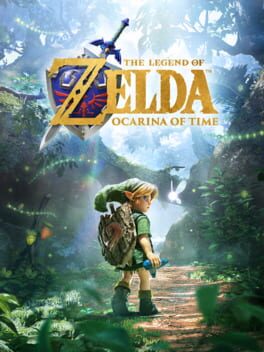
The traditional November blockbuster window, once a reliable bellwether for the year’s biggest sales, has been undergoing a quiet but profound shift. Since the leak of Rockstar’s long‑awaited Grand Theft Auto VI, a wave of developers has deliberately pulled back from the congested slot, opting instead for staggered releases that avoid direct competition with what is expected to be the most lucrative launch in modern gaming history. Nintendo, however, has chosen to double‑down on the frenzy by positioning a full‑scale re‑imagining of The Legend of Zelda: Ocarina of Time for a 5 October drop—exactly two weeks before Rockstar’s marquee title—thereby re‑asserting its willingness to fight for attention in a market that increasingly rewards timing as much as pedigree.
This strategic gamble has rippled far beyond the press releases, spilling into late‑night comedy and mainstream commentary alike. Saturday Night Live devoted a segment of its Weekend Update to the impending clash, lampooning the rivalry between Nintendo’s nostalgic franchise and Rockstar’s gritty open‑world saga. Industry analysts have seized on the moment as a case study in brand power versus raw player count, while fans have taken to social media with a mixture of excitement, dread, and a surprising amount of humor. The conversation is not merely about which game will sell more copies; it is about how the ecosystem of consoles, subscription services, and cross‑play ecosystems will adapt when three juggernauts converge on the same consumer attention span.
What Happened?
In a candid interview with The Game Business, Activision’s chief marketing officer Tyler Bahl downplayed the potential disruptive effect of Zelda’s launch, insisting that the true market mover will be the synergy between Grand Theft Auto VI and Call of Duty: Modern Warfare 4. Bahl argued that the cultural shockwave generated by GTA VI will inevitably drive a surge of new and returning players toward the familiar, high‑octane loop of Call of Duty, a title that already dominates the live‑service shooter space. He framed the relationship as a “halo effect,” suggesting that the massive publicity surrounding Rockstar’s release will act as a catalyst for broader engagement across the shooter genre, rather than cannibalising the audience of Nintendo’s adventure title.
The factual timeline underscores the intensity of the competition: Zelda’s revamped Ocarina is slated for a global launch on 5 October, while Rockstar has confirmed a 19 October release for GTA VI. Activision, meanwhile, has set Modern Warfare 4 for a 26 October debut, deliberately spacing its flagship shooter just after the expected peak of GTA‑driven traffic. Marketing assets for each game have been rolled out in a staggered fashion—teaser trailers for Zelda emphasizing its legacy, Rockstar unveiling cinematic world‑building vignettes, and Activision leveraging cross‑promotion with its Battle Pass ecosystem to entice players who have already been primed by the GTA hype.
Analysis
The clustering of three high‑profile releases within a three‑week window creates a rare micro‑economy of attention where supply vastly outstrips the finite bandwidth of gamers. Historically, such concentration has forced console manufacturers to double‑down on exclusive content and hardware incentives; the current scenario could accelerate that trend, prompting Sony and Microsoft to accelerate their own Q4 releases or deepen discounting on subscription bundles like PlayStation Plus and Xbox Game Pass. Moreover, the presence of a Nintendo‑first title amidst two third‑party heavyweights may rejuvenate the conversation around cross‑platform play, as players who own multiple consoles will be forced to navigate differing ecosystem lock‑ins, potentially nudging them toward hybrid solutions such as cloud streaming services.
From a development perspective, the risk of “launch fatigue” cannot be ignored. The industry has witnessed similar fatigue during the 2018 “Summer of Fire” when multiple shooters launched back‑to‑back, leading to fragmented sales and diluted community momentum. However, the distinct genre identities—action‑adventure, open‑world crime, and tactical shooter—mitigate direct overlap, allowing each title to capture its core demographic while still benefiting from the halo effect of heightened media coverage. The real technical hurdle lies in sustaining server stability for Modern Warfare 4 during the post‑GTA surge; Activision’s investment in cloud‑based scaling solutions will be a litmus test for how well live‑service games can ride the coattails of unrelated blockbuster releases.
XPLog Opinion
At XPLog UK we see this three‑way showdown as a watershed moment that will redefine how publishers schedule marquee titles. Zelda’s cultural gravitas is undeniable, but raw player acquisition is increasingly measured in concurrent users, subscription churn, and micro‑transaction velocity—metrics where Call of Duty excels. If Bahl’s hypothesis holds, GTA VI will act as a massive awareness engine, funneling a wave of players into the shooter’s ecosystem just as they finish their first playthrough of the open‑world crime saga. Nintendo, meanwhile, will likely reap long‑term brand equity benefits, reinforcing its position as the steward of timeless franchises. The ultimate victor will be the platform that can translate this burst of attention into sustained engagement across its broader portfolio.
Final Thoughts
As October unfolds, the industry will be watching not just the individual sales numbers but the ripple effects each launch has on the broader console market, subscription services, and community health. Key dates to monitor include the first‑weekend sales reports for Zelda on 7 October, the GTA VI launch metrics on 21 October, and the post‑launch player retention figures for Modern Warfare 4 after its 28 October release. Whichever title manages to convert hype into lasting player commitment will set the template for the next generation of blockbuster scheduling, and the lessons learned will echo through every major release calendar for years to come.