Overview
Kotaro Uchikoshi, the visionary behind the critically acclaimed Zero Escape series and the ambitious The Hundred Line: Last Defense Academy, has long been a beacon for players who crave cerebral puzzles wrapped in existential storytelling. His latest venture, a studio formed after the success of those titles, promised to push the boundaries of interactive narrative even further, leveraging emerging technologies and a hybrid development model that blended traditional visual novel design with next‑gen console capabilities. The announcement of the studio’s cancellation reverberates far beyond a single project; it strikes at the heart of a niche yet fiercely dedicated market segment that has historically relied on auteur‑driven creators to keep the genre alive amidst a sea of blockbuster shooters and live‑service epics.
The timing of this collapse could not be more consequential. The industry is currently navigating a post‑pandemic recalibration, where mid‑tier studios face tightening budgets, platform holders tighten certification pipelines, and players’ attention spans fragment across streaming, esports, and mobile experiences. Within this climate, a studio anchored by Uchikoshi’s reputation represented a rare hedge against the homogenisation of game design, offering a proof‑point that story‑first experiences could still command commercial viability. As such, the studio’s demise invites a broader examination of how narrative‑centric developers can survive in an ecosystem increasingly dominated by high‑budget, high‑risk ventures.
What Happened?
The cancellation was confirmed in a terse statement released by the studio’s parent company, noting that “unforeseen financial constraints and shifting market conditions” forced the difficult decision to halt development of the upcoming title. While the exact name of the game was never publicly disclosed, insiders suggest it was intended to be a spiritual successor to Zero Escape, blending branching timelines with real‑time decision mechanics that would have leveraged the processing power of the latest console generations. Uchikoshi himself, in a brief interview, expressed profound disappointment, likening the studio’s potential collapse to “a structure that might literally crash into a million pieces,” a metaphor that underscored both the emotional weight of the setback and the fragility of independent creative enterprises.
The fallout extends beyond the cancelled title. The studio, which had assembled a small but highly skilled team of writers, programmers, and artists, now faces an uncertain future, with many staff members reportedly seeking placement at other narrative‑driven houses such as Devolver Digital or Annapurna Interactive. The parent company has hinted at the possibility of restructuring, but concrete details remain scarce, leaving the community to speculate whether the studio will be revived under a different banner or dissolved entirely.
Analysis
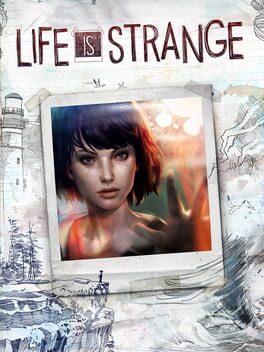
From a market perspective, the studio’s termination highlights a systemic risk for mid‑scale developers that specialise in story‑heavy experiences. While titles like Life is Strange and Disco Elysium have demonstrated that there is a viable audience for narrative games, they often rely on external funding, publisher subsidies, or a hybrid indie‑publisher model to offset development costs. Uchikoshi’s studio, aiming to deliver a premium, console‑first experience, likely required a level of capital investment that became untenable as platform holders tightened revenue‑share expectations and as the global economic slowdown reduced discretionary spending on niche titles.
Compounding the financial pressures are technical hurdles that have become increasingly pronounced. The ambition to fuse intricate puzzle mechanics with real‑time rendering on next‑gen hardware demands a development pipeline that can handle both high‑fidelity assets and complex branching logic—a combination that traditionally forces studios to either compromise on visual fidelity or simplify narrative depth. The industry’s current trajectory, favouring modular development tools and cross‑platform engines, may not yet provide a seamless solution for such hybrid ambitions, leaving studios like Uchikoshi’s vulnerable to overruns and missed milestones.
XPLog Opinion
At XPLog UK, we view the cancellation as a cautionary tale about the perils of over‑extending auteur projects without a robust safety net. Uchikoshi’s creative pedigree is undeniable, yet the market now demands that even the most visionary designers align their ambitions with sustainable business models—whether through early access, episodic releases, or strategic partnerships with publishers who understand the unique value proposition of narrative games. The industry must cultivate a more resilient infrastructure that supports experimental storytelling without forcing creators into untenable financial positions.
Final Thoughts
While the immediate shock of the studio’s shutdown is palpable, the longer narrative may yet be one of adaptation and renewal. Players should keep an eye on upcoming announcements from Uchikoshi himself, as his track record suggests he will re‑emerge, perhaps under a new collaborative framework that mitigates risk while preserving his distinctive storytelling voice. In the meantime, the broader community of narrative enthusiasts would do well to champion funding models—such as crowd‑sourced campaigns and publisher incubators—that can safeguard the next generation of story‑driven games from a similar fate.
.png)
 XPLog
14 Oct 2026
4 min read
XPLog
14 Oct 2026
4 min read