Overview
The release of Castlevania: Belmont's Curse marks a noteworthy moment in Konami's ongoing attempt to re‑ignite the flame of one of its most iconic franchises. After a decade of mixed results—ranging from the ambitious but uneven Metroid‑like "Bloodstained" spin‑off to the lukewarm reception of recent mobile experiments—Konami has been courting both nostalgia‑driven veterans and a new generation of platform‑savvy gamers. In a market saturated with high‑budget AAA shooters and sprawling live‑service titles, the strategic pivot toward a tightly crafted 2D action‑exploration experience reflects a broader industry trend where heritage IPs are being re‑imagined as boutique, quality‑focused products that can thrive on both console and PC ecosystems.
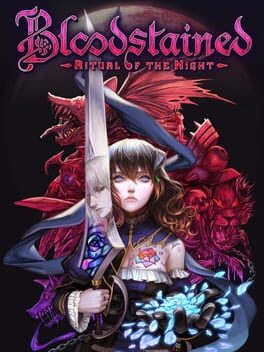
The development partnership behind Belmont's Curse further underscores this shift. Evil Empire, best known for the polished, cinematic platformer Rogue Prince of Persia, joins forces with Motion Twin, the indie studio that birthed the critically acclaimed rogue‑lite Dead Cells. Both teams bring a pedigree of pixel‑perfect design, fluid combat systems, and a deep understanding of modern player expectations for difficulty curves and reward loops. Their collaboration arrives at a time when retro‑styled titles—Hollow Knight, Bloodstained: Ritual of the Night, and the ever‑evolving Dead Cells—have demonstrated that there is a robust, profitable niche for meticulously crafted 2D action games that respect their lineage while innovating with contemporary mechanics.
What Happened?
Konami officially unveiled Castlevania: Belmont's Curse this week, positioning it as a direct sequel set 23 years after the events of Castlevania III: Dracula's Curse. Players will step into the boots of Rose Belmont, the daughter of the legendary Trevor Belmont, as she confronts a resurgent darkness that threatens to engulf the familiar gothic landscapes of Transylvania. The game promises a blend of classic side‑scrolling exploration, modernized combat choreography, and a narrative that weaves legacy lore with fresh character development. Early promotional material confirms a multi‑platform launch across Nintendo Switch, PlayStation 5, Xbox Series X|S, and PC, with a staggered release window slated for early Q1 2027.
Critical reception has begun to coalesce around the first wave of reviews, many of which highlight the game's meticulous level design and the seamless integration of Motion Twin's fluid combat engine with Evil Empire's storytelling sensibilities. Reviewers have praised the decision to anchor the experience in a historically rich timeline—allowing long‑time fans to recognize callbacks to the 1989 title—while also delivering a protagonist whose agency feels genuinely contemporary. Scores are clustering in the high 70s to low 80s on aggregate sites, suggesting a solid if not spectacular debut that could serve as a catalyst for renewed confidence in the Castlevania brand.
Analysis
From a market perspective, Belmont's Curse arrives at a crossroads where the appetite for nostalgic IP revivals is being tempered by a demand for genuine innovation. Konami's choice to outsource development to studios with proven track records in the indie sector mitigates risk while granting the project creative latitude that internal teams might lack. This model mirrors the successful approach taken by Capcom with Resident Evil 2 Remake, where external expertise was leveraged to modernize a classic without sacrificing its core identity. In the competitive landscape, the title must contend not only with established 2D heavyweights but also with the growing pipeline of indie titles that benefit from lower price points and strong community support on platforms like Steam and the Nintendo eShop.
Technical hurdles also loom large. The original Castlevania series is renowned for its intricate level interconnectivity and hidden pathways—a design philosophy that can be challenging to translate into a modern engine without sacrificing performance, especially on the Switch's hardware constraints. Moreover, the introduction of a new protagonist carries narrative risk; fans have historically been protective of the Belmont lineage, and any perceived misstep could alienate the core audience. However, if the developers succeed in balancing reverence for the series' DNA with fresh gameplay loops—such as Motion Twin's signature momentum‑based combat—the title could set a new benchmark for how legacy franchises evolve in the age of indie‑AAA hybrid development.
XPLog Opinion
At XPLog UK we view Castlevania: Belmont's Curse as a decisive litmus test for Konami's long‑term commitment to revitalizing its dormant gems. The partnership with Evil Empire and Motion Twin signals a willingness to cede creative control to studios that understand the delicate art of marrying nostalgia with modern design. Should the game achieve sustained sales beyond its launch window, it will likely embolden Konami to green‑light further entries, perhaps even exploring a multi‑title roadmap that leverages the Belmont family saga across different gameplay styles. Conversely, a tepid market response could reinforce the perception that the Castlevania brand, while still beloved, requires a more radical reimagining to stay relevant in an increasingly crowded indie‑driven market.
Final Thoughts
In sum, Castlevania: Belmont's Curse stands as a bold attempt to reconcile the franchise's storied past with the expectations of today’s discerning gamers. Its success will hinge on the seamless execution of classic design principles, the strength of its new protagonist, and the ability of Konami to support the title with post‑launch content that keeps the community engaged. Keep an eye on the official launch date in early 2027, as well as forthcoming patches and DLC announcements that could shape the long‑term health of the series and potentially herald a renaissance for one of gaming’s most enduring lineages.
.png)
 XPLog
13 Oct 2026
5 min read
XPLog
13 Oct 2026
5 min read