.png)
Overview
The past two years have seen generative artificial intelligence surge from academic curiosity to a headline‑grabbing commercial force, with major publishers touting AI‑driven asset pipelines, narrative assistants, and even whole‑game prototypes. While the hype promises cheaper production and faster iteration, it also raises a chorus of alarms about creative dilution, labor displacement, and the erosion of the handcrafted sensibility that has long defined the medium. In the current console‑centric market, where AAA studios wield multi‑billion‑dollar budgets, the pressure to adopt any technology that can shave weeks off a development cycle is palpable, and the industry narrative is increasingly framed around "AI‑first" roadmaps.
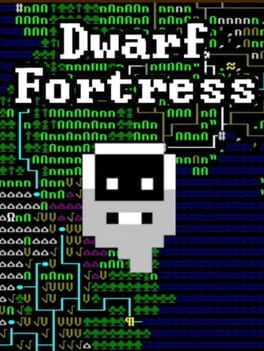
Against this backdrop, the voice of Tarn Adams—co‑founder of Bay 12 Games and the singular creative engine behind the cult classic Dwarf Fortress—carries a weight that belies the indie studio’s modest size. Since its 2006 debut, Dwarf Fortress has become a study in emergent complexity, with its ASCII‑styled world generation and relentless simulation depth earning it a reputation as the "Minecraft of the 2000s" for its procedural ambition. Adams and his brother Zach have famously funded the project through personal savings and a modest Patreon, rejecting conventional publishing deals and insisting on a development philosophy that prizes depth, player agency, and hand‑crafted systems over glossy polish.
What Happened?
In a candid interview published earlier this month, Tarn Adams declared his exhaustion with the industry’s relentless push toward generative AI, stating unequivocally that he will "never use it" in any capacity for Dwarf Fortress. The remarks were not a passive lament but a proactive stance: Adams outlined how recent conference panels and internal pitches from engine partners repeatedly suggested integrating AI‑generated textures, dialogue, or even simulation tweaks, only to be met with a firm refusal grounded in his belief that the game’s core value lies in its meticulously engineered rule‑sets.
Adams further explained that the very essence of Dwarf Fortress—its ability to simulate a living world where dwarves possess individual quirks, economies evolve, and disasters unfold organically—relies on deterministic algorithms that have been refined over more than a decade. He warned that delegating any portion of that logic to a black‑box model would compromise reproducibility, modability, and the community’s trust in the toolset that powers countless fan‑made mods. By rejecting AI, he is also protecting the studio’s modest but sustainable financial model, avoiding the hidden costs of licensing, data‑training, and the potential need for specialized AI talent.
Analysis
The immediate market implication of Adams’ declaration is a reaffirmation that a segment of the industry still views AI as an optional, not mandatory, toolset. For indie developers watching the AI wave, his stance provides a counter‑narrative that success can still be achieved through painstaking systems design and community‑driven iteration. From a financial perspective, bypassing AI eliminates the risk of hidden expenditures on cloud compute credits and model licensing, which have already strained smaller studios that attempted premature AI integration. Moreover, the decision underscores a broader tension: the allure of rapid prototyping versus the long‑term brand equity built on authenticity and depth.
On the console side, the ripple effect may be subtler but no less significant. Major platform holders such as Sony and Microsoft have begun to market AI‑enhanced features—real‑time translation, adaptive difficulty, and procedural content generation—as differentiators for next‑gen titles. A high‑profile refusal by a respected creator could prompt platform policy teams to reconsider blanket incentives for AI adoption, perhaps introducing certification pathways that respect developer choice. Player communities, especially those that have rallied around Dwarf Fortress’s niche appeal, are likely to echo Adams’ sentiment, reinforcing a cultural divide where "hand‑crafted" remains a badge of honor against the perceived homogenization of AI‑generated experiences.
XPLog Opinion
XPLog’s editorial stance is clear: while we acknowledge the undeniable efficiencies AI can bring to certain production pipelines, we view Tarn Adams’ principled rejection as a vital reminder that the soul of a game is not a line of code trained on a dataset, but the deliberate craftsmanship of its creators. In an era where market pressure can turn innovation into a checkbox, Adams’ refusal serves as a rallying cry for developers who wish to preserve artistic integrity, and for players who demand depth over convenience.
Final Thoughts
As the AI debate continues to polarize the industry, the coming months will reveal whether Adams’ position remains an isolated outlier or sparks a broader movement among studios that prioritize systemic complexity over quick visual polish. Keep an eye on Bay 12’s upcoming release schedule, the next major EA AI‑tool rollout, and the upcoming Game Developers Conference panels where the conversation will inevitably circle back to the question: can generative AI coexist with the kind of emergent worlds that Tarn Adams has spent a decade perfecting? The answer will shape both the business models and the creative horizons of gaming for years to come.