.png)
Overview
Last week the walls of Microsoft’s Redmond campus reverberated with a familiar refrain: the Xbox brand must evolve beyond the echo of its most celebrated series. Asha Sharma, senior leader of the Xbox Studios division, addressed a packed town‑hall audience, reminding employees that “we would also like to see us continue to create enduring new IP.” The statement, while succinct, landed against a backdrop of an industry that is increasingly defined by the tension between nostalgic franchise powerhouses and the hunger for fresh, risk‑taking experiences. Over the past decade, Microsoft has leveraged its deep pockets to acquire studios—Bethesda, Obsidian, Ninja Theory—turning Xbox Game Pass into a content buffet, yet the core of its first‑party narrative still leans heavily on stalwarts such as Minecraft, Halo, and Forza.
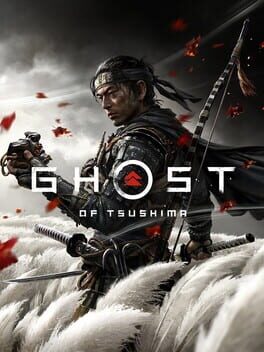
That strategic tilt is not without precedent. Sony’s PlayStation has long cultivated a portfolio of legacy gems, but it has also poured resources into bold new properties like Ghost of Tsushima and The Last of Us Part II, which have re‑shaped consumer expectations. Nintendo, too, walks the fine line between iconic mascots and experimental titles like Splatoon and Animal Crossing: New Horizons. In this competitive milieu, Sharma’s call for “enduring new IP” is a tacit acknowledgment that the Xbox ecosystem risks stagnation if it merely recycles its past laurels. The announcement therefore serves as a litmus test for how Microsoft will balance the safe revenue streams of its heavyweight franchises with the uncertain, but potentially market‑defining, returns of original concepts.
What Happened?
During the town‑hall, Sharma outlined a two‑pronged approach. First, the studio hierarchy will continue to “back our strongest franchises,” a phrase that directly references the ongoing investment in titles like Minecraft, Fallout, Forza, Gears, and Halo. This includes expanding live‑service ecosystems, pushing graphical upgrades for next‑gen consoles, and integrating these worlds more tightly with Xbox Game Pass to sustain subscriber growth. Second, she emphasized a cultural shift toward nurturing new intellectual property, urging teams to “continue to create enduring new IP.” While no specific projects were named, insiders reported that several mid‑size studios have been green‑lit for prototype phases, signaling a tentative but real pivot toward experimentation.
The internal memo also hinted at a reallocation of resources: a modest portion of the budget earmarked for franchise DLC will be diverted to seed funding for unproven concepts. Sharma’s remarks were accompanied by a slide deck showing projected revenue contributions from legacy franchises versus anticipated long‑term value from new IP, suggesting that the leadership is quantifying risk in a way that has historically been opaque. Moreover, the town‑hall featured a brief video montage of upcoming updates for Halo Infinite and a teaser of a yet‑unnamed project, reinforcing the dual narrative of preserving the old while courting the new.
Analysis
The decision to double‑down on established franchises while courting fresh IP reflects a broader industry calculus: legacy titles provide a reliable cash flow that can subsidize the high‑risk, high‑reward development cycles of original games. Xbox’s subscription model, Game Pass, thrives on a steady influx of recognizable content that reduces churn, but it also promises a platform for experimental titles to find an audience without the pressure of a traditional launch window. Competitors such as Sony are already reaping the benefits of this model; Marvel’s Spider‑Man II and God of War Ragnarök have demonstrated that blockbuster sequels can coexist with ambitious new IPs like Returnal. For Microsoft, the challenge lies in ensuring that the “back our strongest franchises” mantra does not become a self‑fulfilling prophecy that crowds out the very innovation needed to differentiate Xbox in a saturated market.
Technical hurdles also loom large. Legacy franchises often run on legacy engines that require extensive modernization to meet next‑gen expectations, diverting engineering talent from green‑field projects. Simultaneously, the push for cross‑platform integration—bringing Xbox titles to PC, mobile, and cloud via Game Pass Ultimate—adds layers of complexity to development pipelines. If Microsoft can streamline these processes, the new IP pipeline could benefit from the same distribution muscle that powers its established series, potentially shortening time‑to‑market and amplifying the impact of fresh titles on the ecosystem.
XPLog Opinion
From XPLog’s perspective, Sharma’s address is a welcome, albeit cautious, signal that Microsoft recognizes the perils of living in the shadow of its own successes. The real test will be whether the promised “enduring new IP” receives the same marketing firepower and long‑term support that legacy franchises enjoy. If Microsoft can allocate genuine development bandwidth and give new titles a clear post‑launch roadmap, it will not only diversify its portfolio but also reinvigorate a core gamer demographic that has grown weary of perpetual DLC cycles. In short, the future health of the Xbox brand hinges on its ability to balance nostalgia with novelty, and this town‑hall marks the first public step toward that equilibrium.
Final Thoughts
In the months ahead, the industry will be watching for concrete announcements—prototype showcases, beta tests, or first‑look trailers—that translate Sharma’s aspirational language into tangible products. Key dates to monitor include the Xbox Games Showcase in early 2027 and the annual Game Pass reveal, where Microsoft traditionally rolls out its next wave of content. If the company can deliver on its promise to foster new IP without cannibalising its flagship franchises, Xbox may finally break free from the perception of being a “legacy‑driven” platform and cement its place as a true incubator of next‑generation gaming experiences.