.png)
Overview
When Cloud Imperium Games first unveiled the vision of a persistent, galaxy‑spanning sandbox with Star Citizen back in 2012, the project instantly became a litmus test for crowdfunded development at scale. Over the past decade the venture has amassed more than $600 million from a fiercely loyal backer community, while simultaneously courting controversy over ever‑shifting roadmaps, perpetual alpha status, and a development philosophy that blends AAA ambition with indie‑style transparency. In this volatile environment, the promise of a single‑player narrative experience—Squadron 42—has functioned as both a morale booster for fans craving a structured story and a strategic hedge for the studio against the looming risk that a pure multiplayer universe might never achieve mass‑market viability.
Industry analysts have long noted that a successful single‑player flagship can serve as a gateway, converting casual observers into long‑term subscribers for the broader ecosystem. The timing of Squadron 42’s latest milestone—its official Steam page—coincides with a broader market shift where PC‑centric publishers are re‑evaluating distribution strategies after Valve’s recent revenue‑share adjustments and the rise of subscription services like Xbox Game Pass. By establishing a presence on Steam, Cloud Imperium is not merely tapping into the platform’s massive user base; it is signaling a willingness to engage with the traditional PC marketplace on its own terms, potentially reshaping the financial calculus that has underpinned Star Citizen’s funding model for years.
What Happened?
Earlier this week Cloud Imperium Games activated a public Steam landing page for Squadron 42, complete with a high‑resolution key art, system specifications, and a teaser trailer that re‑affirms the 2027 launch window that has been hinted at in recent dev‑streams. The page, while still in a pre‑order‑ready state, includes a countdown timer and a link to a closed‑beta sign‑up, suggesting that the studio is moving from internal polishing to a broader community testing phase. This move is noteworthy because, until now, the title has been confined to the RSI launcher, a proprietary hub that has both insulated the game from mainstream discovery and reinforced the perception of a closed‑ecosystem approach.
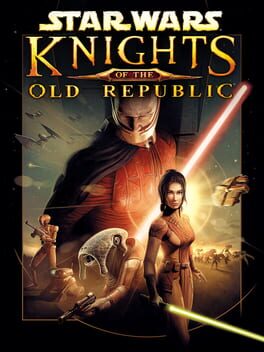
The new trailer, released simultaneously, leans heavily on its star‑studded cast, touting cameo‑style appearances from a roster that spans Hollywood heavyweights to cult sci‑fi icons. While the exact number of credited actors has been a point of hyperbole—some reports inflate the figure to “50 million famous actors”—the underlying reality is that the production has secured talent such as Mark Hamill, Gillian Anderson, and Adam Baldwin, among others. This level of celebrity involvement is unprecedented for a crowdfunded title and underscores the studio’s intent to position Squadron 42 as a cinematic experience that can stand shoulder‑to‑shoulder with legacy franchises like Mass Effect and Star Wars: Knights of the Old Republic.
Analysis
From a market perspective, the Steam debut could act as a catalyst for renewed financial inflows, especially as the platform’s algorithmic recommendation engine begins to surface Squadron 42 to users who have previously purchased space‑sim or narrative‑driven titles. This exposure may help mitigate the funding plateau that Cloud Imperium has experienced after the initial surge of backer contributions, allowing the studio to diversify its revenue streams beyond the subscription model that fuels the persistent universe. Moreover, the decision to align with Steam positions the game within a competitive cluster that includes titles like Elite Dangerous and No Man’s Sky, both of which have leveraged post‑launch updates to rejuvenate their player bases—a strategy that could be mirrored for Squadron 42’s post‑release support.
Technical considerations, however, remain formidable. The ambitious scope of Squadron 42—featuring next‑gen graphics, real‑time ray tracing, and a branching narrative that must coexist with the live‑service elements of Star Citizen—places it at the bleeding edge of current engine capabilities. Cloud Imperium’s proprietary Lumberyard‑derived engine has historically struggled with optimization on a wide range of hardware, prompting criticism from early‑access players. The Steam rollout will inevitably broaden the hardware diversity of the test pool, exposing performance bottlenecks that could delay the 2027 target if not addressed promptly. Additionally, integrating a massive celebrity voice cast demands a robust audio pipeline and meticulous lip‑sync work, which historically inflates production timelines for AAA narratives.
XPLog Opinion
At XPLog UK we view the Steam announcement as a decisive moment that forces Cloud Imperium to confront the duality of its ambition: to be both a sandbox pioneer and a narrative heavyweight. While the star‑studded lineup promises headline‑grabbing marketing muscle, the real test will be whether the underlying gameplay can satisfy the exacting standards of core gamers who have watched the project evolve for over a decade. If the studio can deliver a polished, story‑driven experience without compromising the live‑service backbone, Squadron 42 could become the keystone that finally bridges the gap between niche simulation enthusiasts and mainstream sci‑fi audiences.
Final Thoughts
Squadron 42’s emergence onto Steam marks more than a simple platform migration; it is a litmus test for Cloud Imperium’s ability to translate years of crowd‑funded development into a commercially viable, story‑rich product that can stand on its own merit. As the 2027 launch horizon approaches, the industry will be watching closely for beta feedback, performance metrics, and the efficacy of the studio’s new distribution strategy. Key dates to monitor include the closed‑beta sign‑up window slated for early 2025 and the anticipated public demo later that year, both of which will provide concrete data on whether the project can finally fulfill the promise that has lingered on the horizon for far too long.