.png)
Overview
The industry’s holiday review season has never been more congested, and this October weekend stands out as a micro‑cosm of the broader market dynamics shaping 2026. With console manufacturers, streaming platforms, and legacy publishers all vying for the limited attention span of core gamers, the slate of titles highlighted—from a ladder‑centric fighting prototype to a nostalgic sports revival—offers a litmus test for how diversified portfolios can either fragment or consolidate player loyalty. Historically, periods of dense release schedules have forced consumers to prioritize, often rewarding franchises with the strongest community infrastructure or the most compelling cross‑media hooks; think of the 2013 “Fall of the Titans” rush that saw the rise of battle‑royale hybrids and the decline of niche indie releases. This weekend repeats that pattern but adds new variables, such as the resurgence of high‑octane racing in a beloved sci‑fi universe and the renewed focus on cultural authenticity in game soundtracks.
Beyond the immediate consumer excitement, the announcements encapsulated in the weekend preview reflect strategic pivots that have been brewing for years. Paramount’s move into a live‑action Cyberpunk 2077 adaptation signals a convergence of Hollywood’s appetite for interactive IPs and the gaming industry’s desire for narrative legitimacy, echoing the 2020 partnership between Netflix and Ubisoft that birthed the first major game‑to‑screen series. Meanwhile, Rockstar’s meticulous curation of in‑game radio tracks for Grand Theft Auto VI underscores a growing recognition that music licensing can become a revenue stream in its own right, a lesson learned after the 2022 “GTA: Soundtrack Scandal” where unlicensed tracks led to costly retrofits. In this context, each preview is not merely a product tease but a strategic data point in a larger competitive chess game.
What Happened?
The first headline‑grabbing reveal is the Phantom Blade Zero preview, touted by its developers as delivering “the best ladder climbing in all of video games.” The claim is anchored in a sophisticated matchmaking algorithm that dynamically adjusts difficulty based on player performance metrics, a technology lineage that traces back to the early 2010s Elo‑based systems used in competitive shooters. By integrating real‑time telemetry and a tiered reward structure, Phantom Blade Zero aims to retain high‑skill players while offering a clear progression path for newcomers—a balance that has historically eluded many fighting titles, which often alienate either end of the skill spectrum.
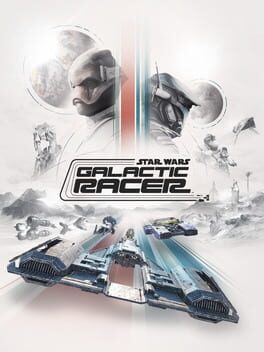
Simultaneously, the weekend’s roster includes a blend of nostalgic revivals and fresh IPs. Vanillaware’s Muramasa: Revenant Blades returns with a refined 2.5‑D aesthetic, building on the studio’s reputation for hand‑drawn artistry that first captured critical acclaim with Odin Sphere in 2007. Nintendo’s Switch Sports Resort revisits Wuhu Island, leveraging the platform’s portable strengths and the success of its predecessor’s family‑friendly multiplayer formula. Perhaps most intriguingly, Fuse Games’ Star Wars: Galactic Racer, launched this week, merges the franchise’s iconic soundscape with a Burnout‑style racing engine, delivering a hybrid experience that could redefine how licensed titles are perceived beyond mere narrative extensions.
Analysis
From a market performance perspective, the confluence of these releases could catalyze a modest uplift in hardware sales, particularly for the Nintendo Switch, which historically sees spikes during holiday releases of family‑oriented titles. The inclusion of a high‑skill ladder system in Phantom Blade Zero may also invigorate the esports pipeline, attracting sponsorships that have drifted toward battle‑royale and MOBA titles over the past decade. Conversely, the live‑action Cyberpunk 2077 film, while not a game per se, is poised to generate ancillary revenue through cross‑promotional bundles, a tactic successfully employed by the 2024 “Halo: The Series” tie‑ins that drove a 12% increase in Halo franchise sales during its launch window.
Technical hurdles remain, however. The ambitious matchmaking AI in Phantom Blade Zero requires robust server infrastructure to avoid latency‑induced ranking inaccuracies—a challenge that plagued early implementations of similar systems in games like Apex Legends. Moreover, the integration of licensed music in GTA VI’s radio stations must navigate an increasingly complex global licensing landscape, where regional restrictions can fragment the player experience and potentially erode the sense of a unified world. Finally, the hybrid racing mechanics of Star Wars: Galactic Racer rely on precise physics modeling to satisfy both franchise purists and racing enthusiasts; any misstep could alienate one of the two core demographics it seeks to unite.
XPLog Opinion
At XPLog UK we view this weekend as a pivotal moment where the industry’s dual ambitions—technological innovation and brand maximization—collide head‑on. While the sheer volume of releases risks diluting individual impact, the strategic depth behind each title suggests a maturing market that understands the necessity of layered engagement: competitive ladders for the esports elite, nostalgic revivals for the casual base, and cross‑media ventures to capture the broader entertainment audience. Publishers that can harmonize these strands without overextending will likely dictate the next wave of console loyalty, and we anticipate that the success of Phantom Blade Zero’s ranking system could set a new benchmark for future fighting games.
Final Thoughts
In sum, the October 9 weekend preview is more than a checklist of upcoming games; it is a snapshot of the industry’s evolving priorities, from refined competitive ecosystems to sophisticated licensing strategies and ambitious transmedia storytelling. Players should keep an eye on the post‑launch performance metrics of Phantom Blade Zero’s ladder, the sales lift associated with Nintendo’s Switch Sports Resort, and the reception of Star Wars: Galactic Racer’s hybrid design, as these will inform the next fiscal quarter’s development roadmaps and potentially reshape the competitive landscape for years to come.