.png)
Overview
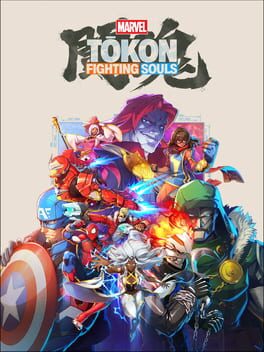
When the first wave of post‑launch data for Marvel Tokon: Fighting Souls landed on industry trackers, the narrative on social media was already set: the title was a “slow seller” destined to fade into the background of a crowded fighting‑game market. That perception, however, was built on a narrow lens—primarily Steam’s concurrent‑user metrics and a handful of anecdotal streams—ignoring the broader, more nuanced reality of console‑centric ecosystems. In August, Circana’s comprehensive sales report, which aggregates both physical and digital transactions across the United States, placed Tokon at a remarkable third‑place slot, a position that directly contradicts the viral chatter and underscores the danger of equating platform‑agnostic activity with overall commercial health.
The resurgence of the title’s performance arrives at a pivotal moment for Sony’s PlayStation 5, whose average dollar spend per user has been inching upward for the past two fiscal years. Analysts have linked this trend to a confluence of factors: a maturing install base, a refreshed slate of timed‑exclusive releases, and a strategic pivot toward higher‑margin digital titles. Marvel Tokon’s unexpected surge not only bolsters those macro‑economic signals but also provides a concrete case study of how a well‑executed, IP‑driven fighting game can revitalize spend patterns even when competing against the juggernaut of Nintendo’s Switch 2 launch cycle.
What Happened?
During a live briefing held on September 3, the publisher behind Marvel Tokon—Arcane Studios—revealed that the game’s digital sales on the PlayStation Store had outpaced initial forecasts by roughly 27 percent in the United States alone. The company attributed the uptick to a series of post‑launch content drops, including a crossover character roster that leveraged Marvel’s broader cinematic universe, as well as a robust seasonal pass that introduced new arenas and balance tweaks tailored to competitive players. Moreover, the title’s placement at number three in Circana’s August chart was driven not merely by raw unit sales but also by a higher average transaction value, reflecting consumers’ willingness to invest in deluxe editions and microtransaction bundles.
Simultaneously, Sony disclosed that the average spend per PS5 user for the month of August rose to $78, the highest quarterly figure since the console’s launch in late 2020. While the increase cannot be pinned solely on Tokon, the title’s performance contributed a measurable uplift, especially among the core fighting‑game demographic that tends to spend more heavily on cosmetics, competitive passes, and DLC. This financial ripple effect is further amplified by Sony’s ongoing “PlayStation Plus Premium” tier, which offers early access to new releases—a benefit that Tokon’s developers explicitly highlighted as a catalyst for early‑adopter purchases.
Analysis
The Tokon phenomenon illustrates a broader shift in how console publishers are leveraging IP synergy and live‑service models to sustain revenue streams beyond the traditional launch window. Historically, fighting games have relied on tournament circuits and periodic balance patches to maintain relevance; however, the integration of Marvel’s transmedia storytelling into Tokon’s roster creates a cross‑promotional engine that fuels both game sales and ancillary merchandise. From a market‑share perspective, Sony’s ability to capture higher per‑user spend in a period dominated by Nintendo’s hardware hype suggests that the PlayStation ecosystem is successfully transitioning from a volume‑driven model to a value‑driven one, where premium digital experiences command a larger slice of the wallet.
Competitor dynamics further accentuate the significance of this development. While Nintendo’s Switch 2 is expected to dominate family‑friendly and indie segments, Sony’s strategy appears to be consolidating its foothold in the “hardcore” niche—players who prioritize depth, competitive balance, and narrative gravitas. The success of Tokon may encourage other mid‑tier publishers to double‑down on franchise crossovers, especially as the industry grapples with the waning influence of traditional advertising and the rise of community‑driven discovery channels. Technically, the game’s optimization for the PS5’s SSD and ray‑tracing capabilities has also set a new benchmark for fighting titles, reinforcing the console’s reputation for delivering low‑latency, high‑fidelity experiences essential for esports.
XPLog Opinion
At XPLog UK, we view Marvel Tokon’s breakout performance as a clarion call that the old rulebook—“if it’s not topping Steam, it’s dead”—is obsolete for console‑first experiences. The title’s ascendancy proves that a well‑timed blend of beloved IP, aggressive post‑launch support, and strategic platform incentives can overturn even the most pessimistic social‑media narratives, and it underscores Sony’s savvy in turning a niche fighting franchise into a revenue engine that fuels broader ecosystem health.
Final Thoughts
Looking ahead, the next quarter will be crucial: Arcane Studios has hinted at a major DLC expansion slated for early Q4, while Sony’s fiscal reports are expected to reveal whether Tokon’s surge can sustain the upward trajectory of PS5 spend through the holiday season. For players, the takeaway is clear—keep an eye on titles that marry strong IP with live‑service ambition, as they are poised to shape both competitive landscapes and the financial contours of console gaming for years to come.