.png)
Overview
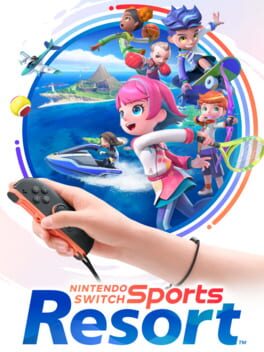
When Nintendo unveiled the first trailer for Switch Sports Resort, it did more than simply tease a new entry in a beloved franchise; it signaled the company’s renewed commitment to the casual‑yet‑competitive niche that has powered the Switch’s longevity since its launch in 2017. The original Wii Sports Resort, released in 2009, turned the then‑novel Wii motion controls into a cultural phenomenon, and its iconic Wuhu Island became a virtual playground that defined a generation of family gaming. By resurrecting that locale on the Switch, Nintendo is tapping into a deep well of nostalgia while simultaneously re‑tooling the experience for a hardware ecosystem that now boasts refined Joy‑Con sensors, a robust online infrastructure, and a user base that has matured alongside the platform.
In the broader market, the announcement arrives at a moment when the console wars have softened into a multi‑platform coexistence, yet the demand for shared, low‑barrier experiences remains fierce. Competitors such as Sony and Microsoft have leaned heavily into high‑budget, narrative‑driven titles, while mobile developers continue to dominate the casual sports segment with titles like Golf Clash and FIFA Mobile. Nintendo’s decision to double‑down on a party‑oriented sports suite therefore positions it as the arbiter of the “play‑anywhere, play‑together” ethos, a stance that could attract both legacy fans and a new wave of social gamers seeking a physically engaging alternative to screen‑bound esports.
What Happened?
The seven‑minute overview trailer, released on Nintendo’s official channels, walks viewers through a vibrant re‑imagining of Wuhu Island, now rendered with the Switch’s upgraded graphics pipeline and a brighter, more dynamic art style. Twelve distinct sports are highlighted, ranging from updated classics like Swordplay and Wakeboarding to fresh entries such as Beach Volleyball and Snowball Fight, each promising refined motion detection and adaptive difficulty that scales from casual family play to competitive high‑score pursuits. The trailer’s pacing deliberately mirrors a day at the resort, moving from sunrise warm‑ups to sunset challenges, underscoring Nintendo’s intent to frame the game as an all‑day social hub rather than a collection of isolated minigames.
Beyond the multiplayer showcase, the trailer emphasizes a surprisingly robust single‑player component. Players will encounter Island Crown challenges that reward mastery of individual disciplines, a free‑roam mode peppered with hidden collectibles that encourage exploration, and streamlined “quick‑play” sessions designed for short bursts of activity during commute or study breaks. Early statements from the development team hint at integration with the Nintendo Switch Online service, allowing leaderboards, seasonal events, and cross‑save functionality that could keep the island lively long after the initial launch window.
Analysis
From a market perspective, Switch Sports Resort is poised to become a catalyst for a secondary sales surge, much like the original Switch Sports did in 2022. The title’s release timing—aligned with the summer holiday season in the Northern Hemisphere—mirrors Nintendo’s historic strategy of leveraging school breaks to boost hardware and software uptake. Moreover, the inclusion of both familiar and novel sports broadens its appeal across demographic segments: families gravitate toward the approachable titles, while dedicated gamers can chase high‑skill leaderboards and seasonal Island Crown rewards, thereby extending the game’s lifecycle beyond the typical 12‑month window.
Technically, the game represents a litmus test for Nintendo’s motion‑control pipeline after years of incremental improvements. The Joy‑Con’s infrared sensor and enhanced gyroscope data are expected to deliver more precise input than the original Wii Remote, but they also raise the bar for developers to fine‑tune latency and accuracy across a diverse player base. Additionally, the decision to keep the experience strictly within the Switch ecosystem—eschewing cross‑play with other consoles—reinforces Nintendo’s long‑standing philosophy of platform‑centric experiences, yet it may limit exposure to the burgeoning cross‑platform multiplayer market that competitors are aggressively courting.
XPLog Opinion
At XPLog UK, we view Switch Sports Resort as Nintendo’s most strategic gambit of the year: a title that not only recycles a beloved setting but also redefines how the Switch can serve as a social catalyst in an increasingly isolated digital landscape. By marrying nostalgia with modern hardware capabilities, Nintendo is likely to cement the Switch’s reputation as the go‑to console for “living‑room esports,” a niche that could translate into sustained subscription growth for Nintendo Switch Online and, ultimately, a healthier ecosystem for third‑party developers seeking a cooperative playground for their own titles.
Final Thoughts
In sum, Nintendo Switch Sports Resort stands as a calculated blend of heritage and innovation, poised to reinforce the Switch’s dominance in the casual‑sports arena while opening fresh avenues for community‑driven content. With a slated release in early summer 2027 and a roadmap that hints at post‑launch seasonal events, players and investors alike should keep an eye on Nintendo’s quarterly reports and the upcoming Nintendo Direct in March, where further details on DLC, online integration, and potential hardware bundles are expected to be disclosed.