.png)
Overview
In an era where licensed games are often dismissed as cash‑grab tie‑ins, the emergence of Star Wars: Galactic Racer offers a rare case study in how a well‑chosen partnership can become a laboratory for design revival. The title arrives at a moment when the racing genre is fragmented between hyper‑realistic simulators, arcade‑style thrill rides, and a growing niche of narrative‑driven experiences. Meanwhile, the Star Wars brand continues to dominate cross‑media revenue streams, yet its forays into pure gameplay experiences have been uneven. Fuse Games, the studio behind the new racer, steps into this volatile landscape armed with a pedigree that harks back to the golden age of high‑octane, crash‑centric racing, making the announcement a bellwether for how legacy mechanics can be re‑contextualized for modern audiences.
That pedigree is not incidental. Fuse Games was born from the ashes of Criterion Software, the studio that gifted the world the Burnout franchise—a series celebrated for its visceral sense of speed, risk, and the intoxicating “game feel” that turned reckless driving into a kinetic sport. The term “game feel” has become a shorthand in development circles for the elusive combination of responsive controls, satisfying feedback loops, and a sense of weight that makes every input feel consequential. By tapping into this DNA, Galactic Racer is not merely another Star Wars spin‑off; it is a deliberate experiment in translating a celebrated, console‑first sensibility onto a multi‑platform, franchise‑driven canvas.
What Happened?
During a recent developer showcase, Fuse Games unveiled the core philosophy that guided Galactic Racer’s creation: “If you’re not feeling something, the experience is dead.” Lead designer Maya Patel explained that the team dissected Burnout’s physics engine, telemetry, and audio cues, then rebuilt those systems from the ground up using a proprietary middleware that could scale across the PlayStation, Xbox, Switch, and PC ecosystems. The result is a racer that promises the same gut‑punch of a well‑timed boost and the satisfying crunch of a perfectly executed takedown, all while threading iconic Star Wars locales—like the neon‑lit streets of Coruscant and the desert dunes of Tatooine—into the race tracks.
Beyond the aesthetic veneer, the developers emphasized a data‑driven approach to “feel.” They logged millions of player inputs during internal playtests, correlating acceleration curves with haptic feedback and visual distortion effects. This granular analysis informed a dynamic difficulty system that subtly adjusts vehicle handling based on player skill, ensuring that the adrenaline surge remains accessible without diluting the high‑risk reward loop that defined Burnout. Early hands‑on impressions from industry journalists suggest that the title delivers a tactile fidelity that feels both nostalgic and freshly calibrated for today’s hardware.
Analysis
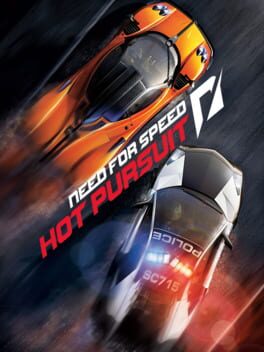
From a market perspective, Galactic Racer occupies a sweet spot at the intersection of nostalgia‑driven demand and franchise leverage. The racing genre has seen a resurgence of arcade‑style titles—such as the recent remaster of Need for Speed: Hot Pursuit—yet few have managed to marry that ethos with a universally recognized IP. By doing so, Fuse Games not only taps into the existing Burnout fanbase, which still holds a cult following despite the series’ dormancy, but also attracts the massive Star Wars audience that may have previously ignored pure racing experiences. This dual‑audience strategy could translate into a stronger launch window, especially as the industry braces for a post‑holiday lull where mid‑year releases often dominate sales charts.
Technically, the pursuit of authentic “game feel” on heterogeneous hardware is ambitious. The Switch’s limited processing headroom, for instance, forces the team to make concessions in particle density and AI complexity, potentially impacting the very feedback loops that define the experience. However, Fuse’s decision to employ a scalable physics layer demonstrates a forward‑looking commitment to cross‑generational parity—a move that could set a new benchmark for how indie‑sized studios handle high‑performance gameplay on less powerful platforms. If successful, this methodology may inspire other developers to revisit legacy mechanics without being shackled by hardware constraints, ushering in a wave of retro‑inspired yet technically sophisticated releases.
XPLog Opinion
At XPLog UK we view Galactic Racer as a bold, if risky, statement that the industry’s obsession with novelty need not eclipse the timeless allure of pure, well‑tuned gameplay. Fuse Games’ willingness to dissect and re‑engineer Burnout’s core feel demonstrates that reverence for the past can coexist with forward‑thinking design, provided the execution is meticulous. While the title’s reliance on Star Wars branding may raise eyebrows among purists, the synergy between iconic sci‑fi aesthetics and a proven arcade formula could very well redefine how licensed games are perceived—not as obligatory cash‑cows, but as genuine playgrounds for design experimentation.
Final Thoughts
In sum, Star Wars: Galactic Racer stands as a litmus test for whether the magic of classic game feel can survive translation across generations, platforms, and IPs. With a slated release in early 2027 across all major consoles and PC, the title will be closely watched by both nostalgic Burnout veterans and the broader Star Wars fanbase. Its performance will likely inform future collaborations between legacy‑rich studios and blockbuster franchises, making it a bellwether for the next wave of arcade‑driven, emotionally resonant experiences.