.png)
Overview
When Jonathan Blow first burst onto the indie scene with the time‑bending platformer Braid, he instantly became synonymous with cerebral design and meticulous craftsmanship. His subsequent magnum opus, The Witness, cemented his reputation as a developer willing to gamble on abstract puzzles wrapped in breathtaking visuals, a gamble that paid off both critically and commercially. Fast‑forward to 2026, Blow has migrated his creative engine to Thekla, a studio that operates under his exacting standards while allowing him to explore even more esoteric gameplay systems. In this climate, the release of Order of the Sinking Star on PlayStation 5 arrives not merely as another puzzle title, but as a deliberate statement: a near‑thousand‑puzzle Sokoban‑centric odyssey that challenges the very patience and perseverance of its audience.
The broader industry context amplifies the significance of this launch. The past few years have seen a surge of indie puzzle experiences—ranging from the minimalist elegance of Tetris Effect to the narrative‑driven enigmas of Return of the Obra Dinn—each leveraging next‑gen console capabilities to deepen immersion. Simultaneously, streaming platforms have turned even the most niche titles into spectator sports, rewarding games that can sustain long, tension‑filled play sessions. Against this backdrop, Blow’s decision to double‑down on a brutally demanding design philosophy is both a risk and a potential catalyst for redefining how high‑difficulty puzzles can thrive within the mainstream console ecosystem.
What Happened?
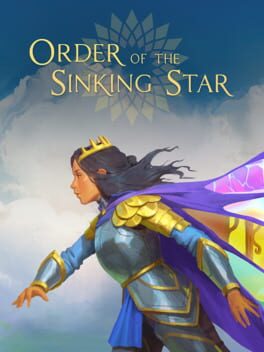
Order of the Sinking Star debuted on the PlayStation 5 storefront with a striking visual trailer that juxtaposed stark, blocky environments against the console’s ray‑traced lighting, immediately signalling the game’s hybrid ambition: classic Sokoban mechanics elevated by modern audiovisual fidelity. The announcement, delivered through a concise developer livestream, emphasized the sheer scale of the undertaking—approximately 950 distinct puzzle scenarios, each meticulously handcrafted, and a branching narrative that promises multiple endings based on the player’s strategic choices. Blow’s team at Thekla framed the project as a “design mixtape,” a curated collection of puzzle archetypes that pushes the boundaries of spatial reasoning and player endurance.
Beyond its sheer volume, the title leverages the PS5’s DualSense controller to translate tactile feedback into gameplay cues: subtle vibrations mimic the weight of moving blocks, while adaptive triggers simulate resistance when a player attempts an illegal push. These sensory layers are not mere gimmicks; they serve to deepen the player’s immersion in a world where every misstep can cascade into a chain of irreversible consequences. The developers have also promised a “sandbox mode” that unlocks after completing the main storyline, allowing seasoned players to remix puzzles and share custom challenges via the PlayStation Network, a clear nod to the thriving community‑driven content trends that have defined recent console generations.
Analysis
From a market perspective, Order of the Sinking Star occupies a precarious niche that straddles hardcore puzzle enthusiasts and the broader indie audience that has grown accustomed to more forgiving experiences. While the title’s ambition may alienate casual players, its depth could cultivate a dedicated sub‑culture of speedrunners and puzzle solvers who thrive on mastering near‑impossible challenges—an audience that has historically driven long‑tail sales for titles like Dark Souls and Cuphead. Moreover, the decision to embed a robust sharing ecosystem positions the game to benefit from user‑generated content, a proven engine for sustained engagement that could offset any initial sales volatility caused by its steep learning curve.
Technically, delivering nearly a thousand distinct puzzles without sacrificing performance on the PS5 is a testament to Thekla’s optimization prowess. However, the sheer scale introduces potential pitfalls: balancing difficulty progression, ensuring each puzzle feels distinct, and preventing player fatigue are design hurdles that have tripped even seasoned developers in the past. Should Blow’s team succeed, the title could set a new benchmark for puzzle density and replayability, compelling competitors to reconsider the depth versus breadth trade‑off in future releases. Conversely, any missteps could reinforce the perception that ultra‑hard indie titles are niche curiosities, limiting their appeal to the mainstream console market.
XPLog Opinion
At XPLog UK, we view Order of the Sinking Star as a bold, if polarising, experiment that reasserts Jonathan Blow’s role as a provocateur within the medium; it forces the industry to ask whether endurance‑based design can coexist with the accessibility expectations of today’s diverse player base, and whether the console ecosystem is ready to champion a game that rewards perseverance over instant gratification.
Final Thoughts
In sum, Order of the Sinking Star stands as a litmus test for the viability of high‑complexity puzzle experiences on next‑gen consoles, and its performance over the next twelve months will likely inform how publishers allocate resources to similarly ambitious indie projects. Keep an eye on community‑driven leaderboards, upcoming DLC roadmaps, and the potential for a PC port later in 2027, all of which will shape the lasting legacy of Blow’s most demanding title to date.