.png)
Overview
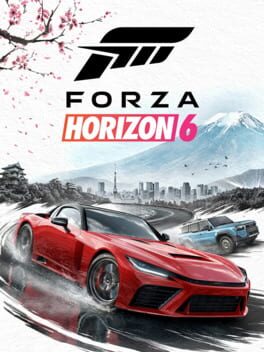
Since its debut in 2012, the Forza Horizon franchise has become the benchmark for open‑world racing experiences, marrying Microsoft’s meticulous attention to automotive detail with a festival‑like atmosphere that encourages both casual cruising and high‑octane competition. Each annual instalment has not only pushed the graphical envelope on Xbox hardware but also subtly reshaped the expectations of players who demand seamless world‑building, dynamic weather systems, and a relentless stream of live events. The series’ migration onto PlayStation 5, first hinted at during the launch of Forza Horizon 5, represented a rare moment of cross‑generational goodwill, suggesting that Microsoft was willing to share its flagship racing IP beyond the confines of its own console ecosystem.
That goodwill, however, now sits on shaky ground. In late August, reputable outlets The Verge and IGN reported that the highly anticipated PlayStation 5 version of Forza Horizon 6 has been pushed back to 2027—a staggering three‑year postponement that dwarfs typical launch‑window adjustments. Playground Games, the studio behind the series, had publicly refuted any delay just weeks earlier, insisting the title remained on schedule. This contradiction not only fuels speculation about internal development bottlenecks but also surfaces broader strategic tensions between Microsoft’s aggressive multiplatform ambitions and Sony’s desire to keep its console library competitive amid a crowded next‑gen market.
What Happened?
According to the latest intelligence, the delay stems from a confluence of technical, licensing, and strategic factors. Playground Games is reportedly re‑architecting the title on the cutting‑edge ForzaTech 2.0 engine, a platform that aims to deliver ray‑traced lighting, AI‑driven traffic, and a fully mutable weather system that reacts in real time to player actions. Integrating these capabilities while maintaining parity across Xbox Series X|S and PlayStation 5 has proven more complex than initially projected, especially given the need to secure new automotive licences for vehicles slated for the 2027 horizon. Moreover, Microsoft’s ongoing push to bundle Forza Horizon 6 into Xbox Game Pass has introduced additional layers of negotiation around revenue sharing and exclusive content pipelines, further elongating the development timetable.
The timeline of public statements adds another layer of intrigue. In early August, Playground Games issued a brief on social media asserting that the PlayStation 5 launch remained “on track,” a claim that was quickly echoed by several industry analysts. Yet within weeks, The Verge’s Tom Warren and IGN’s editorial team cited insider sources indicating a “significant schedule shift.” The rapid reversal suggests either a miscommunication within Microsoft’s publishing hierarchy or a strategic decision to withhold the delay until a more opportune moment, perhaps aligning the PlayStation release with a major hardware refresh or a future Xbox showcase. This back‑and‑forth has left the player community divided, with some fans expressing disappointment while others speculate that the extra development time could yield a generational leap forward.
Analysis
From a market perspective, postponing the PlayStation 5 version of Forza Horizon 6 could recalibrate the competitive dynamics of the racing genre. Sony’s current flagship racers—such as Gran Turismo 7 and the upcoming Need for Speed Revolution—are vying for the same demographic of enthusiasts who crave photorealistic visuals and expansive open worlds. By delaying, Microsoft risks ceding ground to these rivals, potentially eroding the franchise’s cross‑platform momentum and diminishing its leverage in future licensing negotiations. Conversely, the delay may serve as a defensive maneuver, allowing Microsoft to concentrate resources on delivering a polished Xbox‑centric experience that can be leveraged as a premium Game Pass title, thereby reinforcing the subscription service’s value proposition.
Technical hurdles also loom large. The ambition to unify the ForzaTech 2.0 engine across disparate hardware architectures demands a level of optimisation that few studios have achieved at this scale. PlayStation 5’s custom SSD and GPU layout differ significantly from Xbox’s architecture, meaning that developers must craft bespoke rendering pipelines, memory management strategies, and controller integration layers. Additionally, the inclusion of next‑generation features like real‑time ray tracing for reflective car surfaces and AI‑driven traffic behaviour introduces a cascade of testing requirements, especially when paired with the stringent certification processes of both Microsoft and Sony. These challenges, while daunting, could ultimately result in a benchmark title that sets new standards for cross‑platform fidelity—provided the extended timeline is managed judiciously.
XPLog Opinion
At XPLog UK, we view the delay not merely as a setback but as a calculated gamble by Microsoft to future‑proof its marquee racing franchise. While the three‑year gap threatens to dilute immediate hype, it also signals an intent to deliver a product that transcends the incremental upgrades typical of annual releases. If Playground Games can harness the extra development window to perfect the engine, secure an unprecedented roster of licensed vehicles, and embed robust live‑service features, Forza Horizon 6 could emerge as a defining title for both Xbox and PlayStation ecosystems. However, the onus now lies on Microsoft to communicate a clear roadmap and to ensure that the eventual PlayStation launch does not feel like an afterthought, lest the franchise’s hard‑won reputation among core gamers erode.
Final Thoughts
In sum, the reported 2027 release date for Forza Horizon 6 on PlayStation 5 underscores the growing complexity of delivering next‑gen, cross‑platform experiences in an era of aggressive hardware differentiation and evolving subscription models. Players should keep a close eye on Microsoft’s forthcoming Xbox Series X|S showcase later this year, as well as Sony’s next hardware refresh cycle, both of which will likely provide clearer signals about when the delayed title will finally hit PlayStation shelves. Until then, the racing community remains poised on the edge of anticipation, hopeful that the extra development time will translate into a truly revolutionary open‑world racing adventure.