.png)
Overview
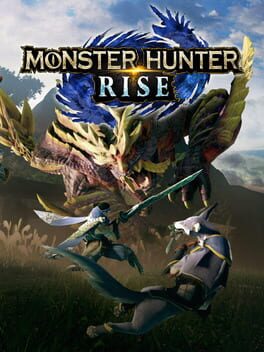
When Capcom first unveiled Monster Hunter Rise on the Nintendo Switch in 2021, the title instantly became a cultural touchstone, marrying the franchise’s signature hunt‑and‑craft loop with a breezier, more accessible design language. The game’s rapid ascent to 20 million copies sold across Switch, PC, Xbox and PlayStation not only cemented it as a commercial juggernaut but also demonstrated the franchise’s elasticity in a post‑pandemic market hungry for cooperative experiences. This milestone arrives at a moment when the mobile gaming sector commands over half of global game revenues, prompting publishers to reevaluate legacy IPs through the lens of on‑the‑go accessibility and subscription‑driven distribution.
Capcom’s decision to partner with Netflix for a mobile rollout reflects a broader industry pivot: heavyweight developers are increasingly courting over‑the‑top (OTT) platforms to bypass traditional app‑store gatekeepers and tap into an already‑engaged subscriber base. Netflix, having spent the past two years building a nascent gaming catalogue, now possesses a foothold on both iOS and Android ecosystems, offering developers a curated storefront that sidesteps the 30 % revenue cut imposed by Apple and Google. For a franchise as globally resonant as Monster Hunter, the move promises to extend its reach to millions of casual gamers who have yet to experience a console‑grade hunt, while also testing the waters of subscription‑based monetisation for a traditionally premium‑priced series.
What Happened?
Earlier today, fresh store listings appeared on the Apple App Store and Google Play, signalling the soft launch of Monster Hunter Rise on mobile devices – but only for Netflix subscribers. The entry is currently hidden behind the Netflix gaming hub, meaning players must possess an active Netflix subscription to download and play the title. This approach mirrors Netflix’s earlier mobile releases such as “Stranger Things 3: The Game,” positioning Rise as a flagship offering intended to both reward existing subscribers and attract new ones through the lure of a beloved, high‑production value title.
Capcom’s press release confirmed that the mobile version will retain the core gameplay loop, including the iconic Palamute companions, the Wirebug mobility system, and the expansive ecosystem of monsters that defined the console releases. However, the company acknowledged that certain high‑end graphical features will be scaled back to accommodate a broader range of hardware, and that micro‑transaction‑free progression will be preserved to align with Netflix’s ad‑free, all‑inclusive model. The announcement also hinted at a staggered global rollout, with the soft launch serving as a telemetry phase to fine‑tune performance, latency, and control schemes before a full worldwide release later in the year.
Analysis
The partnership is a calculated strike at the convergence of two massive revenue streams: Capcom’s proven ability to monetize premium IPs and Netflix’s aggressive expansion into interactive entertainment. By anchoring Rise behind a subscription, Netflix can differentiate its library from the crowded free‑to‑play market, while Capcom sidesteps the volatile micro‑transaction ecosystem that has plagued many mobile adaptations of console franchises. Moreover, the move could catalyse a shift in how AAA publishers view subscription platforms, potentially prompting rivals such as Ubisoft or EA to negotiate similar deals, thereby reshaping the economics of mobile game distribution.
From a technical standpoint, translating a title that originally leveraged the Switch’s hybrid hardware to the fragmented Android and iOS landscape is no small feat. Capcom will need to reconcile diverse screen resolutions, touch‑centric controls, and variable network conditions without sacrificing the tactile responsiveness that fans expect from a Monster Hunter hunt. Success here could set a new benchmark for future cross‑platform ports, encouraging developers to invest in robust, platform‑agnostic engines that streamline the migration from console to mobile without a proportional increase in development overhead.
XPLog Opinion
At XPLog UK we view this Netflix‑first launch as a bold, if slightly contentious, evolution for the Monster Hunter brand. The accessibility boost is undeniable – millions of smartphone‑first gamers will finally get to wield the Great Sword – yet the subscription barrier risks alienating a core segment that has traditionally purchased games outright. In a market where free‑to‑play titans dominate mobile charts, Capcom’s choice to forgo in‑app purchases in favour of a Netflix‑only model may limit immediate revenue but could cultivate a more loyal, long‑term player base that values a premium, ad‑free experience.
Final Thoughts
Capcom’s mobile debut of Monster Hunter Rise via Netflix marks a pivotal experiment at the intersection of AAA pedigree and subscription‑driven distribution. As the soft launch gathers data over the coming weeks, the industry will be watching closely to see whether the model can sustain the franchise’s reputation for depth while delivering the convenience expected of mobile gamers. Keep an eye on Capcom’s upcoming Q4 earnings call for early performance metrics, and watch for a full global rollout slated for early 2027, which could redefine how legacy franchises find new life on handheld devices.