.png)
Overview
Xbox has spent the better part of the last decade refining a launch cadence that favours a steady stream of titles over blockbuster‑only moments. The strategy, honed under the stewardship of Phil Spencer, leans heavily on the twin pillars of Game Pass and a low‑barrier marketplace that welcomes both polished AAA releases and experimental indie ventures. In a week that has already seen a handful of high‑profile announcements, the console’s latest trio of releases underscores a deliberate pivot toward diversity of experience, betting that the sheer volume of fresh content will keep subscribers engaged amid fierce competition from Sony’s PlayStation Studios line‑up and Nintendo’s first‑party exclusives.
Historically, the romance of the RMS Titanic has resurfaced in gaming sporadically – from early 90s point‑and‑click adventures to more recent VR recreations – but never as a satirical survival simulator on a major console. The decision to place such an oddball concept on Xbox’s front porch reflects a broader industry trend: developers are increasingly willing to experiment with niche historical settings, leveraging modern physics engines and streaming capabilities to deliver experiences that would have been impossible on legacy hardware. For Microsoft, the move signals confidence that its audience is mature enough to appreciate a game that mixes dark humour, emergent gameplay, and a tongue‑in‑cheek homage to a cultural myth.
What Happened?
On October 7, Microsoft announced the simultaneous launch of three new titles for Xbox Series X|S and Windows PC: the quirky “Titanic Escape Simulator,” a rhythm‑driven indie platformer titled “Neon Pulse,” and a narrative‑driven action‑RPG “Echoes of Valhalla.” All three are available on Game Pass from day one, a tactic that reinforces the subscription’s “all‑you‑can‑play” promise and provides immediate exposure for smaller studios that might otherwise be lost in the noise of a crowded marketplace. The releases were accompanied by a brief developer livestream, during which the creators of Titanic Escape Simulator explained their inspiration – a blend of classic disaster movies, sandbox physics, and a desire to subvert the tragic legacy of the real‑world ship with a tongue‑in‑cheek survival challenge.
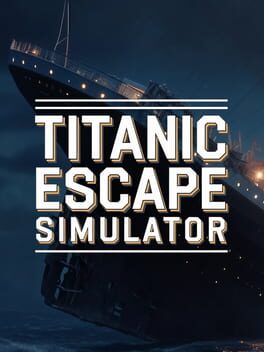
“Titanic Escape Simulator” puts players aboard a meticulously modelled early‑20th‑century ocean liner that, true to history, meets a watery demise. However, rather than a solemn reenactment, the game adopts a sandbox approach: players must scavenge for life‑vests, negotiate crowded decks, and even barter with a digitally resurrected Billy Zane cameo for a coveted spot on a lifeboat. The developers have emphasized emergent storytelling, allowing each playthrough to unfold differently based on player choices, from heroic rescues to comedic chaos. Early access feedback highlights a surprisingly robust physics system that simulates the ship’s tilt, water ingress, and crowd dynamics, all rendered in a stylised, slightly cartoonish aesthetic that tempers the underlying tragedy.
Analysis
The inclusion of Titanic Escape Simulator within the Game Pass catalogue is a calculated risk that could pay dividends in subscriber retention. By expanding the library’s genre breadth, Microsoft reinforces the platform’s reputation as a haven for experimental titles that might never see a physical release. This approach also aligns with the broader market shift toward “games as service,” where continual content refreshes keep engagement metrics high. Moreover, the game’s reliance on procedural crowd AI and real‑time fluid simulation showcases Xbox Series X|S’s hardware capabilities, serving as a low‑cost tech demo that could attract other developers to explore similar sandbox mechanics on the platform.
From a competitive standpoint, Sony’s PlayStation ecosystem has traditionally leaned on marquee exclusives to drive hardware sales, while Nintendo capitalises on family‑friendly IPs. Microsoft’s diversification strategy, however, aims to build a “content moat” that is less dependent on any single blockbuster. The danger, however, lies in potential oversaturation; an influx of niche titles could dilute brand perception if quality control falters. Titanic Escape Simulator’s quirky premise may attract curiosity, but sustained success will hinge on post‑launch support, community‑generated content, and the ability to translate its novelty into replayability that justifies its place alongside heavyweight releases.
XPLog Opinion
At XPLog we view the launch as a bold affirmation that Microsoft is no longer content to be the “platform for the masses” alone; it now seeks to be the “platform for the daring.” By foregrounding a title that deliberately flirts with absurdity, Xbox signals to developers that there is room for creative risk‑taking without the usual commercial shackles. If the game can convert its initial curiosity spike into a vibrant modding community or seasonal events, it will validate the notion that even the most outlandish concepts can become cornerstones of a thriving ecosystem.
Final Thoughts
In short, the October 7 triple launch underscores Microsoft’s commitment to a breadth‑first content strategy, betting that the sum of many eclectic experiences will outweigh the occasional misstep. Players should keep an eye on upcoming patches for Titanic Escape Simulator, watch for community‑driven challenges on Xbox Live, and note the next wave of Game Pass additions slated for the holiday quarter, which will further test the durability of this diversified approach.