.png)
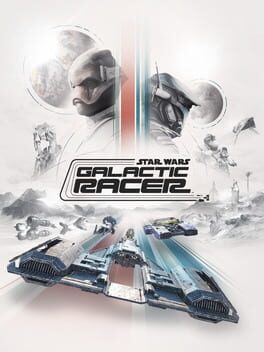
Overview
When the lights of a distant galaxy flicker to life on a console screen, the expectation is not merely a cinematic adventure but an immersive experience that leverages the weight of the franchise’s legacy. The latest entry, Star Wars: Galactic Racer, arrives at a moment when the arcade‑racing genre is undergoing a quiet renaissance, spurred by a new wave of titles that blend high‑octane thrills with rogue‑lite progression systems. This convergence mirrors the industry’s broader shift toward games that reward mastery through iterative runs, a design philosophy popularized by titles such as Hades and F1 2021's seasonal modes. By embedding the iconic podracing spectacle within a framework that emphasizes boost management and vehicle customization, the game positions itself as both a nostalgic homage and a forward‑looking experiment.
Historically, Star Wars has flirted with the racing niche sporadically—most notably with the 1999 Star Wars: Episode I Racer, which set a high bar for speed, physics, and the sense of danger that defines podracing. That title, while beloved, suffered from the limitations of its era: clunky online infrastructure and a lack of persistent progression. Galactic Racer inherits the DNA of its predecessor but reimagines it for a modern ecosystem, where live service models, cross‑platform play, and post‑launch content are expected standards. The announcement, therefore, is not just a new product drop; it signals Lucasfilm Games' renewed commitment to leveraging the franchise’s kinetic moments in a market hungry for bite‑size, replayable experiences that can sit comfortably alongside blockbuster releases.
What Happened?
The unveiling of Galactic Racer was delivered through a live‑streamed showcase that highlighted the game's dual‑boost system, a mechanic that forces players to balance raw speed against the risk of catastrophic overheating. The first tier, an afterburner, offers a modest, always‑available surge that encourages strategic timing. The second, a ramjet, delivers a far more potent burst but demands continuous button pressure, precise navigation, and an intimate understanding of each vehicle's thermal envelope. This risk‑reward loop is amplified by a robust upgrade tree that spans three distinct vehicle classes—landspeeder, speeder bike, and skim speeder—each with unique handling characteristics and visual identities tied to specific planetary biomes.
Beyond the core gameplay, the developers disclosed a rogue‑lite campaign structure wherein players race through a Galactic League season, unlocking upgrades and cosmetic rewards as they survive increasingly hostile courses. The campaign’s procedural elements ensure that no two runs feel identical, a design choice that aligns with the broader industry trend of extending a game's lifespan through emergent difficulty spikes. Additionally, the title supports cross‑play between Xbox, PlayStation, and PC, and promises post‑launch content packs that will introduce new tracks, vehicle skins, and narrative vignettes that expand the lore of the podracing circuit.
Analysis
From a market perspective, Galactic Racer occupies a sweet spot between premium, narrative‑driven Star Wars experiences and the low‑entry‑bar, high‑replayability titles that dominate the mobile and indie sectors. Its reliance on a refined boost mechanic taps into a growing appetite for skill‑based micro‑competitions, a niche currently dominated by titles such as Mario Kart 8 Deluxe and Wipeout Omega Collection. By offering a competitive ladder that rewards precision and vehicle tuning, the game could cultivate a grassroots esports scene, especially if the developers follow the precedent set by Rocket League in supporting community tournaments and seasonal rankings. Moreover, the decision to embed a rogue‑lite progression system addresses the fatigue many players feel with static single‑player campaigns, ensuring that each season feels fresh and that monetization can be approached through cosmetic microtransactions rather than pay‑to‑win power scaling.
Technically, the dual‑boost system presents both an opportunity and a challenge. On one hand, it differentiates Galactic Racer from generic arcade racers by demanding a deeper mastery of heat management, akin to the stamina systems seen in fighting games. On the other hand, balancing the heat thresholds across three vehicle classes will require rigorous telemetry analysis post‑launch to avoid alienating casual players who may find the ramjet's penalty too punitive. The game's success will also hinge on its ability to deliver seamless cross‑platform performance, a hurdle that many recent multi‑console releases have stumbled over due to disparate hardware capabilities and network latency issues. If Lucasfilm Games can navigate these technical waters, Galactic Racer could set a new benchmark for franchise‑driven arcade titles.
XPLog Opinion
At XPLog UK, we view Galactic Racer as a strategic masterstroke that repositions the Star Wars brand within a segment that has been largely underserved by major publishers. By marrying the franchise’s most adrenaline‑charged lore element with a sophisticated, skill‑centric racing system, Lucasfilm Games not only revitalizes the podracing mythos but also diversifies its portfolio beyond the prevailing action‑adventure formula. The title’s emphasis on player agency, progression depth, and cross‑play signals a mature understanding of the modern gamer’s expectations, and we anticipate that its launch will catalyze a wave of similarly ambitious, franchise‑linked arcade experiences.
Final Thoughts
Star Wars: Galactic Racer arrives as a bold experiment that could reshape how legacy franchises approach the arcade genre, offering a compelling blend of nostalgia, competitive depth, and modern live‑service sensibilities. With its scheduled release in Q1 2027 and a roadmap of post‑launch content already hinted at, the title promises to keep the podracing spirit alive while inviting a new generation of racers to master the delicate dance between speed and heat. Players and analysts alike should keep an eye on community reception, leaderboard dynamics, and the forthcoming content drops that will ultimately determine whether Galactic Racer becomes a fleeting novelty or a lasting pillar of the Star Wars gaming universe.