.png)
Overview
The surprise drop of Star Wars: Galactic Racer has sent ripples through a franchise that has, for the past two decades, been a roller‑coaster of critical highs and commercial lows. While the galaxy‑wide saga has produced iconic RPGs like Knights of the Old Republic in 2003, its recent forays—most notably the narrative‑driven Jedi: Survivor and the experimental Star Wars Zero Company—have struggled to capture the same critical acclaim, often landing in the mid‑70s Metascore range despite hefty marketing budgets.
In an industry still wrestling with the aftershocks of the console generation transition, a new title achieving an 88 Metascore is more than a statistical outlier; it signals a potential pivot point for both the IP holder and the broader market. The current ecosystem, dominated by live‑service shooters and expansive open‑world adventures, has left little room for pure, high‑octane racing experiences, especially those anchored in a licensed universe. Galactic Racer’s arrival therefore forces analysts to reconsider the elasticity of fan expectations and the strategic value of niche, genre‑focused projects within a blockbuster‑heavy pipeline.
What Happened?
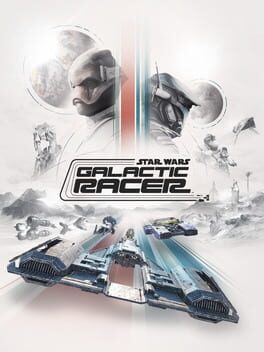
Developed by a relatively under‑the‑radar studio that previously contributed to the Star Wars mobile ecosystem, Galactic Racer launched today across PlayStation 5, Xbox Series X|S, and PC, delivering a hyper‑fast, combat‑infused racing experience that blends the aesthetic grandeur of the Star Wars universe with the kinetic thrills of modern arcade racers. The game features a roster of iconic ships, each customizable with weapon load‑outs, and tracks that span from the neon‑lit streets of Nar Shaddaa to the treacherous ice fields of Hoth, all rendered with a visual fidelity that leverages ray‑tracing and high frame‑rate modes to satisfy both casual fans and hardcore performance seekers.
Publisher Lucasfilm Games announced that the title has already secured an 88 Metascore on Metacritic, outpacing not only the recent Jedi: Survivor (Metascore 78) but also eclipsing the broader critical reception of the franchise’s last decade. In a post‑launch briefing, the lead designer highlighted a design philosophy centered on “risk‑reward loops” that encourage aggressive piloting while rewarding strategic use of power‑ups, a mechanic that reviewers have praised for revitalising the sense of danger that defined early Star Wars arcade cabinets of the 1980s.
Analysis
The commercial impact of such a high score cannot be overstated. Historically, a Metascore above 85 has correlated with sustained sales momentum, especially when paired with strong community engagement and post‑launch content pipelines. Galactic Racer’s critical success arrives at a moment when EA’s Star Wars Battlefront franchise is waning, and Disney’s internal game studio is still finding its footing after the controversial shutdown of several legacy projects. By delivering a product that excels in both technical execution and gameplay depth, Lucasfilm Games may have re‑established credibility that could translate into higher licensing confidence from third‑party developers seeking to tap into the Star Wars brand without the overhead of massive open‑world production.
From a platform perspective, the title’s cross‑generation launch on both current‑gen consoles and PC positions it as a unifying banner for the next wave of console competition. Sony’s emphasis on exclusive, narrative‑driven experiences has left a gap for high‑skill, multiplayer‑centric titles, while Microsoft’s acquisition of multiple studios has been aimed at diversifying its catalogue. Galactic Racer, with its robust online modes and potential for esports integration, could become a keystone title that drives hardware sales and subscription engagement for both ecosystems, especially if seasonal updates and competitive circuits are announced in the coming months.
XPLog Opinion
At XPLog UK we view Galactic Racer not merely as a surprise hit but as a proof‑point that the Star Wars licence still possesses untapped genre versatility; the franchise’s future should no longer be confined to the RPG and shooter corridors that have dominated the past fifteen years. By embracing a focused, high‑adrenaline experience, Lucasfilm Games has demonstrated that strategic risk‑taking—both in design and in marketing—can yield critical and commercial dividends, and we expect to see a resurgence of genre‑specific Star Wars titles that cater to distinct player niches rather than chasing blanket blockbuster formulas.
Final Thoughts
With its meteoric rise to the top of the franchise’s critical rankings, Star Wars: Galactic Racer sets a new benchmark for what a licensed game can achieve when it marries authentic universe storytelling with razor‑sharp gameplay mechanics. As the industry watches the next quarterly earnings reports, the title’s performance will be a litmus test for the viability of niche, high‑skill experiences in a market saturated with live‑service behemoths, and the coming months of DLC roadmaps and esports announcements will be the true gauge of its lasting influence.