.png)
Overview
More than a year after the Switch 2’s global debut, Nintendo has quietly amassed a solid install base of over 23 million units, a figure that reflects both the platform’s enduring appeal and the challenges of maintaining growth in a market now dominated by high‑spec consoles and cloud‑gaming services. While the hardware’s hybrid design continues to attract a broad demographic—from casual handheld fans to core gamers craving a portable powerhouse—the sales curve has inevitably begun to flatten, prompting the Japanese giant to lean on its time‑tested play‑to‑sell tactics: curated bundles that combine hardware, software, and exclusive aesthetics into a single purchase proposition.
Historically, Nintendo has used bundles to punctuate hardware cycles, from the original Wii’s Sports bundle that turned a fledgling console into a cultural phenomenon, to the Switch’s ‘Mario Kart 8 Deluxe’ and ‘Animal Crossing: New Horizons’ packages that turned casual curiosity into sustained revenue streams. In the current console generation, Sony and Microsoft are aggressively pricing their next‑gen devices while also offering subscription services that blur the line between hardware ownership and digital access. Within this competitive crucible, Nintendo’s decision to roll out a new “Choose‑Your‑Game” bundle in its home market is less a novelty than a calculated maneuver to protect market share, invigorate retail shelves, and reaffirm the company’s reputation for delivering value‑centric experiences.
What Happened?
In early October, Nintendo announced a Japan‑exclusive “Choose‑Your‑Game” Switch 2 bundle that allows consumers to select one title from a curated list of three flagship releases—each representing a distinct genre pillar: a flagship first‑party adventure, a multiplayer party staple, and a critically acclaimed indie showcase. Priced competitively at ¥34,980 (approximately $250 USD), the bundle pairs the console with a 64 GB microSD card, a stylus, and a custom‑designed dock that bears subtle nods to the selected game’s visual identity. Nintendo’s regional marketing director emphasized that the flexibility of choice is intended to “empower players to start their Switch 2 journey with a game that truly resonates with their personal playstyle,” a sentiment that mirrors the company’s broader push toward player‑centric hardware narratives.
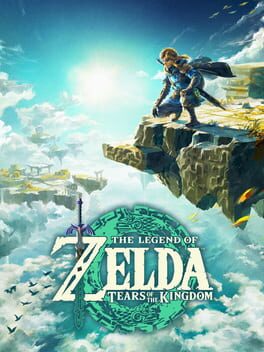
The announcement arrives amid a flurry of hardware bundles that Nintendo has released worldwide over the past six months, ranging from limited‑edition “Mario” themed consoles to “Game‑Specific” bundles that pair the Switch 2 with titles like “The Legend of Zelda: Tears of the Kingdom” and “Metroid Prime Remastered.” By concentrating this latest offering on the Japanese market, Nintendo is tapping into a region where physical game sales still command significant market share, and where retailer relationships remain a potent lever for moving inventory. Early reports suggest that the bundle will be stocked in major chains such as Yodobashi and Bic Camera, with pre‑order windows opening within the week of the announcement, a strategy designed to generate immediate shelf‑turnover and to create a buzz that can spill over into neighboring Asian territories.
Analysis
The timing of this bundle is crucial. As the Switch 2 edges toward the two‑year mark, its sales velocity is naturally waning, and Nintendo’s quarterly financial guidance has hinted at a modest dip in hardware revenue compared with the launch year. By bundling a high‑visibility title with the console, Nintendo not only adds perceived value for price‑sensitive shoppers but also secures a guaranteed software sell‑through, a metric that directly influences developer confidence and future first‑party investment. Moreover, the “choose‑your‑game” mechanic sidesteps the risk of alienating fans who might otherwise reject a bundle tied to a single franchise, thereby widening the appeal across divergent player segments.
From a competitive standpoint, the bundle serves as a defensive bulwark against Sony’s PlayStation 5 “Game of the Year” bundles and Microsoft’s Xbox Series X “Game Pass” promotions, both of which leverage exclusive titles and subscription economics to lock in consumers. Nintendo’s approach, however, leans on tangible ownership and the nostalgic pull of physical media—an area where the Japanese market still exhibits strong loyalty. Technically, the inclusion of a larger microSD card addresses a long‑standing pain point for Switch owners, who have frequently cited storage constraints as a barrier to adopting the platform’s growing library of high‑resolution titles. By pre‑emptively solving this friction point, Nintendo not only smooths the onboarding experience for new adopters but also signals an awareness of evolving consumer expectations around seamless, out‑of‑the‑box functionality.
XPLog Opinion
At XPLog UK we view Nintendo’s “Choose‑Your‑Game” bundle as a masterclass in market‑responsive packaging: it acknowledges the plateauing hardware sales curve while simultaneously reinforcing the company’s core value proposition—delivering a complete, ready‑to‑play experience that feels both personal and premium. The strategic emphasis on choice rather than coercion respects the increasingly sophisticated Japanese gamer, who now expects curated flexibility rather than blanket mandates. If the bundle succeeds in driving a measurable uplift in both hardware and software units, it could set a precedent for future regional bundles that blend localized content with global brand power, a playbook that other publishers may well emulate as the console wars shift toward nuanced, market‑specific engagements.
Final Thoughts
In sum, Nintendo’s latest bundle is more than a retail gimmick; it is a calibrated response to a maturing hardware lifecycle, a reaffirmation of the company’s legacy of value‑driven packaging, and a tactical move to keep the Switch 2 ecosystem vibrant in its most loyal market. As the bundle hits shelves in November and pre‑orders roll out, analysts will be watching sales data closely to gauge whether this model can be scaled globally or remains a Japan‑centric success story. Either way, the outcome will inform how Nintendo—and indeed the broader console industry—balances hardware longevity with fresh, player‑first incentives in an increasingly crowded entertainment landscape.