.png)
Overview
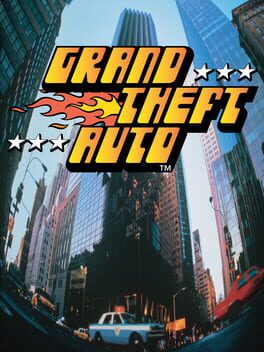
Since its debut in 1997, Rockstar Games has cultivated a reputation for turning the sandbox genre into a cultural barometer, using the Grand Theft Auto franchise to satirise everything from 1990s pop culture to contemporary politics. Each new iteration has arrived on a development horizon of five to seven years, a cadence that not only allows the studio to refine its proprietary RAGE engine but also to observe the broader entertainment ecosystem, noting which memes fade and which become entrenched. This long‑form development model has historically given Rockstar the latitude to embed razor‑sharp social commentary, as seen in the hyper‑exaggerated 2013 release of GTA V, which mirrored the rise of streaming, gig‑economy hustles, and the nascent concerns around digital surveillance.
In the present climate, the industry is awash with “trend‑chasing” titles that graft battle‑royale modes onto legacy franchises, lean heavily on live‑service monetisation, and adopt minimalist art styles to cut production costs. Simultaneously, the audience’s appetite for authentic, narrative‑driven experiences remains robust, as evidenced by the sustained success of titles like The Last of Us II and Cyberpunk 2077’s post‑launch redemption. Rockstar’s latest declaration—that its GTA VI team deliberately eschewed the temptation to “jump on the bandwagon” and instead crafted an “own slanted, overblown version” of contemporary satire—positions the studio at a crossroads where artistic integrity clashes with market pressure.
What Happened?
During a recent developer round‑table streamed to a select press cohort, senior figures from Rockstar North revealed that the creative leads consciously rejected several popular design cues that have become ubiquitous across the open‑world genre. Instead of integrating a persistent battle‑royale loop or micro‑transaction‑driven property acquisition system, the team opted to amplify the series’ signature over‑the‑top realism, pushing the boundaries of city‑scale AI, dynamic weather, and emergent storytelling. Their mantra, as quoted, was to “avoid trends that would become outdated come launch,” a philosophy that harkens back to the studio’s early days when the original GTA’s pixelated streets were a deliberate contrast to the glossy 3D titles of the era.
The development timeline, now approaching six years, has seen Rockstar invest heavily in next‑gen rendering pipelines, real‑time ray tracing, and a bespoke procedural generation framework that promises a living metropolis capable of reacting to player actions in unprecedented ways. While the studio has not disclosed concrete gameplay mechanics, the emphasis on “slanted, overblown versions” suggests an intention to hyper‑exaggerate societal tropes—think a city where influencer culture is literalised through AI‑driven paparazzi drones, or a financial district that morphs into a volatile, player‑shaped market simulation. By sidestepping the low‑risk, high‑frequency content updates that dominate the current console ecosystem, Rockstar is betting on a singular, blockbuster launch that will dominate the conversation for years.
Analysis
The decision to shun trend‑following mechanics could yield a double‑edged sword for Rockstar’s market performance. On one hand, the franchise’s brand equity remains one of the strongest in gaming, and a bold, self‑contained experience is likely to attract both legacy fans and newcomers craving a cohesive narrative. This approach also differentiates GTA VI from competitors like Ubisoft’s “live‑service” titles, which have suffered from player fatigue due to constant content churn. However, the financial risk is non‑trivial; a title that refuses to embed post‑launch monetisation pathways may forfeit the recurring revenue streams that have become a staple for publishers navigating the post‑pandemic market slowdown.
Technical ambition compounds the gamble. Rockstar’s push for a city that evolves in real time demands a level of engine optimisation that has historically required multiple hardware generations to perfect. The RAGE engine’s upcoming overhaul must reconcile the need for massive AI populations with the constraints of current console architectures, a challenge that could result in performance compromises or delayed release windows. Moreover, the industry’s shift toward cloud‑based gaming services adds another variable: if GTA VI’s world is too demanding for streaming platforms, Rockstar may inadvertently cede a segment of the emerging subscriber base to more lightweight, cloud‑optimised competitors.
XPLog Opinion
From XPLog’s perspective, Rockstar’s refusal to dilute GTA VI with fleeting trends is a courageous reaffirmation of the studio’s auteur‑driven roots, and it signals to the broader industry that there is still a viable market for singular, story‑centric blockbusters. While the financial calculus may appear conservative in an era dominated by micro‑transactions, the long‑term brand reinforcement and cultural impact of a well‑executed, trend‑free launch could outweigh short‑term revenue dips, setting a benchmark for future AAA projects that wish to prioritise artistic vision over incremental monetisation.
Final Thoughts
Ultimately, GTA VI’s anti‑trend stance could reshape expectations for next‑generation open‑world design, proving that a meticulously crafted, self‑contained experience still commands the spotlight in a market saturated with perpetual updates. Players and analysts alike should mark the anticipated release window in late 2025, while keeping an eye on Rockstar’s forthcoming technical showcases that will reveal how the studio plans to balance raw ambition with the practicalities of today’s console and streaming ecosystems.