.png)
Overview
October has become the unofficial launch window for heavyweight releases across the console spectrum, and Nintendo’s latest handheld, the Switch 2, is poised to be the focal point of that surge. After a year of speculation surrounding a native port of Square Enix’s beloved Kingdom Hearts saga, the announcement finally materialised, promising a full‑blown, offline experience that finally abandons the stop‑gap cloud streaming model that many fans regarded as a compromise. This shift is more than a technical footnote; it signals Nintendo’s confidence that the upgraded SSD‑driven architecture can sustain the data‑intensive demands of a franchise that spans multiple generations, cinematic cut‑scenes, and a sprawling musical score.
Yet the excitement is tempered by the stark reality of storage economics on a handheld device. The Switch 2’s base model ships with a modest 128 GB of internal flash, a figure that already feels cramped when juxtaposed with the 130 GB footprint of the upcoming Kingdom Hearts Collection. Historically, Nintendo has mitigated such constraints through cloud streaming, micro‑SD expansion, and selective content downloads. This time, however, the decision to deliver the entire library natively forces players to confront a storage calculus that will likely reshape how they manage their game libraries, prompting a wave of micro‑SD purchases and sparking debate about the practicality of massive, all‑in‑one compilations on portable hardware.
What Happened?
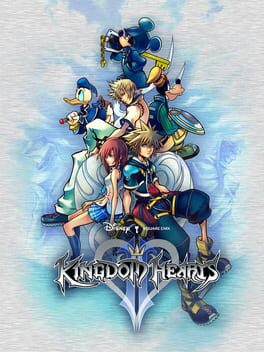
The official reveal confirmed that the Kingdom Hearts Collection will arrive as three distinct applications on the Switch 2 eShop, each representing a logical segment of the series: the original Kingdom Hearts and Chain of Memories, the Kingdom Hearts II era, and the newer Re:Mind/Final Mix titles. When summed, the three binaries exceed 130 GB, a staggering figure that eclipses even the most data‑hungry titles on current ninth‑generation consoles. Square Enix’s development lead highlighted that the decision to split the collection was driven by both technical limitations of the operating system’s package size and a desire to give players the flexibility to install only the chapters they wish to explore first.
Beyond the raw numbers, the announcement underscored a strategic pivot away from the cloud‑only approach that Nintendo previously championed for legacy titles on the Switch family. By opting for a fully native port, Square Enix can preserve the series’ signature visual fidelity—high‑resolution textures, intricate lighting rigs, and the iconic “keyblade” effects—without the latency and compression artefacts inherent to streaming. The developers also promised a suite of quality‑of‑life upgrades, including re‑engineered save‑state handling, refined touch‑screen controls, and optional performance modes that let players toggle between 30 fps cinematic smoothness and a higher‑frame‑rate “speedrun” setting.
Analysis
From a market perspective, the sheer magnitude of the Kingdom Hearts Collection on a handheld platform could recalibrate consumer expectations for what is feasible on the Switch 2. Competing ecosystems—namely Sony’s PlayStation 5 and Microsoft’s Xbox Series X|S—have already embraced multi‑gigabyte bundles as a norm, but they do so on devices with terabyte‑scale internal storage. Nintendo’s gamble hinges on the belief that its loyal fanbase will either invest in high‑capacity micro‑SD cards or accept a staggered installation approach. If successful, this could open the floodgates for other publishers to revisit their back‑catalogues, encouraging a wave of “complete‑edition” releases that were previously deemed impractical for the original Switch’s limited storage.
Technically, the undertaking is a litmus test for the Switch 2’s SSD architecture and its ability to stream massive asset bundles without stutter. The original Switch relied heavily on a custom NAND flash that struggled with rapid texture swaps, prompting developers to employ aggressive asset compression. The new hardware’s NVMe‑class storage promises sub‑millisecond access times, but the real challenge lies in the software stack—ensuring that the operating system can handle multi‑gigabyte package loading while maintaining battery efficiency. Square Enix’s decision to partition the collection into three apps may be a pragmatic workaround, yet it also reveals a potential bottleneck in Nintendo’s packaging pipeline that could influence future title strategies.
XPLog Opinion
At XPLog UK we view the Kingdom Hearts Collection as a bold, if slightly reckless, statement of intent from both Nintendo and Square Enix. The ambition to deliver a 130 GB legacy anthology natively on a handheld is commendable and showcases the Switch 2’s technical progress, but it also risks alienating a segment of the core audience that values portability over storage‑heavy commitments. Our recommendation to players is to approach the collection modularly—install the first two apps to experience the narrative arc, then assess whether the remaining titles justify the extra micro‑SD investment. Publishers would do well to heed this precedent and consider tiered releases that balance completeness with accessibility, lest they create a premium‑only niche that runs counter to Nintendo’s traditionally inclusive ethos.
Final Thoughts
In sum, the Kingdom Hearts Collection on Switch 2 is poised to become a landmark moment for handheld gaming, marrying nostalgic ambition with next‑gen hardware capability. While the 130 GB footprint presents undeniable logistical hurdles, it also signals a maturing platform ready to host flagship, data‑intensive experiences without resorting to the cloud. Players should keep an eye on the official launch window slated for early November, watch for firmware updates that may optimise storage handling, and prepare for a potential surge in high‑capacity micro‑SD sales as the community rallies to accommodate this monumental anthology.