.png)
Overview
Since its inception, XPLog's Box Art Brawl column has become a crucible where nostalgia, design theory, and market economics collide. The series thrives on dissecting obscure or under‑appreciated titles, placing them under a spotlight that often reshapes collector sentiment and informs future re‑release strategies. This week’s focus lands on a title that barely grazed mainstream consciousness: Zone of the Enders: The Fist of Mars for the Game Boy Advance, a handheld off‑shoot of Hideo Kojima’s celebrated mecha franchise that debuted in 2001. While the core console entries on PlayStation 2 garnered critical acclaim for their kinetic combat and cinematic flair, the GBA iteration slipped through the cracks of both Western import charts and Japanese retail shelves, becoming a prized artifact for dedicated fans of the series and handheld enthusiasts alike.
In the broader context of 2024’s retro‑gaming renaissance, the relevance of such a deep‑cut cannot be overstated. Nintendo’s Switch Online expansion, Sony’s PlayStation Plus Classic catalog, and a surge of third‑party emulation services have all heightened demand for previously inaccessible titles. Simultaneously, the collector market has seen a pronounced premium on limited‑run Game Boy Advance cartridges, especially those tied to larger IPs. By revisiting The Fist of Mars, Box Art Brawl not only educates a new generation of gamers about a hidden chapter of the Zone of the Enders saga but also fuels speculation about whether Bandai Namco might someday resurrect the game for modern platforms, a move that could unlock both nostalgic revenue streams and fresh audience engagement.
What Happened?
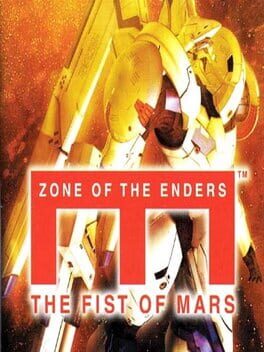
The latest Box Art Brawl installment, authored by veteran contributor Alex Mercer, presented an exhaustive visual and mechanical deconstruction of the GBA title. Mercer highlighted the game’s distinctive box art—a stark, angular composition that juxtaposes the titular mecha against a crimson Martian horizon, evoking both the series’ sci‑fi gravitas and the handheld’s limited palette. Beyond the artwork, the feature delved into the game’s development pedigree: Winkysoft, a studio known for its work on the Super Robot Wars franchise, was tasked with translating Kojima’s high‑octane 3D combat into a 2D side‑scroll format, a challenge that demanded inventive sprite animation and clever use of the GBA’s limited processing power.
Mercer also incorporated community feedback, noting that a poll conducted on the XPLog forum saw a decisive 66% of participants championing the GBA entry as the most compelling underdog in the series’ history. The article quoted the game’s original producer, who explained that the title was conceived as a bridge between the console narrative and the anime adaptation airing at the time, aiming to capture a younger audience that primarily engaged with handheld devices. While the game never received an official Western localization, fan translations have proliferated, underscoring a persistent grassroots demand that continues to echo through retro‑gaming forums and social media channels.
Analysis
From a market perspective, the resurgence of interest in The Fist of Mars illustrates a broader trend: niche handheld titles can become linchpins in a publisher’s long‑term IP strategy. Bandai Namco, which has successfully leveraged its flagship franchises through remasters and cross‑media collaborations, could view a high‑definition re‑release or inclusion in a forthcoming “Classic Collection” as a low‑risk, high‑reward maneuver. The technical hurdles—updating 8‑bit sprite work for modern displays, re‑authoring audio, and securing legacy code—are mitigated by the growing ecosystem of emulation‑friendly development kits, a fact that many studios are already capitalising on for retro revivals.
Competitor dynamics further amplify the opportunity. Sony’s PlayStation Portal and Nintendo’s continued emphasis on Switch Online’s expanding library have set a precedent that handheld nostalgia can translate into tangible subscription growth. If Bandai Namco were to position The Fist of Mars as an exclusive launch title for a new streaming service or as part of a limited‑edition physical re‑release, it could not only re‑ignite fan enthusiasm but also carve out a unique selling proposition that differentiates its catalog from rivals who focus primarily on flagship console experiences.
XPLog Opinion
At XPLog, we contend that the spotlight on The Fist of Mars is more than a nostalgic footnote; it is a strategic indicator that publishers must mine their back catalogues with surgical precision. The game’s blend of compelling narrative hooks, distinctive art direction, and technical ingenuity makes it a prime candidate for a modern renaissance, and ignoring such assets risks ceding cultural capital to competitors who are already repackaging their own hidden gems for today’s streaming‑first audience.
Final Thoughts
As the retro‑gaming tide continues to swell, titles like Zone of the Enders: The Fist of Mars stand poised to become the next wave of rediscovered classics, provided publishers recognise their latent value. Keep an eye on Bandai Namco’s upcoming fiscal announcements and the next edition of Box Art Brawl—both are likely to reveal whether this GBA oddity will finally break out of its collector‑shelf confinement and re‑enter the mainstream conversation in 2025.