Overview
The indie landscape of 2026 has become a crucible for daring experiments that fuse seemingly disparate genres, and Nivalis Nights arrives as the latest testament to that alchemical trend. While the mainstream has been dominated by high‑budget sequels and live‑service juggernauts, a wave of smaller studios has begun to re‑imagine the boundaries of interactive storytelling, borrowing aesthetic cues from blockbuster titles and gameplay loops from beloved sims. In this climate, the promise of a neon‑drenched metropolis that also lets you tend a humble onion farm feels less like a novelty and more like a calculated response to a player base that craves both spectacle and intimacy.
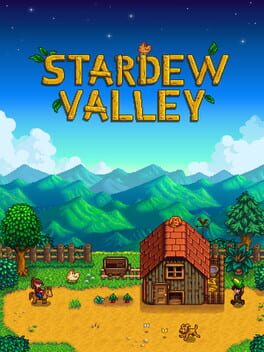
Against that backdrop, the announcement of Nivalis Nights—an indie title that explicitly references the cyber‑punk aesthetic of CD Projekt Red's Cyberpunk 2077 while borrowing the pastoral charm of Stardew Valley—signals a strategic positioning that could reshape expectations for mid‑tier releases. The developers have framed the game as a "city‑wide narrative sandbox," emphasizing emergent storytelling over linear quests, and they have leaned heavily on the idea that a dystopian setting can coexist with the low‑stakes, reward‑centric mechanics of farm‑life sims. This hybridization taps into the broader industry shift toward games that serve as platforms for player‑driven narratives, a movement that has been accelerated by the rise of mod‑friendly ecosystems and streaming culture.
What Happened?
During a livestreamed press event earlier this week, Nivalis Studios unveiled the first gameplay footage of Nivalis Nights, showcasing a protagonist stepping out of a cramped apartment into a rain‑slick alleyway illuminated by holo‑ads, only to be redirected by an AI‑driven city monitor into a mandatory lockdown scenario. Within minutes, the camera pans to a bustling market where players can purchase seeds, tend to a solitary onion, and simultaneously receive a distress call about a serial killer on the loose. The developers highlighted that the game’s core loop intertwines conventional farming tasks—planting, harvesting, upgrading a noodle bar—with high‑stakes investigative missions that can pivot the city’s political landscape.
Further details revealed that the game will feature a dynamic narrative engine capable of generating branching storylines based on player choices, ranging from child‑trafficking rescue operations to romantic entanglements with CorpSec agents. The studio emphasized that every major decision ripples through the city’s districts, influencing factions such as separatist oil rig workers and a clandestine group that rewrites criminal memories. While the gameplay footage primarily focuses on the “onion‑growing” mechanic as a metaphor for growth amidst decay, the developers assured that the farming element will be deep enough to satisfy veterans of the genre, offering seasonal crops, livestock, and a fully fledged economy that interacts with the cyber‑punk underworld.
Analysis
From a market perspective, Nivalis Nights occupies a sweet spot between the high‑risk, high‑reward territory of AAA cyber‑punk titles and the low‑cost, high‑engagement niche of farming sims. By marrying the visual language of a dystopian megacity with the comforting loop of agricultural progression, the game can attract two distinct player demographics and potentially cross‑pollinate them. Early indicators suggest that the title could perform strongly on PC and next‑gen consoles, where the hardware can render the complex lighting and AI systems required for a living, breathing city. Moreover, the game’s emphasis on emergent narrative aligns it with the growing demand for player agency seen in titles like Baldur's Gate 3 and the recent surge of story‑driven indie successes.
Technically, the ambition is not without challenges. Rendering a sprawling, neon‑filled urban environment while maintaining a seamless farming simulation demands a robust engine capable of handling both large‑scale world streaming and fine‑grained simulation of crop growth cycles. Nivalis Studios has hinted at a proprietary hybrid engine that leverages procedural generation for city districts while using deterministic algorithms for agricultural mechanics, a solution that could set a new benchmark if executed well. Additionally, the game's reliance on AI‑driven narrative branching raises concerns about content depth versus breadth; the studio will need to balance the sheer number of possible outcomes with meaningful, well‑written scenarios to avoid the pitfalls that plagued earlier narrative‑heavy releases.
XPLog Opinion
In our view, Nivalis Nights is more than a clever mash‑up—it is a litmus test for the future of mid‑tier game development, where studios must innovate not by chasing graphical fidelity alone, but by rethinking genre conventions. If the title delivers on its promise of a living city that reacts to the humble act of growing an onion, it could usher in a new wave of hybrid experiences that challenge the industry’s siloed approach to design. We expect the title to become a reference point for developers seeking to blend narrative depth with loop‑driven gameplay, and we’ll be watching closely how its post‑launch support and community‑generated content shape its longevity.
Final Thoughts
Nivalis Nights arrives at a moment when gamers are hungry for experiences that feel both grand and personal, and its daring combination of cyber‑punk grit and farm‑life serenity could redefine what indie studios consider possible. With a projected release in Q2 2027 across PC, PlayStation 5, Xbox Series X|S, and a cloud‑streaming tier, the title will give industry watchers ample time to gauge its impact on player expectations and on the competitive dynamics between narrative‑heavy AAA projects and innovative indie offerings. Keep an eye on the upcoming beta windows in early 2027, as they will likely reveal how the game's ambitious systems perform under real‑world player pressure.
.png)
 XPLog
04 Oct 2026
5 min read
XPLog
04 Oct 2026
5 min read