.png)
Overview
The Metro series, birthed from Dmitry Glukhovsky's bleak literary vision and honed by Ukrainian studio 4A Games, has long occupied a unique niche at the intersection of narrative‑driven survival horror and tactical first‑person shooting. Since the launch of Metro 2033 in 2010, the franchise has evolved through iterative refinements, culminating in the Redux re‑releases that bundled the original titles with extensive visual overhauls, refined AI, and a unified progression system. Reaching the 50 million‑unit milestone this year is not merely a sales badge; it signals a rare endurance for a post‑apocalyptic IP that has weathered shifting console generations, geopolitical upheavals, and the rise of battle‑royale dominance, all while retaining a devoted core audience that values atmospheric storytelling as much as gunplay.
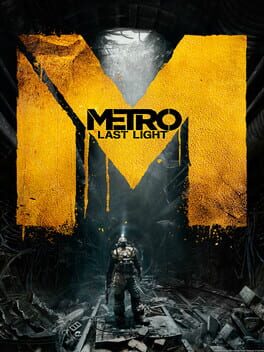
Against this backdrop, the announcement of a free next‑gen update for Metro 2033 Redux and Metro: Last Light Redux arrives at a pivotal moment for both the franchise and the broader market. The PC release slated for 22 October, followed by console roll‑outs on 29 October, positions the titles squarely within the early‑adopter window for PlayStation 5, Xbox Series X|S, and the latest Radeon‑powered PCs. In an industry where paid DLCs and season passes dominate revenue streams, offering a comprehensive graphical and performance upgrade at no cost underscores Deep Silver’s strategic pivot toward long‑term brand stewardship, aiming to keep legacy titles relevant as players transition to newer hardware ecosystems.
What Happened?
The forthcoming update promises a suite of technical enhancements that leverage the full horsepower of modern GPUs and CPUs. 4A Games has confirmed native 4K rendering, unlocked ray‑traced global illumination, and a redesigned asset pipeline that replaces legacy textures with ultra‑high‑resolution scans of the original concept art. Frame‑rate stability will be bolstered by a dynamic resolution scaler and support for DLSS 3 on Nvidia RTX cards, while AMD’s FidelityFX Super Resolution will cater to Radeon users. Audio receives a parallel overhaul, with 3D‑spatial sound pipelines re‑engineered for Dolby Atmos and Windows Sonic, ensuring that the series’ signature oppressive ambience translates faithfully across next‑gen audio stacks.
Beyond the visual and auditory polish, the patch introduces quality‑of‑life tweaks that address long‑standing community feedback. Weapon handling has been refined to reduce the notorious “spaghetti‑gun” feel, AI pathfinding now respects the series’ emphasis on tactical cover, and the UI receives a modernized layout that scales gracefully on larger displays. In a joint statement, 4A Games emphasized that the update is “free for all existing owners,” a move designed to reward the franchise’s loyal fanbase and pre‑empt criticism that has dogged previous post‑launch monetisation attempts. The studio also hinted at future cross‑platform save support, a feature that could finally bridge the gap between PC and console ecosystems for Metro’s narrative‑heavy campaigns.
Analysis
From a market perspective, the free next‑gen refresh serves multiple strategic objectives. Firstly, it revitalises sales pipelines for legacy titles, encouraging late adopters to purchase the Redux bundles now that they are future‑proofed, thereby extending the revenue tail of a franchise that has already contributed significantly to Deep Silver’s bottom line. Secondly, the move acts as a defensive bulwark against emerging competitors such as the “S.T.A.L.K.E.R. 2” launch, which threatens to siphon attention from the post‑apocalyptic niche. By delivering a technically superior experience without additional cost, Metro reinforces its position as the genre’s benchmark, compelling rivals to match not only narrative depth but also graphical fidelity.
Technical hurdles cannot be overlooked, however. Porting the complex lighting and particle systems originally crafted for DirectX 11 to the heterogeneous architectures of the PS5’s custom SSD and the Xbox Series X’s variable‑rate shading required substantial re‑architecting of the engine’s core. Moreover, maintaining parity across platforms while honouring the promise of a “free” update places pressure on development resources that could otherwise be allocated to new IPs or expansions. Yet, the long‑term payoff lies in ecosystem lock‑in: players who experience Metro’s refreshed world on next‑gen hardware are more likely to remain within the 4A/Deep Silver portfolio for future releases, fostering a virtuous cycle of brand loyalty.
XPLog Opinion
At XPLog UK we view the Metro Redux next‑gen overhaul as a masterclass in legacy stewardship; it demonstrates that a publisher can simultaneously honour its veteran community and attract fresh eyes by investing in genuine, cost‑free upgrades. In an era where “games as a service” often translates to relentless monetisation, Deep Silver’s decision to give back rather than extract sets a precedent that could reshape how studios approach long‑lived IPs, especially as the console generation matures and the appetite for high‑fidelity remasters grows.
Final Thoughts
Ultimately, the free next‑gen update for Metro 2033 Redux and Metro: Last Light Redux not only cements the franchise’s status as a cornerstone of atmospheric shooters but also signals a broader industry shift toward preserving and enhancing legacy experiences for modern hardware. Players should keep an eye on the rollout schedule—PC on 22 October, consoles on 29 October—and anticipate subsequent patches that may unlock cross‑save functionality, further blurring the lines between platform silos and ensuring that Metro’s dark, immersive world remains accessible for years to come.