.png)
Overview
The Xbox ecosystem has quietly expanded its catalogue of free‑to‑play demos, a practice that traces its roots back to the early days of the original Xbox when Microsoft experimented with limited trial experiences to entice console‑bound audiences. In the current generation, the move is far more calculated: with subscription services like Game Pass reshaping consumer expectations, publishers are leveraging demos not merely as marketing fluff but as data‑rich touchpoints that can inform launch strategies, community building, and post‑launch support. The recent addition of three high‑profile demos—Castlevania: Belmont's Curse, FATAL FURY: City of the Wolves, and Elta: Defy All Gods—illustrates how Microsoft is curating a pipeline that blends nostalgia, niche genre resurgence, and indie‑driven innovation, all while keeping the barrier to entry at zero.
These releases arrive at a crossroads for the broader industry. The pandemic‑induced surge in console sales has plateaued, prompting platform holders to double‑down on software engagement metrics rather than pure hardware moves. Simultaneously, the rise of “play‑first” models, where players can sample a substantial slice of a game before committing financially, has forced publishers to rethink the economics of discovery. By offering demos that not only showcase core mechanics but also allow progress carry‑over—most notably in Castlevania: Belmont's Curse—the Xbox Store is positioning itself as a proving ground for this emergent paradigm, promising a smoother conversion funnel from curiosity to purchase.
What Happened?
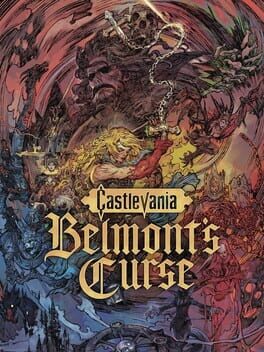
The first of the trio, Castlevania: Belmont's Curse, drops a polished slice of Konami’s storied franchise onto the Xbox Store, granting players a fully functional entry point that records in‑game progress. This is a departure from the traditional “time‑limited” demo format, aligning more closely with the “save‑and‑continue” approach popularised by PC platforms. The carry‑over mechanic is set to sync with the full title slated for release in October, meaning early adopters can essentially pre‑level their characters, a strategy that could dramatically reduce churn and boost first‑week sales, especially among long‑time fans eager to revisit the gothic platforming lineage.
Following suit, the FATAL FURY: City of the Wolves demo arrives after the full game's successful launch earlier in the year, serving as both a refresher for existing players and a gateway for newcomers who missed the initial hype. The demo offers a curated selection of combat scenarios that highlight the title’s refined melee system and expansive weapon crafting, reinforcing the game's reputation for depth without overwhelming casual audiences. Finally, Elta: Defy All Gods supplies a full 60‑minute experience of the upcoming action‑platformer, a bold move given its already “Positive” reception on Steam. By mirroring the Steam demo’s structure, the Xbox version not only validates cross‑platform parity but also capitalises on community‑driven word‑of‑mouth, positioning Elta as a potential breakout hit in the indie‑driven segment of the store.
Analysis
From a market perspective, the simultaneous rollout of these demos signals a calibrated push to diversify Xbox’s software pipeline beyond first‑party blockbusters. Konami’s re‑entry into the console spotlight with Castlevania taps into a legacy audience while the demo’s progress‑carry feature serves as a low‑risk acquisition tool that could be replicated across other legacy franchises seeking rejuvenation. Meanwhile, FATAL FURY’s post‑launch demo reflects a growing trend where developers treat demos as evergreen marketing assets rather than one‑off launch windows, extending a title’s lifecycle and providing a continual funnel for late adopters. Elta’s inclusion underscores Microsoft’s commitment to championing indie talent, leveraging the demo format to surface hidden gems that might otherwise be eclipsed by AAA noise. Collectively, these moves could recalibrate the Xbox Store’s value proposition, positioning it as a discovery hub where players can trial a spectrum of experiences before committing, thereby strengthening retention metrics for both the platform and its Game Pass ecosystem.
XPLog Opinion
At XPLog UK we view this triad of demos as a watershed moment for console‑centric discovery: Microsoft is effectively borrowing the “freemium‑style” engagement loop that has long dominated mobile and PC, but tailoring it to the expectations of core gamers who demand depth, narrative cohesion, and technical polish. By allowing progress to persist into the full product, Xbox not only rewards early investment of time but also creates a psychological anchor that nudges players toward conversion—a tactic that could become the industry standard if the October sales figures for Castlevania validate the hypothesis.
Final Thoughts
In the months ahead, the true impact of these demos will be measured by conversion rates, community sentiment, and the ripple effect on competing platforms that may adopt similar carry‑over mechanics. Observers should keep an eye on the October launch window for Castlevania: Belmont's Curse, the next quarterly update to Xbox’s demo catalogue, and any announced expansions to the demo‑carry‑over model across other third‑party titles. If the experiment proves successful, we could be witnessing the birth of a new era where “play first, buy later” becomes the default acquisition pathway for console gamers.