.png)
Overview
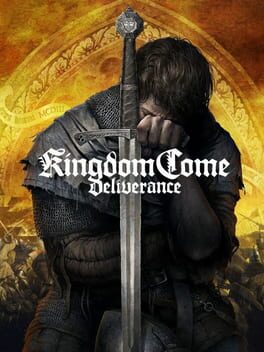
Warhorse Studios, the Czech‑based studio that earned critical acclaim for the historically grounded Kingdom Come: Deliverance, returned last year with a sequel that pushes the boundaries of realism, narrative depth, and technical ambition. Kingdom Come 2 arrived at a time when the industry is wrestling with soaring development budgets, a talent shortage that has driven salaries sky‑high, and a post‑pandemic inflationary wave that has left many publishers questioning whether the long‑standing $59.99 price point can still fund the kind of multi‑year projects that demand dozens of specialists, cutting‑edge motion‑capture pipelines, and exhaustive research teams. The sequel’s launch, priced at the new premium tier of $69.99, was positioned as a test case for a market that has, for the most part, resisted overt price inflation despite the clear upward pressure on costs.
At the same time, Rockstar Games is gearing up for the long‑awaited Grand Theft Auto VI, a title that historically resets expectations not only for open‑world design but also for the economics of blockbuster releases. The industry watches Rockstar’s pricing strategy with a mixture of trepidation and hope, because a higher launch price could signal a broader shift toward “premium‑plus” pricing, a model that would allow studios like Warhorse to recoup massive R&D outlays without resorting to aggressive post‑launch monetisation. In this climate, co‑founder Martin Klima’s public hope that GTA VI will nudge the market upward is more than a wish; it is a strategic indicator of how mid‑tier publishers are positioning themselves amid an evolving revenue landscape.
What Happened?
During a recent interview at the Game Developers Conference, Martin Klima explained that Warhorse Studios deliberately set Kingdom Come 2 at a price point that reflects its production values, but he also confessed that the studio is “crossing its fingers” that Rockstar’s next release will make a higher price feel normal rather than punitive. Klima highlighted that the game’s extensive world‑building—spanning 200 km of historically accurate terrain, a fully voiced cast of over 400 characters, and a combat system rebuilt from the ground up—required a budget that dwarfs the studio’s 2018 predecessor. The decision to price the sequel at $69.99 was therefore presented as a “necessary evolution” rather than a purely profit‑driven move.
Klima further elaborated that Warhorse’s survival hinges on the ability to sustain a healthy margin per unit sold, especially as subscription services like Xbox Game Pass and PlayStation Plus begin to erode the traditional “buy‑once‑play‑forever” model. While the studio remains optimistic about long‑tail revenue from DLC and post‑launch support, the core financial health, according to Klima, is still anchored in the initial launch window. He warned that without a market‑wide acceptance of higher launch prices, mid‑tier studios could be forced to either downscale future ambitions or lean more heavily on micro‑transactions—an avenue that would clash with Warhorse’s reputation for narrative integrity.
Analysis
The pricing dilemma Warhorse faces is symptomatic of a broader inflection point in the AAA ecosystem. Historically, Rockstar has set price benchmarks that ripple through the industry; the $59.99 launch price of Grand Theft Auto V in 2013 was quickly adopted as the de‑facto standard for premium titles. If GTA VI emerges at $69.99 or even $79.99, it would create a new price ceiling that could legitimize similar moves from other high‑budget studios. This would likely improve revenue per unit for games that already command a premium audience, but it also risks compressing the market for consumers who have grown accustomed to a $60 ceiling, especially in regions where disposable income is limited.
From a competitive standpoint, a price hike could accelerate the fragmentation of console ecosystems. Sony and Microsoft have both invested heavily in subscription bundles that soften the impact of high launch prices, yet a sustained shift toward premium‑plus pricing may push more players toward these services, potentially increasing platform lock‑in. Conversely, developers that refuse to follow the trend could find themselves at a pricing disadvantage, forced to either undercut the market or risk being perceived as lower‑quality. The ripple effect may also pressure indie publishers, who already operate on razor‑thin margins, to reassess their pricing strategies or explore hybrid models that blend lower upfront costs with robust post‑launch monetisation.
XPLog Opinion
At XPLog UK we view Klima’s optimism as a realistic barometer of the industry’s current strain: the era of $60 AAA launches is waning, and the next wave of titles—especially those that blend deep narrative ambition with cutting‑edge technology—will need to justify a higher price tag through tangible value. GTA VI will act as the litmus test; should Rockstar succeed without sparking a consumer backlash, it will give studios like Warhorse the confidence to price their games in line with production realities. However, any misstep could trigger a backlash that reverberates across the market, forcing publishers to double‑down on post‑launch monetisation, a path that many core gamers have already grown wary of.
Final Thoughts
In the months ahead, the industry will be watching Rockstar’s pricing announcement as closely as its release date, slated for early 2025. Warhorse’s next quarterly report, due in Q4 2024, will likely reveal whether the gamble on a $69.99 launch has paid off, and whether the broader market is ready to accept a new premium tier. For players, the takeaway is clear: the economics of high‑budget, narrative‑driven games are shifting, and the price you pay at launch may soon reflect the true cost of creating worlds as rich and historically faithful as those Warhorse strives to build.