.png)
Overview
Arcade‑style racing has long oscillated between periods of mainstream dominance and niche reverence, and the current console generation is witnessing a resurgence driven by next‑gen hardware and a nostalgic appetite among core gamers. Sony’s PlayStation 5, with its ultra‑fast SSD and sophisticated haptic feedback, has become a fertile ground for titles that demand split‑second reactions and visceral sensory cues, prompting developers to revisit the raw, adrenaline‑fueled formulas that defined the genre’s golden era in the early 2000s. In this climate, a new Star Wars‑themed racer is not merely a licensed add‑on; it is a strategic entry point that leverages a beloved franchise to re‑ignite interest in high‑speed, crash‑centric gameplay that has been largely absent from the flagship platform’s lineup.
Fuse Games, the London‑based studio that emerged from the ashes of Criterion’s legendary design team, brings a pedigree steeped in the very DNA of modern racing. The studio’s founders cut their teeth on the Burnout series, a franchise renowned for its emphasis on aggressive driving, spectacular takedowns, and a sense of reckless joy. Their transition into the Star Wars universe represents a convergence of two powerful legacies: the cinematic mythos of a galaxy far, far away and the engineering expertise of a team that helped codify the rules of high‑velocity competition. This backdrop provides a compelling narrative hook for both longtime fans of the franchise and veteran racers craving a fresh yet familiar experience.
What Happened?
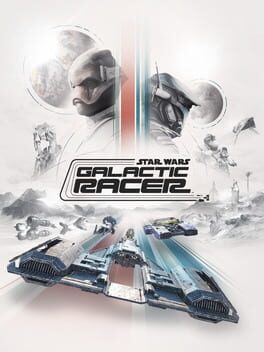
At the heart of the announcement is a clear design manifesto: fuse the chaotic, off‑road brutality of MotorStorm: Pacific Rift, the sleek, anti‑gravity thrust of WipEout HD, and the aggressive, takedown‑focused ethos of Burnout 3 into a single, cohesive package that runs natively on the PS5. Early gameplay footage showcases a kaleidoscope of star‑system tracks, each rendered with ray‑traced lighting that accentuates the neon glow of hyperspace tunnels and the gritty texture of asteroid‑strewn canyons. The title supports the DualSense controller’s adaptive triggers and haptic feedback, translating every gear shift and tire squeal into a tactile event that deepens immersion beyond what previous console racers have achieved.
Fuse’s development team has emphasized that the game is built from the ground up for the current hardware, eschewing the practice of simple upscaling that plagued many early‑gen cross‑generational releases. According to a recent developer interview, the studio invested heavily in a proprietary physics engine capable of handling the extreme forces generated by both traditional wheeled vehicles and the newly introduced grav‑levitating pods that hover over low‑gravity tracks. The result is a dynamic handling model that rewards precision while still allowing for spectacular, cinematic crashes—a design choice that directly nods to the studio’s Burnout heritage while pushing the envelope with Star Wars‑specific visual flair.
Analysis
The market implications of a high‑profile, PS5‑exclusive arcade racer extend beyond mere sales projections. By aligning with the Star Wars license, Fuse taps into a multi‑billion‑dollar franchise that guarantees a baseline audience, yet the game’s core appeal lies in its promise to deliver a pure, skill‑centric experience that stands apart from the simulation‑heavy titles dominating the console racing space. Competitors such as Gran Turismo 7 and Forza Horizon 5 have entrenched themselves as the benchmark for realism and open‑world exploration, respectively; Galactic Racer’s focus on tightly‑crafted circuits and aggressive, fast‑paced gameplay positions it as a counter‑program that can attract players seeking quick, adrenaline‑driven sessions rather than long‑form progression.
From a technical standpoint, the decision to harness the PS5’s SSD for near‑instantaneous track loading and to implement full‑frame ray tracing signals a commitment to future‑proofing the title for potential cross‑generation releases. However, this ambition also introduces challenges: maintaining a stable 60 fps frame rate while rendering complex particle effects from laser blasts and debris requires meticulous optimization, and any misstep could erode the delicate balance between visual fidelity and responsive control that arcade racers demand. Should Fuse successfully navigate these hurdles, the title could set a new performance standard for high‑speed racing on current‑gen hardware, compelling rival studios to elevate their own technical aspirations.
XPLog Opinion
At XPLog UK we view Star Wars: Galactic Racer as a bold statement that the arcade racing genre is far from dead; it is merely evolving. Fuse Games has leveraged its Criterion‑born expertise to craft a product that feels simultaneously nostalgic and innovative, and the decision to anchor it in the Star Wars universe is a masterstroke that marries brand power with genuine gameplay ambition. If the final product lives up to the early impressions, it will not only rejuvenate the PS5’s racing catalogue but also force the industry to reconsider the viability of high‑octane, short‑session experiences in an era dominated by sprawling, content‑rich titles.
Final Thoughts
In sum, Star Wars: Galactic Racer arrives at a pivotal moment for both the PlayStation ecosystem and the broader racing genre, offering a tantalising blend of legacy design philosophy and next‑gen technical prowess. Players should keep an eye on the forthcoming launch window slated for late 2024, as well as any post‑launch live‑service updates that could expand the roster of ships, tracks, and competitive modes. Whether it becomes a cult classic or a mainstream hit, its impact on how publishers approach licensed, arcade‑style experiences will be closely watched by the industry for years to come.