.png)
Overview
When Nintendo unveiled the next‑generation Switch 2, the announcement sent ripples through a market still reeling from the transition to cloud‑centric services and the rise of high‑fidelity cross‑play experiences. For Capcom, whose Monster Hunter franchise has become a cultural touchstone across consoles, handhelds, and even mobile, the prospect of landing its latest flagship on the new hardware is both an opportunity and a litmus test. The series has historically thrived on the synergy between hardware capabilities and the series’ demanding combat loops—think the original Monster Hunter on the PlayStation 2, the breakthrough of Monster Hunter World on the PS4 and Xbox One, and the handheld triumph of Monster Hunter Rise on the original Switch. Each leap required Capcom to stretch the engine, re‑engineer asset pipelines, and, crucially, negotiate the expectations of a fanbase that measures success in the smoothness of a monster’s roar as much as in its loot tables.
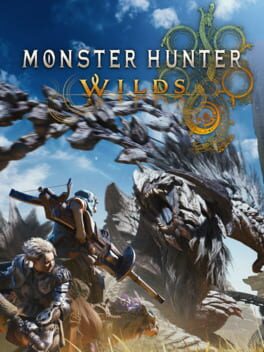
Yet the path has never been smooth. The launch window for the most recent entry—known colloquially as Monster Hunter Wilds—was marred by performance hiccups on both current‑gen consoles, with frame‑rate dips and texture pop‑ins that sparked heated debates on forums and social media. Those technical woes, while ultimately patched, underscored a broader industry tension: developers are increasingly pressured to ship expansive, open‑world experiences on hardware that may be a generation behind the visual ambitions of the title. In this climate, Capcom’s decision to pursue a Switch 2 port signals confidence in the new console’s architecture, but also a willingness to engage in the painstaking, iteration‑heavy optimisation process that has become a hallmark of modern AAA ports.
What Happened?
In a candid interview with NintendoLife, Capcom’s lead technical director described the Switch 2 port as “a painstaking process, with decisions made one by one.” The team reportedly dissected the game’s rendering pipeline, stripping away non‑essential post‑process effects and re‑working shader code to align with the Switch 2’s hybrid GPU architecture. Rather than applying a blanket downscale, engineers opted for a granular approach: certain monster models received bespoke LOD (level‑of‑detail) meshes, while UI elements were re‑tuned to retain clarity at the target 1080p handheld resolution. This methodical, piece‑by‑piece optimisation, while time‑consuming, is intended to preserve the core gameplay loop that defines Monster Hunter—tight combat timing, precise hit‑registration, and the visceral satisfaction of landing a perfect “critical.”
The result, according to the same source, is a version that runs at a stable 60 fps in handheld mode without compromising the “experience of Monster Hunter Wilds.” Capcom has pledged that the visual fidelity will match the console‑grade launch, albeit with minor compromises such as slightly reduced particle density and a modest reduction in draw distance for distant terrain. Crucially, the developers emphasized that these cuts were made after exhaustive play‑testing sessions with veteran hunters, ensuring that the feel of the hunt remains intact. The announcement also hinted at a launch window aligned with the Switch 2’s holiday rollout, positioning the title as a system‑selling flagship for Nintendo’s next‑gen device.
Analysis
From a market perspective, Capcom’s commitment to a high‑profile port on Switch 2 is a strategic maneuver that could reshape the competitive dynamics of the mid‑range console space. Nintendo has traditionally relied on exclusive first‑party titles to drive hardware adoption, but the inclusion of a heavyweight third‑party franchise like Monster Hunter offers a hybrid model that blends brand loyalty with broader appeal. If the port delivers the promised performance, it could persuade a segment of the core gaming audience—particularly those who have been hesitant to adopt a handheld‑centric ecosystem—to view the Switch 2 as a viable alternative to the PlayStation 5 or Xbox Series X for on‑the‑go high‑end experiences. Moreover, the successful execution of such a technically demanding port may embolden other AAA publishers to consider the Switch 2 as a serious platform for their flagship releases, potentially expanding Nintendo’s software pipeline beyond its current first‑party‑heavy lineup.
Technically, the “one‑by‑one” optimisation philosophy reflects a broader industry trend toward modular engine design, where developers isolate performance‑critical subsystems to iterate independently. This approach mitigates the risk of wholesale regressions that plagued earlier ports, such as the infamous performance dip of The Witcher 3 on the original Switch. By targeting specific assets—monster models, particle systems, UI scaling—Capcom can fine‑tune the experience without sacrificing the emergent gameplay depth that defines the series. Looking ahead, the lessons learned here could feed back into Capcom’s internal engine roadmap, informing future titles that aim for simultaneous multi‑platform releases. It also sets a precedent for how publishers might handle the inevitable trade‑offs between visual ambition and hardware constraints in an era where next‑gen consoles are rapidly approaching their performance ceilings.
XPLog Opinion
At XPLog UK we view Capcom’s painstaking port as a bold affirmation of the Switch 2’s potential to become more than a niche handheld—it is a declaration that Nintendo’s ecosystem can host technically sophisticated, globally beloved franchises without diluting their essence. While the extended development timeline may test the patience of hunters eager for a new adventure, the willingness to sacrifice a few visual flourishes for a buttery‑smooth 60 fps experience demonstrates a player‑first mindset that aligns with the franchise’s legacy. In an industry where rushed launches often erode brand equity, Capcom’s measured approach could pay dividends, reinforcing both the Monster Hunter brand and Nintendo’s reputation as a platform that respects the integrity of its third‑party partners.
Final Thoughts
Capcom’s admission that porting Monster Hunter Wilds to Switch 2 is a meticulous, decision‑driven endeavour underscores the evolving calculus of AAA development in a multi‑platform world. By prioritising performance and player experience over blanket graphical parity, the studio not only safeguards the franchise’s core appeal but also positions the Switch 2 as a serious contender in the premium handheld market. As the holiday launch window approaches, the industry will be watching closely to see whether the final product lives up to its promise—and whether this effort sparks a new wave of ambitious, high‑fidelity ports that could reshape Nintendo’s software landscape for years to come.